




Lidded Ceramic Container
A lidded ceramic container satisfies both utility and display, offering a neat vessel to house dry goods, tobacco, or powder.
Lidded Ceramic Container
A lidded ceramic container takes many forms across different centuries and origins, ranging from sugar boxes and butter dishes to ginger jars, pomanders, and tobacco jars. Buyers seeking a lidded ceramic container encounter items fashioned for domestic utility, table service, or dressing table storage.
The pieces on this page span the Victorian era, the eighteenth century, the nineteenth century, nineteen hundred, nineteen thirty, eighteen eighty, the sixteenth century, and nineteen sixty. Forms include decorative jars, decorative boxes, trinket and storage boxes, lidded boxes, tobacco jars, tableware, pot pourri vases, and decorative vessels.
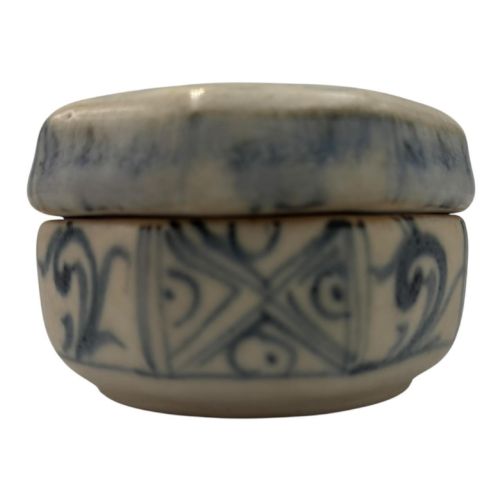
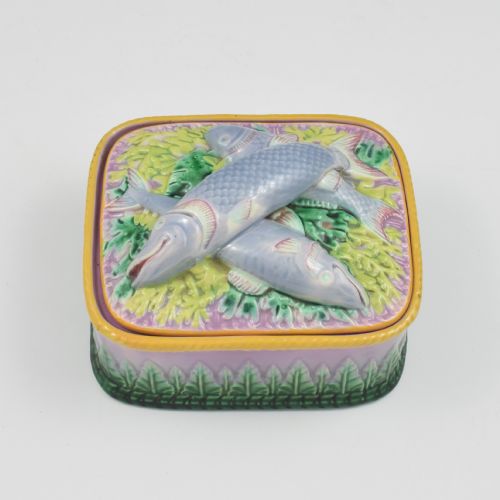
Origins stretch widely, covering English porcelain, Dutch delft, Chinese blue and white porcelain, Japanese cloisonne enamel, Vietnamese blue and white ware, French Limoges, and Kashmiri pots. Victorian Staffordshire and George Jones majolica represent the more sculptural domestic output of the nineteenth century.
How They Were Made
Makers utilised ceramic, porcelain, earthenware, and glaze as the primary structural bodies, frequently applying enamel, gilding, and copper elements for surface enrichment. Brass and silver plate often form the supporting mounts, handles, or fitted hardware on nineteenth century biscuit barrels and butter dishes.
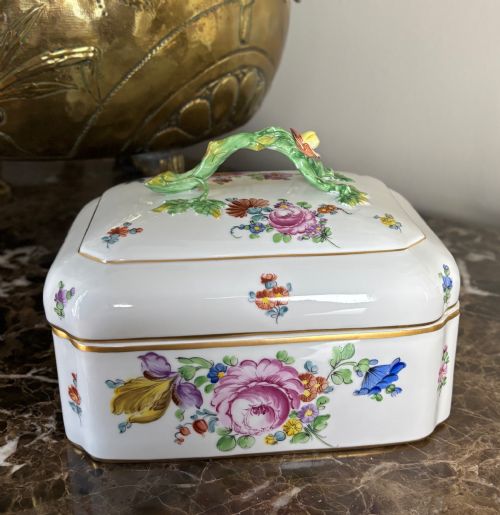
Techniques range from the intricate hand-painted fruit of Royal Worcester and the cobalt underglaze of Vietnamese and Chinese blue and white wares to the vibrant relief modelling seen in majolica sardine boxes and Staffordshire tobacco jars.
Lidded Ceramic Container Retail Price Guide 2026
Typical asking prices for lidded ceramic container among the pieces listed under this phrase on Sellingantiques today, from the lower quarter to the upper quarter. They describe what is for sale here now, not the wider market.
Victorian Staffordshire potters happily sculpted cheerful figures like Pierrot to guard your pipe tobacco.
What Varies in Quality
Quality rests in the crispness of the moulding, the precision of the hand-painted or enamelled decoration, and the integrity of the fitted lid. Finer pieces demonstrate superior control over the glaze kiln firing and more elaborate hand-finished details such as gilded highlights or complex pierced crown covers.
The distinction between standard utility vessels and superior display items lies in the artistic execution of the surface design, whether it involves delicate botanical studies on porcelain or finely detailed cloisonne mosaics on metal and ceramic cores.
George Jones·Royal Worcester·Chamberlain Worcester·Royal Doulton·Limoges
The Lidded Ceramic Container Glossary
- Majolica
- A type of earthenware featuring colourful lead glazes applied over an opaque tin-glazed or direct-fired body. This technique allows for rich, vibrant hues and high-relief modelling popular during the Victorian period.
- Pot Pourri Vase
- A decorative vessel designed with a pierced or perforated cover to release the scent of dried flowers and spices held within. These pieces often feature elaborate painted ornamentation intended for prominent display in reception rooms.
- Tobacco Jar
- A covered container specifically built to keep leaf tobacco moist and fresh for smoking. They frequently incorporate inner lids or heavy ceramic bodies alongside playful figural designs.
- Famille Rose
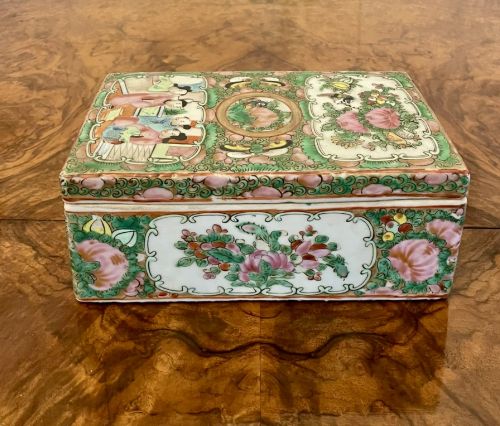
- A palette of opaque enamel colours dominated by pink or rose shades, introduced to Chinese porcelain during the Qing dynasty. The style gained immense popularity for export wares.
- Cloisonne Enamel
- A decorative metalwork technique where enamel paste is applied within compartments created by soldered flat wires. While primarily metal-based, these techniques often complement ceramic and glass collections.
Lidded Ceramic Container: Frequently Asked Questions
What were lidded ceramic containers used for?
These vessels served diverse domestic functions, holding everything from tobacco and dry food stuffs to cosmetics, sugar, and pot pourri. Their fitted lids helped preserve contents while keeping dressing tables and sideboards tidy.
Over time, many shifted from purely utilitarian roles to decorative display objects, celebrated for their painted finishes and sculptural forms.
How do I date an antique ceramic container?
Dating relies on examining the ceramic body, glaze characteristics, stylistic markers, and any maker marks stamped or painted underneath. Victorian pieces often display registration marks or distinct moulded relief patterns.
Earlier eighteenth and sixteenth-century examples show different potting techniques, foot rim formations, and hand-painted pigment styles typical of specific dynasties or European factories.
How should I clean a lidded ceramic container?
Maintenance requires gentle dusting with a soft, dry cloth to protect delicate surface enamels, gilding, and older glazes. Moisture can damage exposed earthenware bodies or vulnerable metal mounts.
Harsh cleaning agents must be avoided entirely to preserve the original glaze sheen and any hand-painted artistry applied over the surface.
Are pot pourri vases different from standard jars?
Pot pourri vases feature specially pierced or perforated lids designed to release fragrance into a room. Standard storage jars and boxes seal tightly to protect contents from air and moisture.
Both fall under the wider umbrella of lidded containers, but the pierced cover distinguishes scent-diffusing vessels from dry storage pieces.