


Library Shelf Styling
Library shelf styling brings together period bookcases, tiered stands and decorative books to create balanced, characterful interiors using historic timber.
Library Shelf Styling
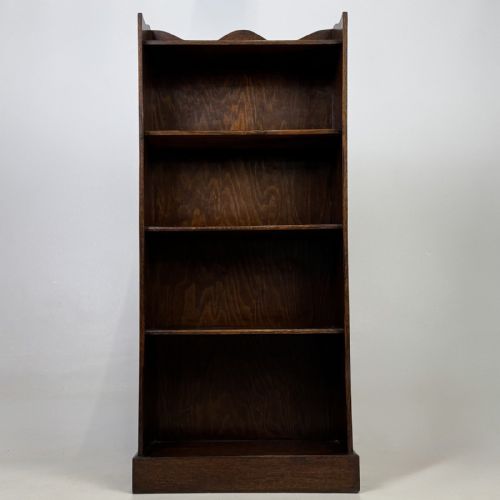
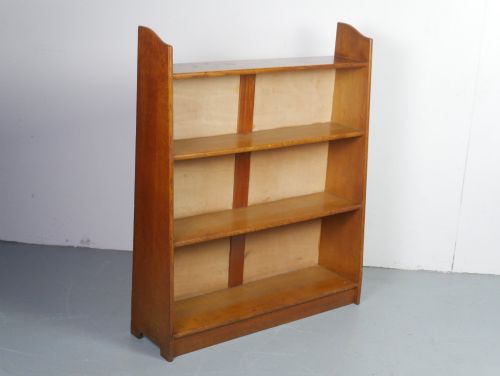
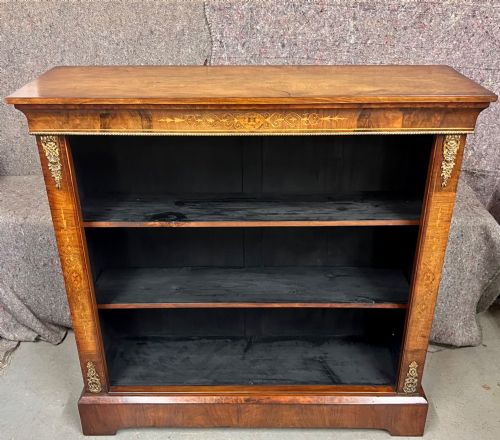
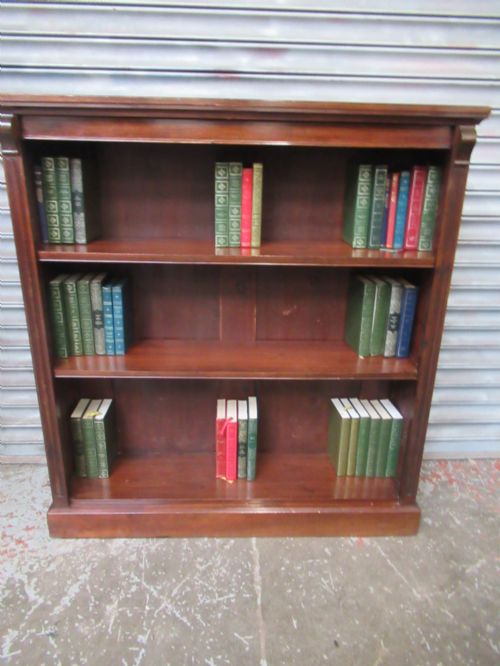
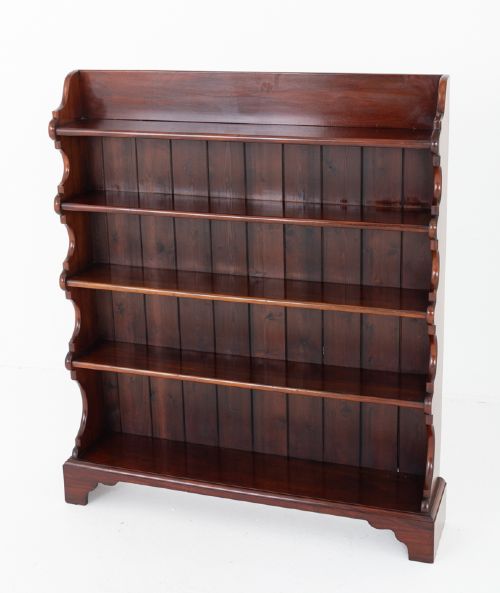
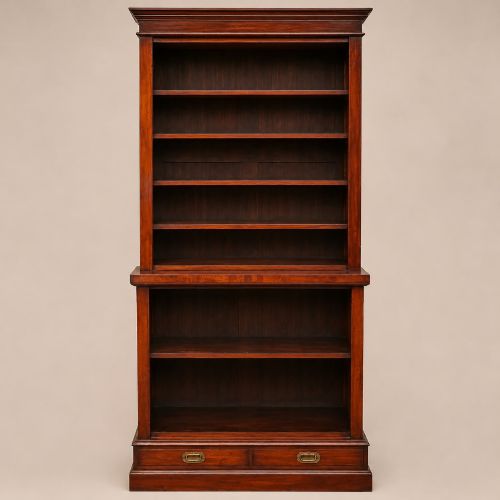
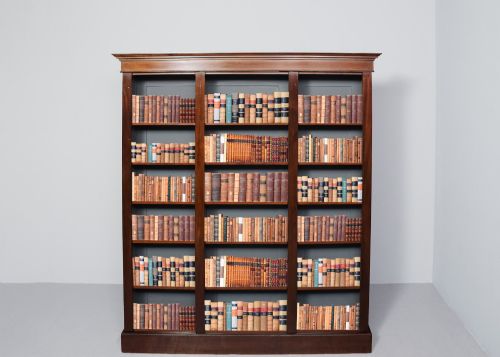
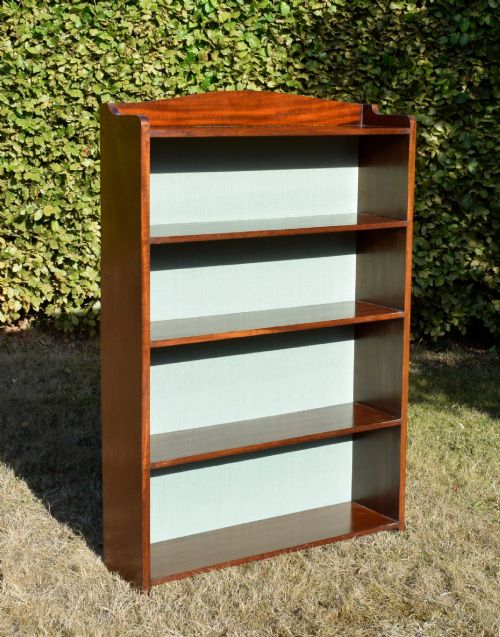
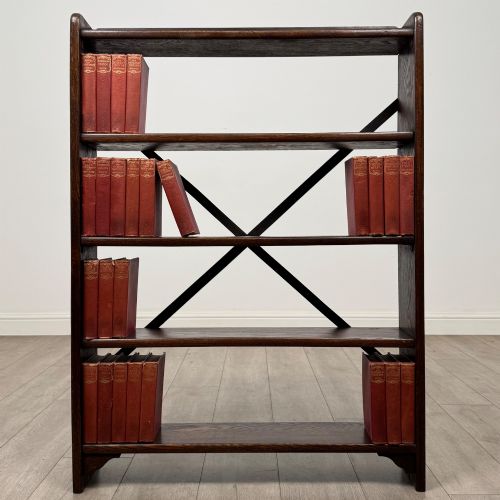
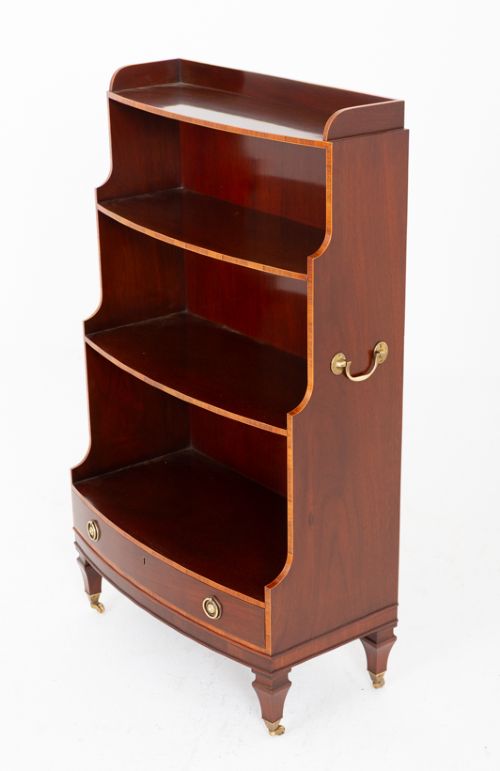
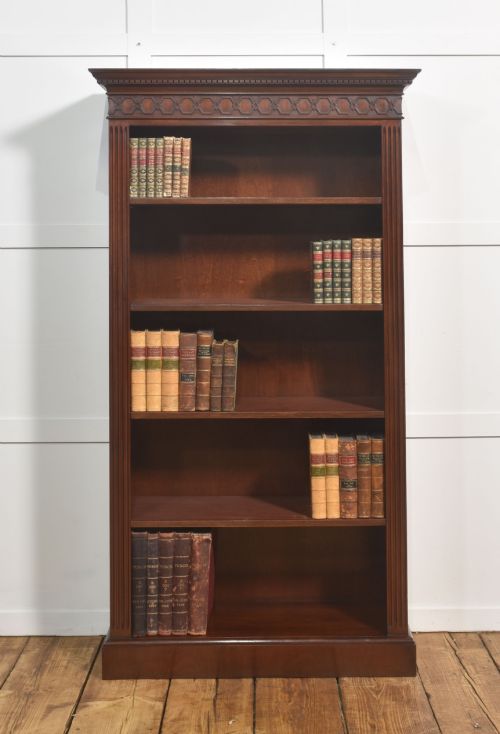
Library shelf styling relies primarily on open bookcases, stacking barrister cases and whatnots sourced from the Victorian, Edwardian and early twentieth-century periods. These foundational timber pieces allow books and decorative objects to be arranged visibly within a room.
Mahogany and oak dominate the available forms, ranging from neat single-bay oak cases to large breakfront mahogany library bookcases with adjustable shelves. Pieces often draw upon Georgian, Regency, Sheraton and Arts and Crafts design vocabularies.
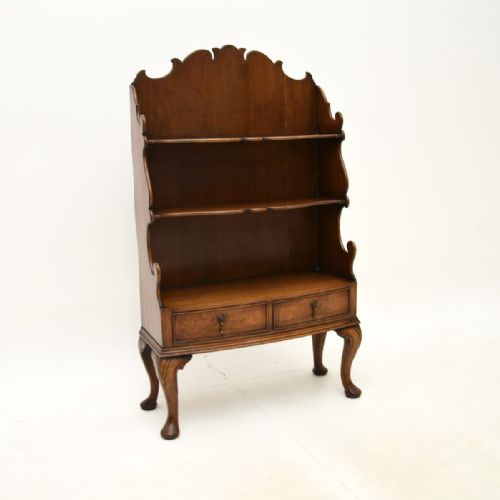
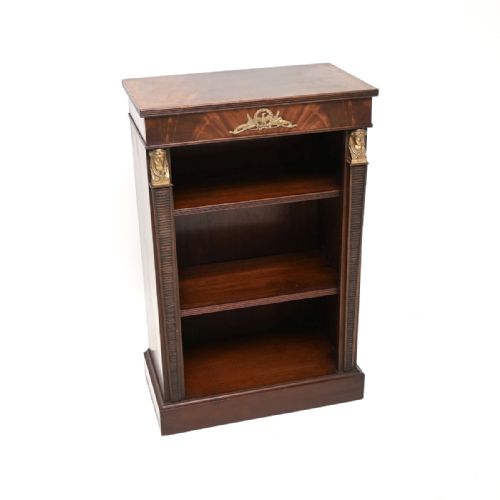
Smaller display items such as etageres, tier stands and decorative books supplement the larger shelving units to complete the arrangement of a domestic library shelf.
How they were made
Cabinet makers utilised solid and veneered timbers including mahogany, walnut, oak, satinwood and rosewood, frequently incorporating brass fittings and glass panels.
Construction techniques combine traditional joinery with functional elements such as adjustable shelving brackets, dentil cornices, inlaid stringing and iron backs.
Library Shelf Styling Retail Price Guide 2026
Typical asking prices for library shelf styling among the pieces listed under this phrase on Sellingantiques today, from the lower quarter to the upper quarter. They describe what is for sale here now, not the wider market.
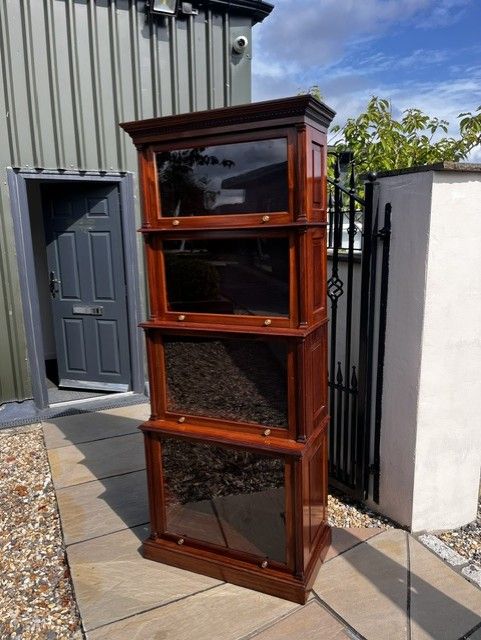
Barrister bookcases let busy lawyers shut their books in a hurry while keeping them perfectly upright and dust-free.
What varies in quality
The standard of timber selection and figure sets superior examples apart, particularly in figured walnut, burr veneers and well-matched mahogany grain.
Refinement in carving, crispness of dentil cornices, precision of inlaid stringing and the integration of maker-marked hardware determine the tier of craftsmanship.
Minty of Oxford·Gillows·Waring and Gillows·Heal's·Maple and Co.
The Library Shelf Styling Glossary
- Open bookcase
- A shelving unit without doors designed for immediate access to books. These pieces form the primary storage element in traditional room arrangements.
- Breakfront
- A large cabinet or bookcase where the central section projects forward from the flanking wings. This architectural arrangement adds depth and visual rhythm to a wall.
- Stacking bookcase
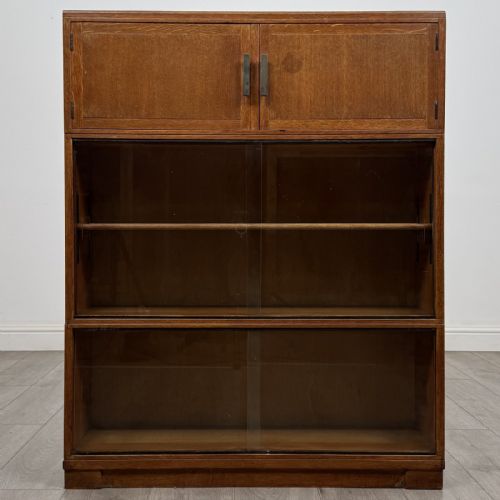
- Modular shelving composed of separate glazed or open sections placed vertically one upon another. Also known as barrister bookcases, they often incorporate lifting glass doors.
- Dentil cornice
- A decorative moulding featuring a repeating series of small rectangular blocks resembling teeth. It commonly crowns the top edge of formal bookcases.
- Etagere
- A set of open shelves for displaying ornaments, miniature ceramics or decorative books. The form emerged in France and prioritises tiered display over deep storage.
Library Shelf Styling: Frequently Asked Questions
How do I style open bookshelves?
Combine vertical stacks of books with horizontal rows and small decorative objects to create visual weight and rhythm across the timber shelves.
Varying the heights of items and incorporating materials like brass or glass prevents the display from appearing heavy or uniform.
What is a stacking barrister bookcase?
A stacking barrister bookcase consists of modular wooden tiers with lifting glass doors designed to protect professional volumes in offices and studies.
This sectional design allows individual units to be added or rearranged as a library collection grows over time.
How do I identify Edwardian oak bookcases?
Edwardian oak bookcases typically feature lighter timber tones, clean architectural lines and simple Arts and Crafts or traditional proportions.
Many examples include practical adjustable wooden shelving supported by metal track systems inside the main carcass.
Where should I place a whatnot?
A whatnot works well in corners or against empty wall spaces where its tiered open shelving can hold small decorative items and books.
Because these pieces are finished on all sides or feature slender uprights, they maintain an open, airy feel in smaller rooms.