
Library Revolving Book Stand
Library revolving book stand designs let you reach a dozen volumes from your armchair without leaving your seat.
Library Revolving Book Stand
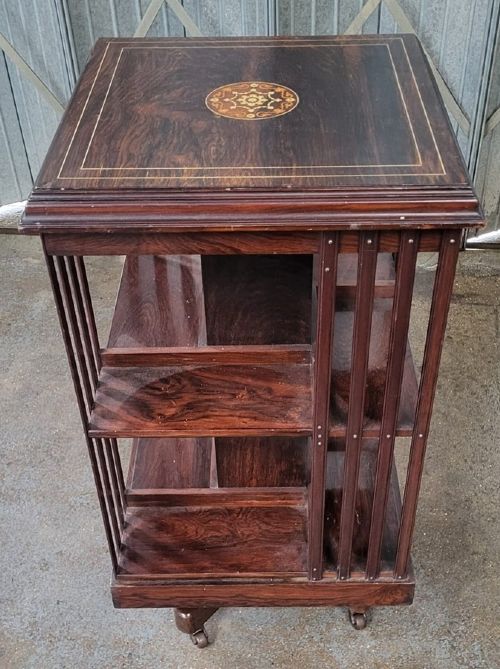
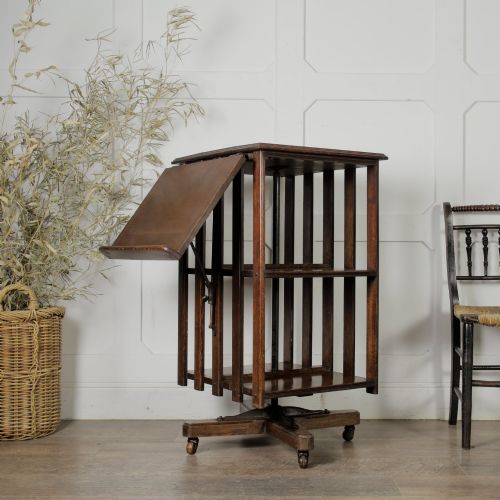
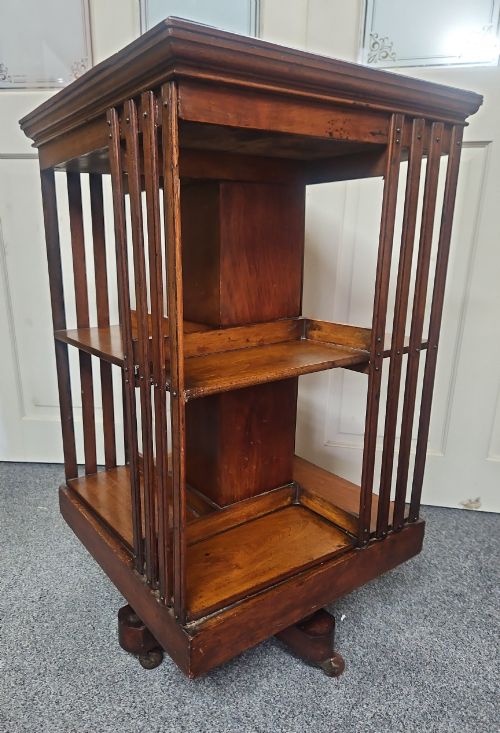
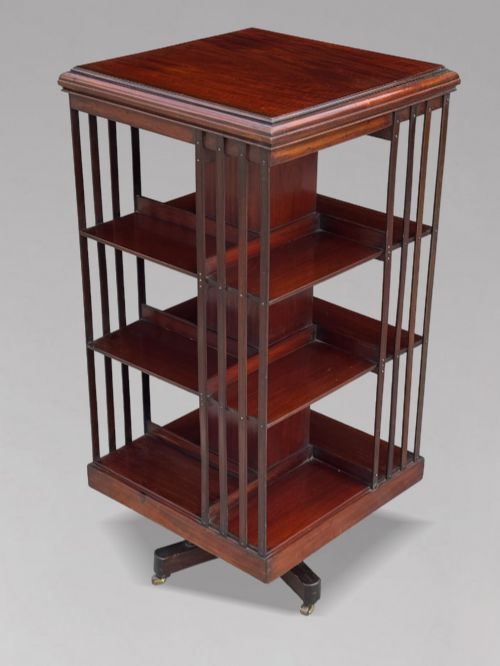
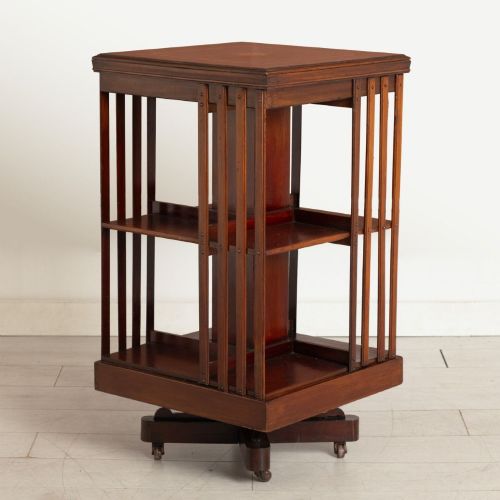
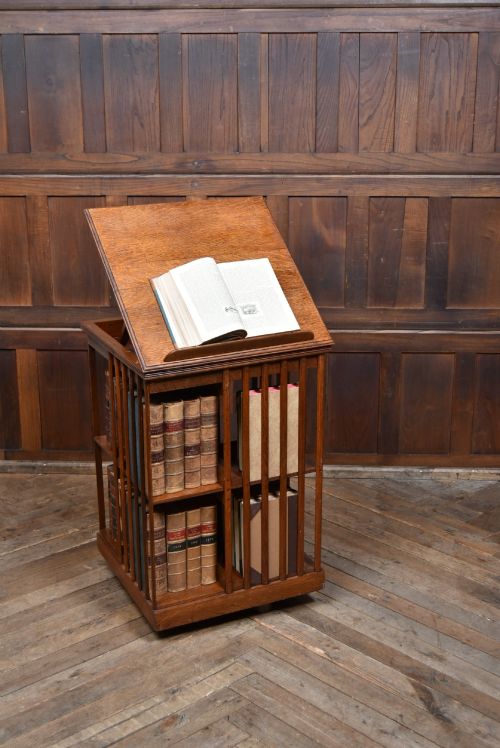
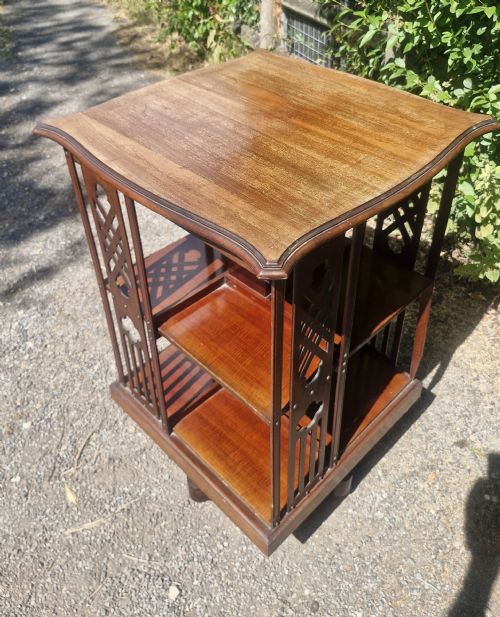
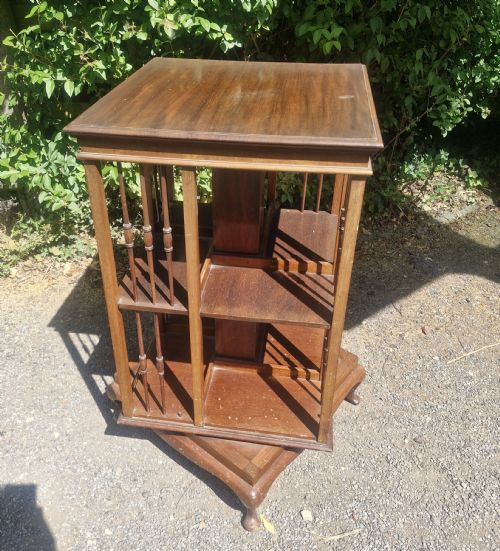
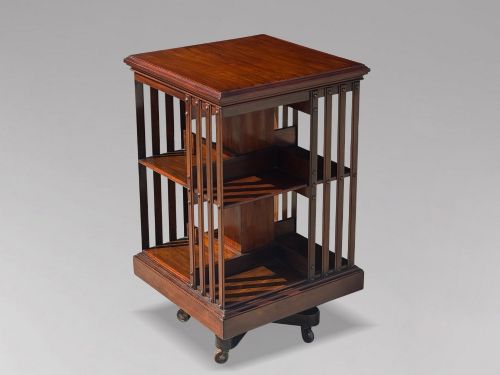
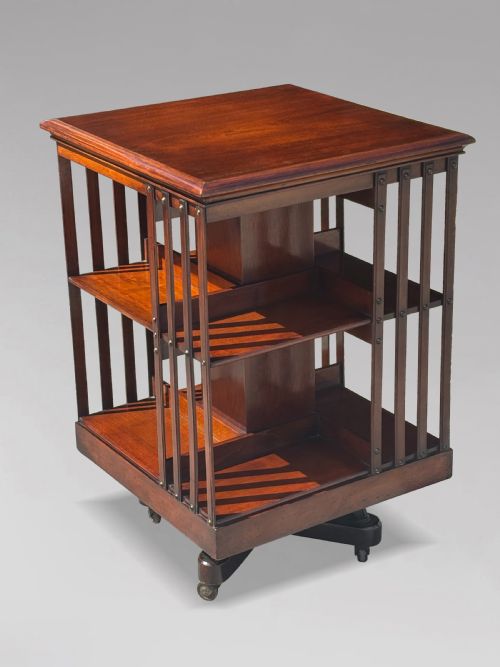
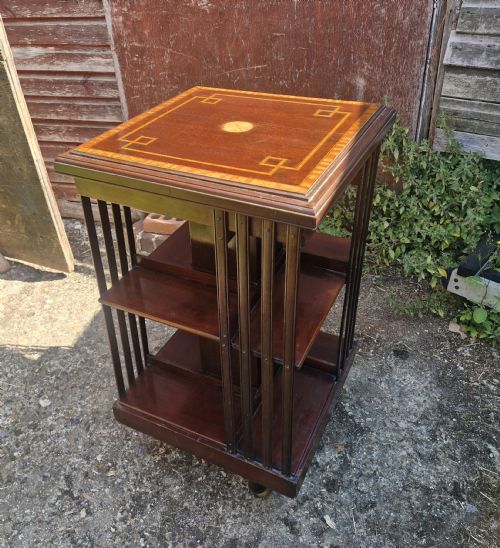
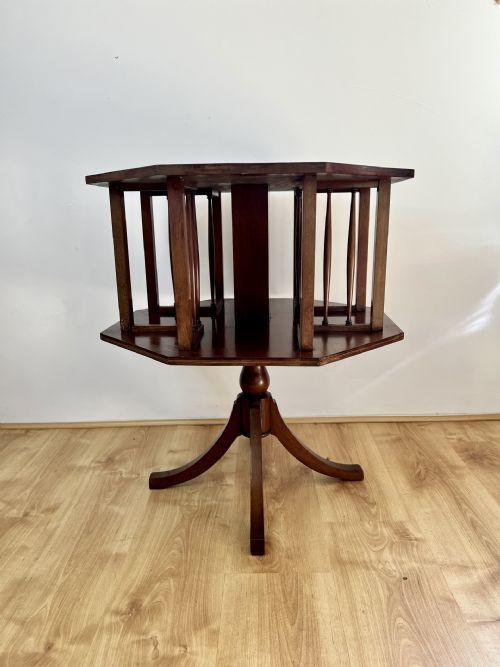
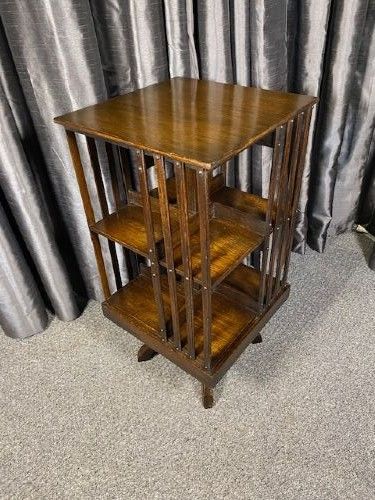
A library revolving book stand is a rotating desktop or floor-standing furniture piece designed to hold working volumes close at hand. When you search for this phrase, you find compact wooden units intended to turn smoothly on a central spindle. The most common version you meet on this page is the Edwardian or Victorian floor-standing bookcase made from rich mahogany or solid oak.
Makers built these pieces primarily for studies, libraries, and drawing rooms where quick access to reference books mattered. They range from small desktop book rests to tall multi-tiered shelving units that spin with a gentle push. Most examples date from the late nineteenth century up to the early decades of the twentieth century, reflecting a period when home libraries expanded significantly.
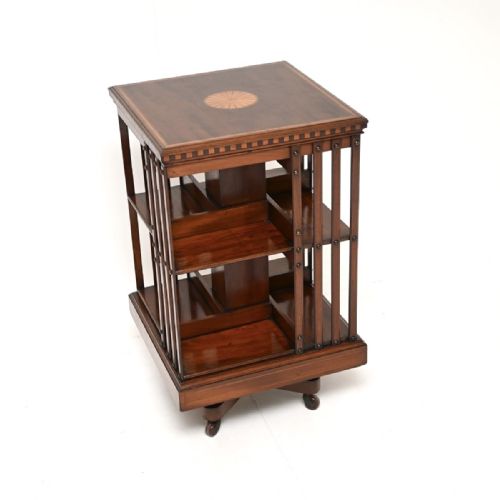
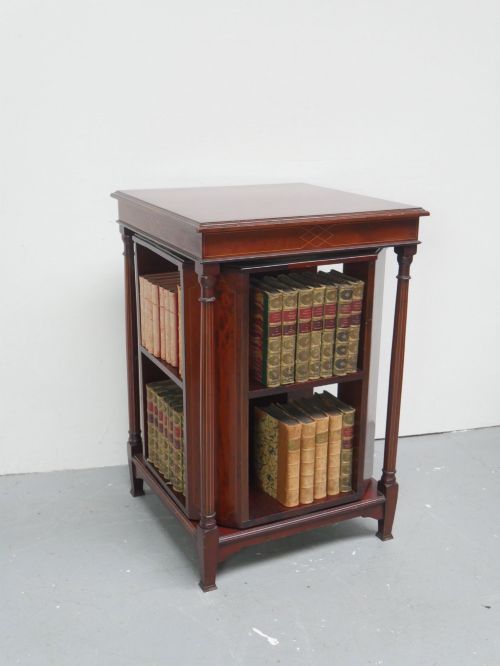
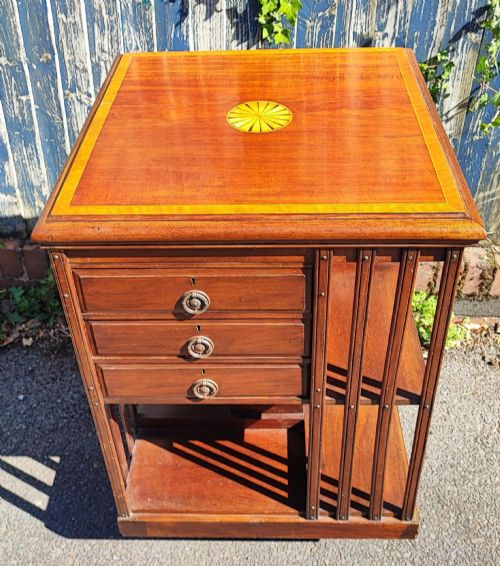
The format varies from simple slatted oak frames to elaborately inlaid satinwood and mahogany models featuring Sheraton Revival details. You will encounter square floor models alongside petite variants and occasional pieces topped with burr walnut or Dutch floral marquetry. Each variation serves the practical need of keeping favourite titles visible and accessible from any angle.
How they were made
Cabinet makers constructed these rotating stands using solid hardwoods like mahogany and oak, supplemented by walnut, satinwood, and rosewood veneers. Structural components required sturdy timber to support the weight of heavy volumes on multiple tiers without sagging. Workshops utilised brass mechanisms and cast iron internal pivots to ensure the revolving action remained balanced and smooth over decades of daily use.
Surface decoration often involved intricate marquetry inlay, contrasting stringing lines, and polished flame mahogany panels that highlighted the natural grain of the wood. Joinery was typically robust, employing dovetail techniques on internal dividers and secure framing to withstand the rotational torque placed on the central spindle. Finished surfaces received hand-rubbed wax or polish to protect the timber and deepen its colour.
Some models spin so freely you can select your evening reading with a gentle flick of the wrist.
What varies in quality
The distinction between standard production pieces and finer cabinetwork lies in the selection of timber and the complexity of the decorative inlay. Superior examples feature figured flame mahogany, burr walnut, or crisp Sheraton-style satinwood stringing rather than plain secondary woods. The smoothness and stability of the revolving action also indicate the care taken with the internal brass or iron pivot mechanism.
Proportion and scale separate simpler utilitarian stands from bespoke library furnishings intended for prominent rooms. Tighter joinery, well-defined slatted dividers, and undisturbed patination on the polished wood surfaces distinguish the better preserved specimens. Pieces retaining their original cast iron or brass underpinnings demonstrate the durability built into higher tier workshops.
Maple and Co
The Library Revolving Book Stand Glossary
- Marquetry
- Decorative woodwork where pieces of veneer are fitted into a ground to form floral or geometric patterns. This technique appears on the top surfaces of select Edwardian and Dutch style stands.
- Sheraton Revival
- A late nineteenth-century style drawing inspiration from late eighteenth-century classical designs. Pieces often feature delicate inlay, satinwood banding, and tapered supports.
- Burr walnut
- Timber taken from a tree growth featuring swirling, irregular grain patterns that create decorative visual movement. It was frequently utilised on top panels to add richness.
- Spindle
- The vertical rod or central axis around which the revolving bookcase turns. It bears the weight of the tiers and governs the smoothness of rotation.
- Flame mahogany
- Timber cut to reveal a characteristic flamed or fire-like grain figure. Cabinet makers deployed these matched veneers to create striking symmetrical patterns on bookcase sides.
Library Revolving Book Stand: Frequently Asked Questions
How do library revolving book stands work?
These pieces utilise a hidden internal pivot system mounted on a heavy cruciform base, allowing the upper tiers to spin freely in either direction. The mechanism distributes the weight of the books evenly so the user can access different titles without moving the entire piece.
Most designs rely on a central vertical spindle paired with cast iron or brass components to maintain stability during rotation. This engineering keeps the bookcase balanced even when loaded unevenly with volumes.
Where were these stands used originally?
Victorian and Edwardian households placed these units beside armchairs in studies, libraries, and drawing rooms where reference books were consulted frequently. They allowed readers to keep a current selection of dictionaries, novels, and journals within arm's reach.
Smaller desk-top versions sat upon large partner desks or reading tables for immediate access to daily ledgers. Floor-standing variants occupied corners or open spaces where four sides of shelving could be utilised efficiently.
How do I care for the wood finish?
Maintain the polished mahogany or oak surfaces by dusting regularly with a soft, dry cloth and applying natural beeswax periodically to nourish the timber. Avoid placing these pieces in direct sunlight or near heat sources to prevent the veneers from drying out or splitting.
Checking the central revolving mechanism occasionally and keeping the base clean ensures the rotation remains smooth. Gentle handling preserves both the structural joinery and the historic patination of the wood.
What periods do these pieces come from?
The listings on this page consist predominantly of Victorian and Edwardian pieces dating from the late nineteenth century through to the early twentieth century. You will also find occasional Regency style revivals and pieces referencing earlier Dutch marquetry traditions.
Construction details, timber choices, and decorative motifs help identify the specific decade of manufacture. Edwardian examples frequently showcase lighter mahogany and delicate stringing, while Victorian models tend towards heavier oak and darker finishes.