




Library Display Globe
A library display globe brings together early twentieth-century sectional storage and scholarly association, offering flexible housing for a growing library.
Library Display Globe
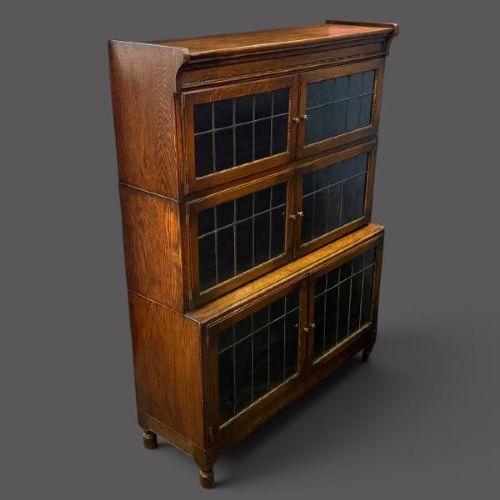
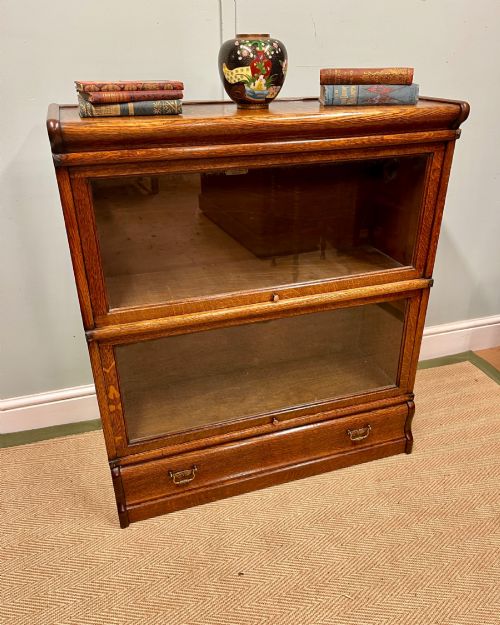
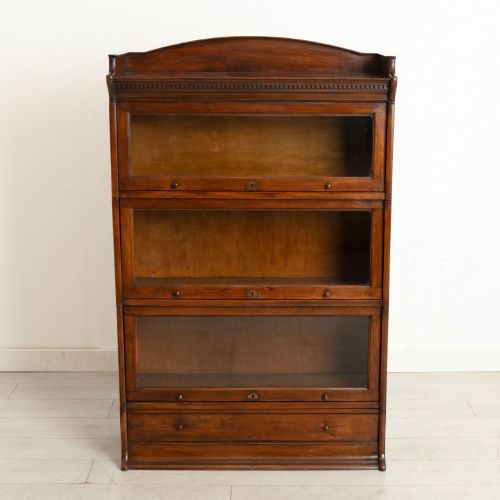
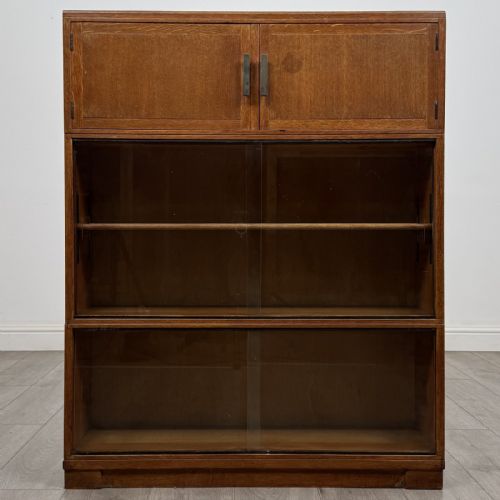
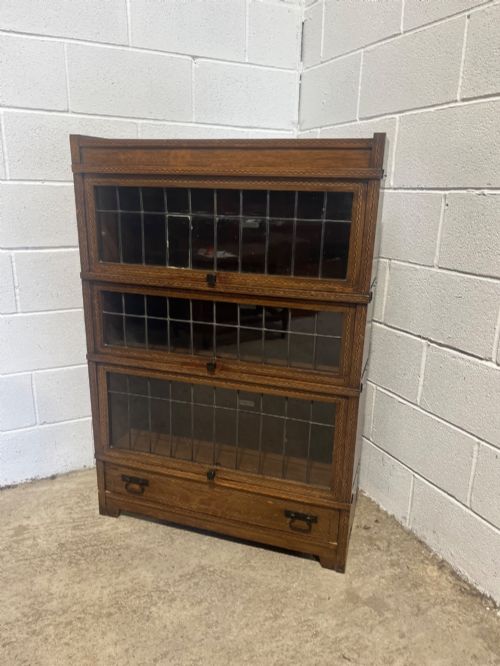
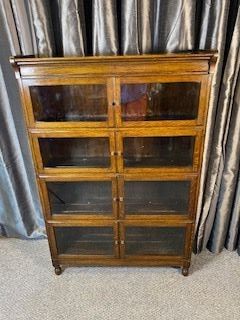
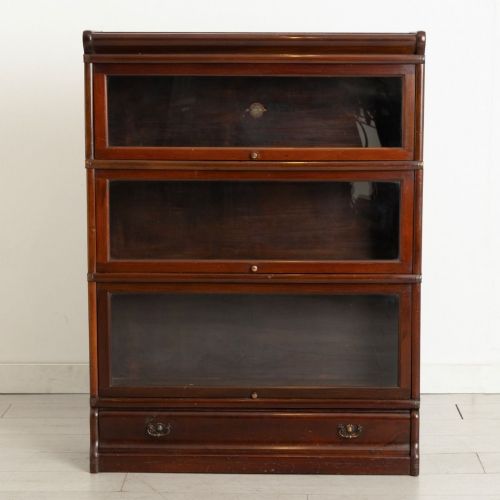
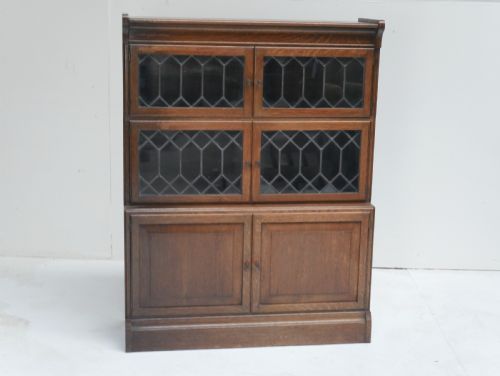
When buyers search for a library display globe, they generally encounter early twentieth-century sectional bookcases associated with scholarly display, spanning the Edwardian, Arts and Crafts, and Art Deco periods. These items combine modular stacking units with glazed fronts, designed to house and display volumes while protecting them from dust.
The pieces listed here appear in forms such as sectional bookcases, stacking bookcases, and modular tiers. Originating predominantly from the early nineteen-hundreds through the nineteen-thirties, they reflect the domestic library requirements of the period.
Most examples you meet on this page are constructed in oak or mahogany, often featuring leaded glass panels and modular tiers that allow the furniture to grow alongside a collection. Makers such as Globe Wernicke, Lebus, Heal's, Minty, and AMYL dominate the selection, providing distinct regional and workshop variations in these stacking units.
Factors of quality
The sophistication of the mechanical door action and the originality of the glass panels distinguish finer workshop output. Maker attribution, visible through stamps or plates from firms like Globe Wernicke or Heal's, further elevates the standing of an individual piece.
Library Display Globe Retail Price Guide 2026
Typical asking prices for library display globe among the pieces listed under this phrase on Sellingantiques today, from the lower quarter to the upper quarter. They describe what is for sale here now, not the wider market.
Listings span the early decades of the twentieth century, focusing primarily on Edwardian, Arts and Crafts, and Art Deco styles in oak and mahogany.
Lebus·Globe Wernicke·Heals·Minty·AMYL
The Library Display Globe Glossary
- Globe Wernicke
- A prominent maker and style of modular stacking bookcase originating in the late nineteenth and early twentieth centuries. The firm popularised the lawyer or barrister bookcase design with interlocking tiers.
- Leaded glass
- Glass panes held together within a network of lead cames. This technique creates decorative geometric patterns across the cabinet doors.
- Golden oak
- A bright, warm oak finish favoured during the Edwardian period. It highlights the natural medullary rays in quarter-sawn timber.
- Stacking bookcase
- An alternative term for a sectional bookcase where multiple modular shelves rest one upon another. The design permits easy disassembly and relocation.
Library Display Globe: Frequently Asked Questions
How do sectional bookcases work?
Sectional bookcases consist of individual modular tiers that stack on top of a base and beneath a top cornice. Each shelf tier operates as a self-contained box with its own glazed lifting door.
This modular construction allows the bookcase to be disassembled into manageable parts for transport and rebuilt to varying heights according to the owner's library needs.
What woods are typical for these bookcases?
Oak and mahogany are the primary timbers found in these pieces. Oak appears in both golden tones and darker fumed variations, often quarter-sawn to show pronounced grain patterns.
Mahogany offers a smoother, richer reddish-brown surface, sometimes enhanced with subtle wood inlay work around the frame edges.
How do I date an Edwardian stacking bookcase?
Dating relies on stylistic markers, construction methods, and maker stamps typically found inside the individual tiers. Edwardian pieces often display Arts and Crafts influences through straightforward joinery and exposed hardware.
Later examples from the nineteen-thirties incorporate Art Deco geometric simplicity in their brass fittings and glass arrangement, distinguishing them from earlier Edwardian designs.
Can individual tiers be rearranged?
Yes, the modular design permits the separation and rearrangement of tiers, provided the dimensions and depth categories match across the stack. Tiers typically lock together using side pins or simple gravity-based alignment systems.
This flexibility allows collectors to alter the height of the bookcase or group sections with matching door styles.