

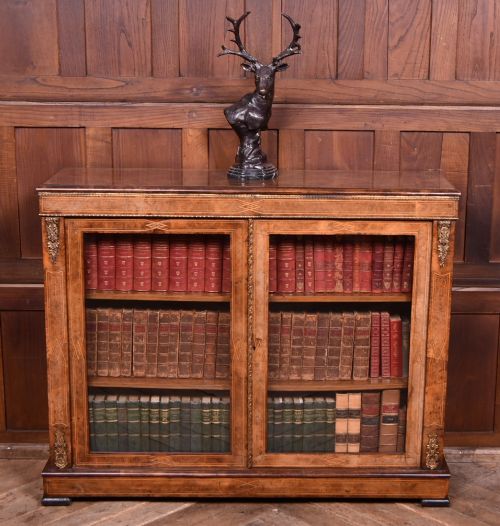
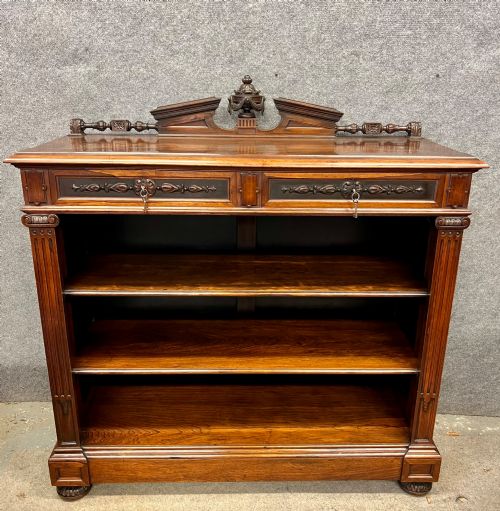

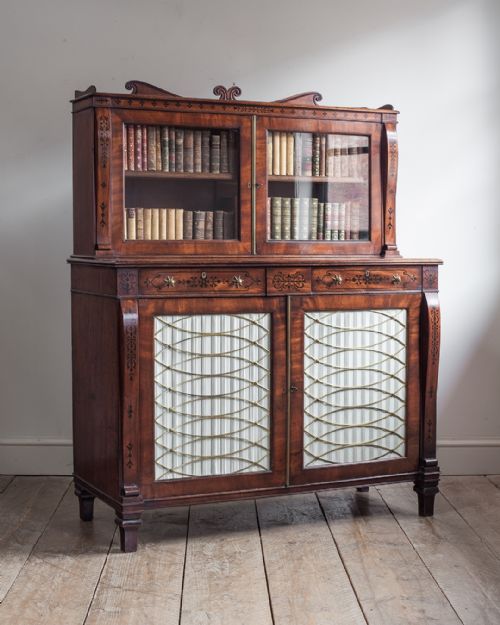

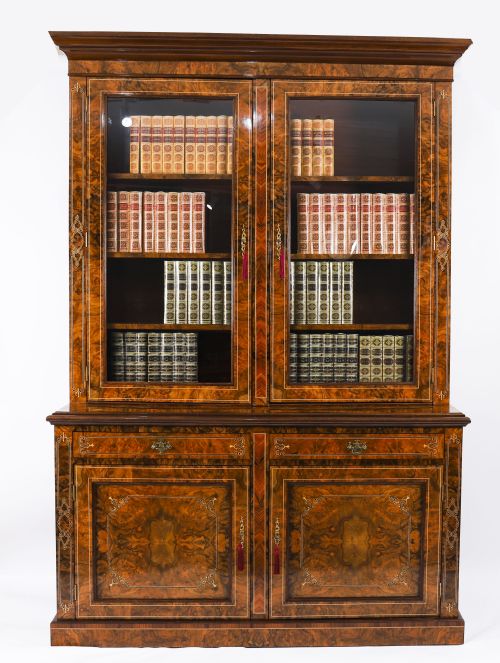


Library Bookcase Credenza
A library bookcase credenza combines open shelving or glazed display with enclosed cabinet storage, bringing substantial timber presence and practical utility to a room.
Library Bookcase Credenza
A library bookcase credenza merges the storage of books and display cabinets with the low profile of a side cabinet, appearing across the nineteenth century and into the early twentieth century. These pieces serve as substantial architectural furniture for the home, providing both glass-fronted or open shelving and lower enclosed cupboards.
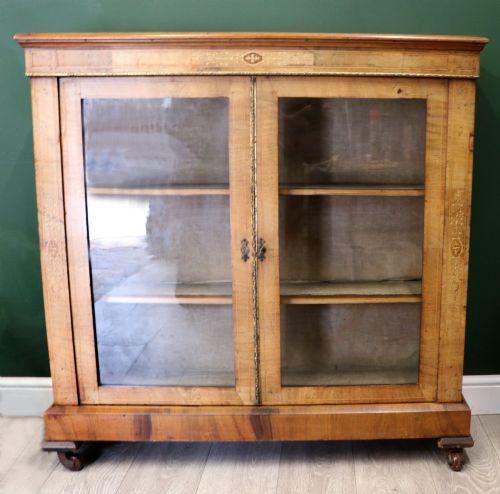
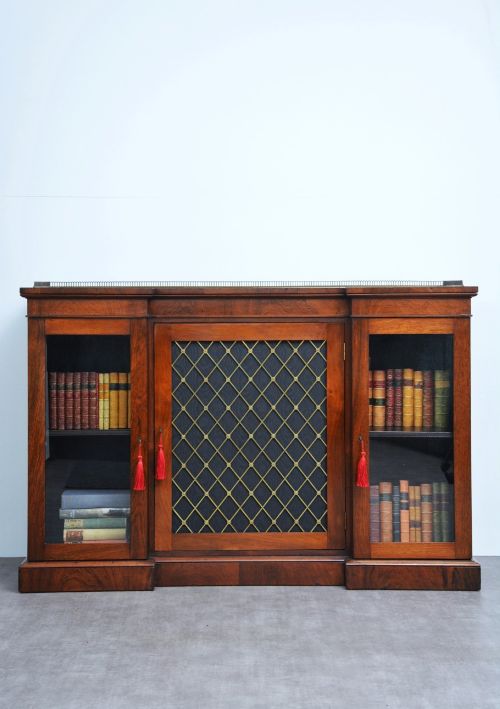
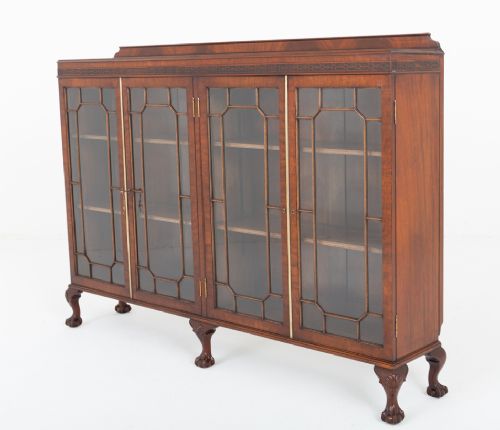
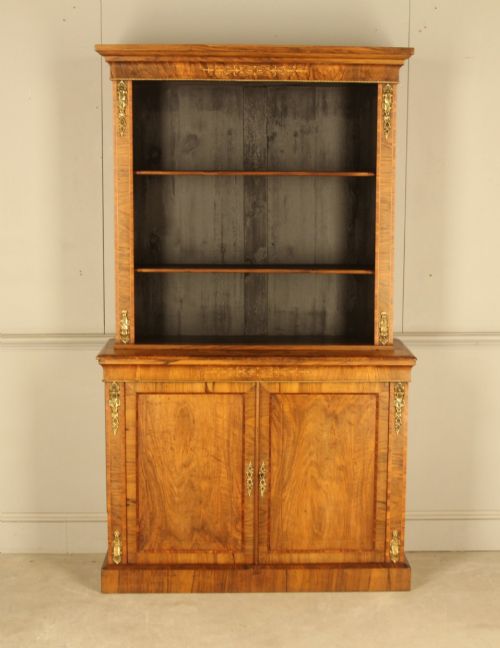
The versions met on this page span the Victorian, Regency, and Edwardian periods, utilising forms such as breakfront bookcase cabinets and side cabinets. Walnut, mahogany, and rosewood dominate the construction, often enhanced by glass doors and brass details.
Makers such as Robert Strahan, Maple & Co., and Gillows appear among the listings alongside various revival styles including Chippendale and Queen Anne. Buyers encounter both open bookcases and enclosed display cabinets tailored for household libraries and reception rooms.
Factors affecting quality
The refinement of the timber selection largely determines the distinction between pieces, with figured walnut, burr walnut, and rosewood veneers showing greater grain complexity than plain secondary woods. Finely matched veneers across breakfront facades indicate higher workshop skill.
The presence of specialised decorative elements such as brass inlay, gilt mounts, ormolu, and carved revival details elevates the execution of the piece. Attribution to known makers like Gillows or Maple & Co. also marks out the standard of construction.
Library Bookcase Credenza Retail Price Guide 2026
Typical asking prices for library bookcase credenza among the pieces listed under this phrase on Sellingantiques today, from the lower quarter to the upper quarter. They describe what is for sale here now, not the wider market.
Listings feature walnut, mahogany, and rosewood alongside brass, glass, and ormolu mounts.
Robert Strahan·Maple & Co.·Gillows
The Library Bookcase Credenza Glossary
- Breakfront
- A piece of furniture with a central section that projects forward from the flanking sections. This configuration adds architectural depth to large cabinets and bookcases.
- Ormolu
- Gilded bronze or brass used as a decorative mount on furniture. It provides metallic contrast against dark hardwoods like rosewood and walnut.
- Burr walnut
- Timber taken from the gnarled growth of a walnut tree, producing highly figured, swirling grain patterns. Cabinet makers prized it for veneering prominent doors and drawer fronts.
- Chiffonier
- A low sideboard or cabinet, frequently fitted with shelves or a small bookcase superstructure. The term overlaps with side cabinets and low library bookcases.
- Glazed
- Fitted with glass panes, typically in the doors of bookcases to protect volumes from dust while allowing visibility. This technique is common in display cabinets.
Library Bookcase Credenza: Frequently Asked Questions
What is a library bookcase credenza?
A library bookcase credenza is a hybrid cabinet combining bookcase shelving with the low storage format of a credenza or side cabinet. They typically feature wooden shelving above enclosed lower cupboards or drawers.
These pieces were designed for domestic libraries and studies to house book collections alongside concealed storage for papers and objects.
Which woods were used for these bookcases?
Cabinet makers predominantly used mahogany, walnut, burr walnut, and rosewood for these library pieces. Grain patterns such as figured walnut add decorative interest to the larger flat surfaces.
Secondary timbers like pitch pine also appear, particularly in regional Scottish pieces. Hardwoods were chosen for their structural strength and capacity to take fine veneers.
How do I identify the period?
Periods are identified through a combination of timber choice, decorative motifs, and overall architectural style. Regency and George IV pieces often display rosewood with brass inlay, while Victorian examples frequently utilise walnut with gilt mounts.
Revival styles such as Chippendale Revival borrow earlier eighteenth-century carving conventions, while Edwardian pieces introduce lighter proportions.
How should I live with one?
These large cabinets require adequate wall space and stable indoor humidity to protect historic hardwoods and veneers from warping. Position them away from direct heat sources and strong sunlight to preserve the finish.
The shelving accommodates book collections, while the lower cupboards store household items and display cabinets hold decorative objects.