





Library Bergere
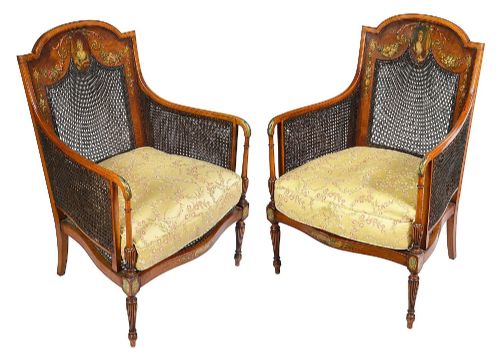
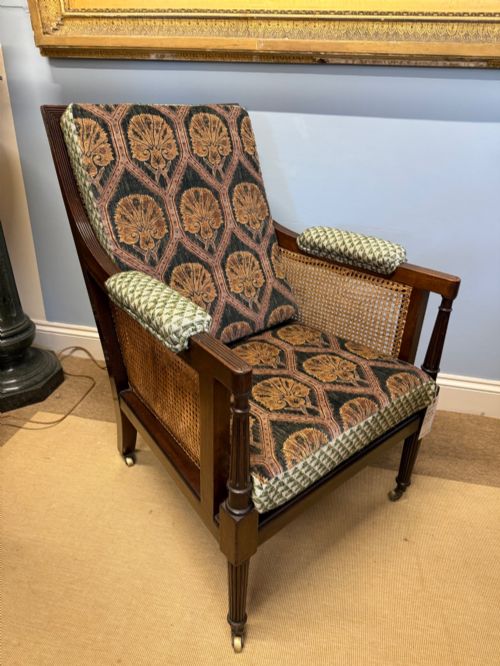
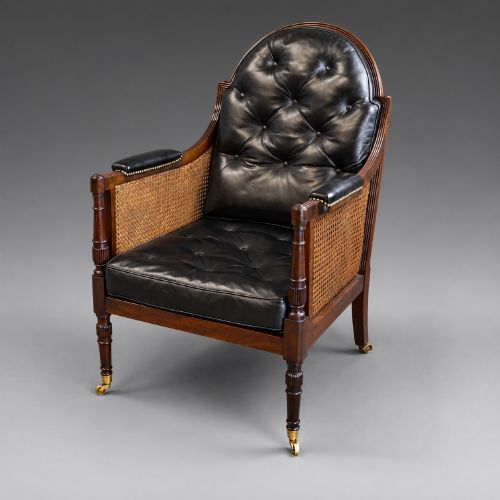
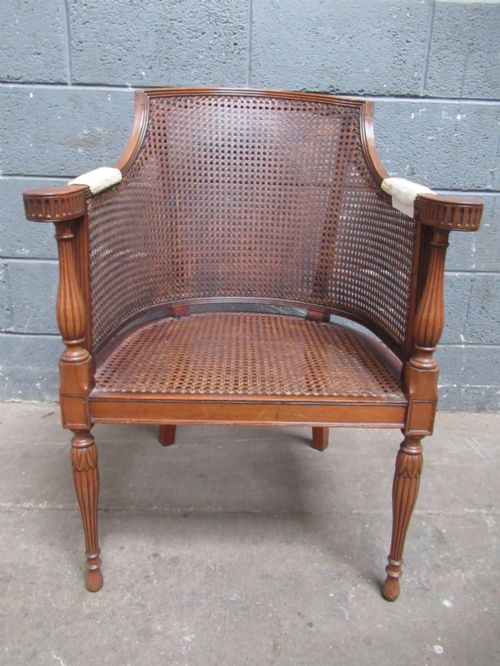
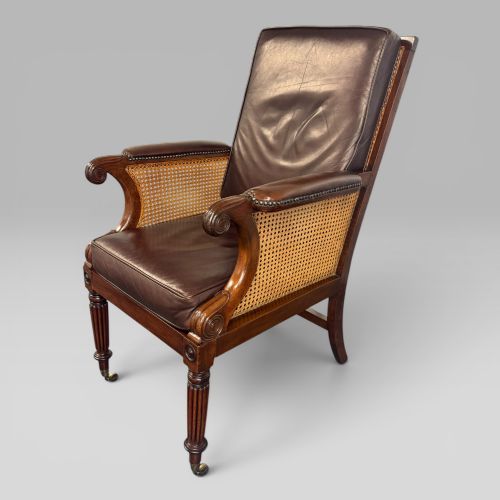
Library bergere armchairs combine generous proportions with woven cane panels, offering a restful seat designed for hours of reading.
Library Bergere
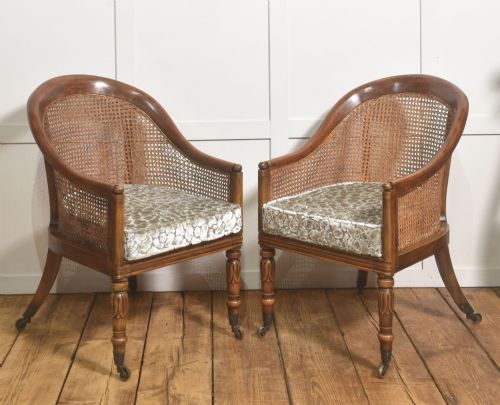
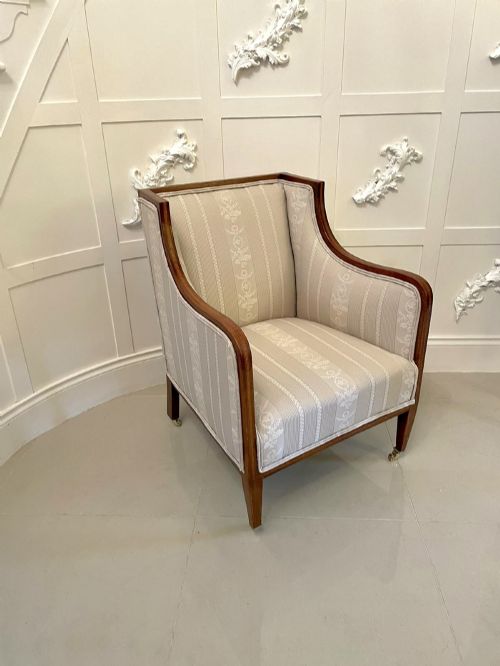
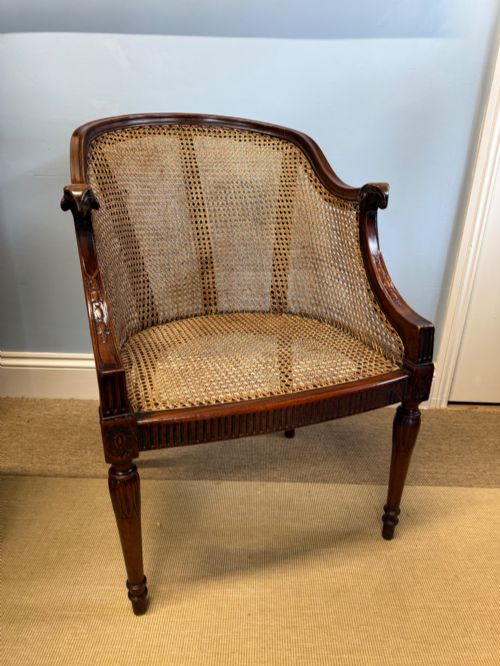
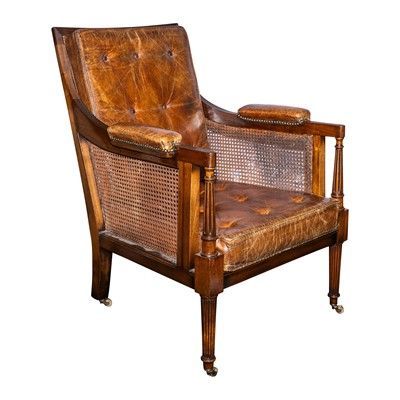
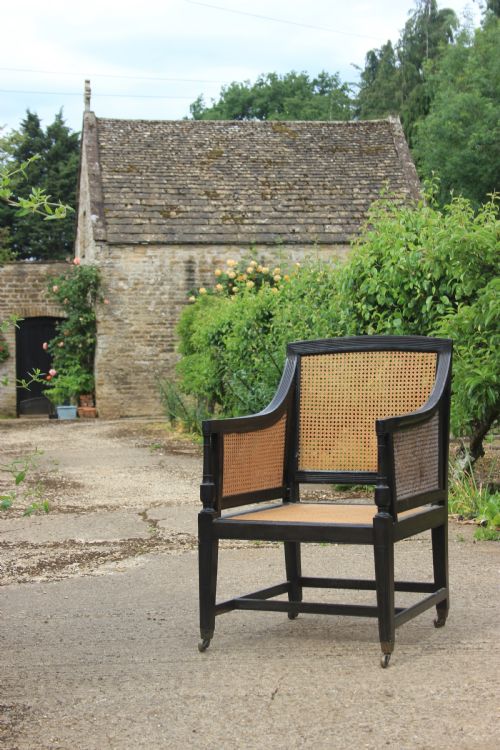
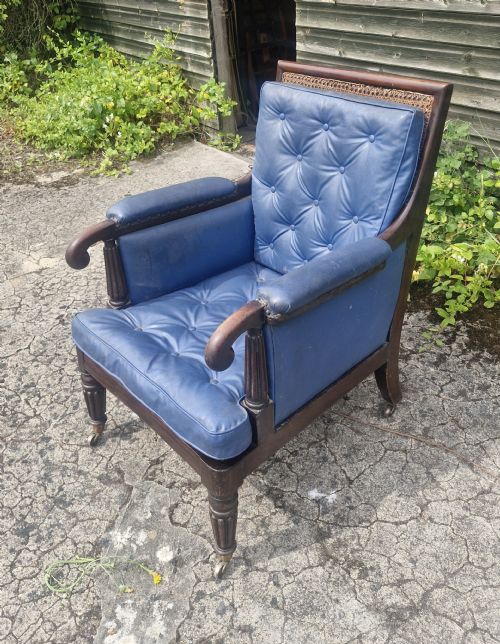
A library bergere is an enclosed upholstered armchair characterised by cane or rattan panels fitted to the back and sides. When searching this phrase, buyers encounter deep seats and substantial timber frames designed for comfort in a study or library.
The versions most commonly met on this page date from the nineteenth century, particularly the Regency and William IV periods, alongside later Edwardian and twentieth-century revivals. Mahogany forms the backbone of these pieces, supplemented by rosewood, satinwood and walnut.
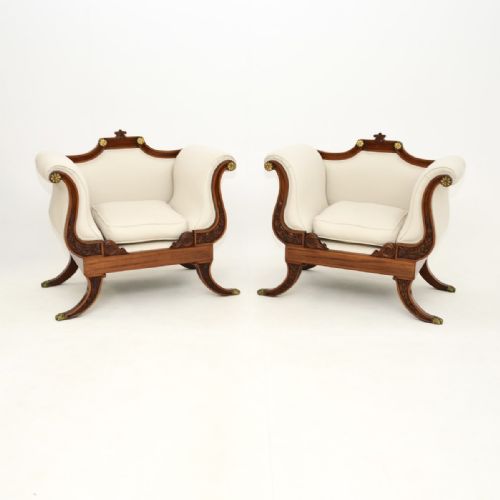
Makers and designers from the Regency era onwards adapted these deep-seated armchairs into various revival styles, including Louis XVI and Sheraton influences. Tub-shaped variants and pairs frequently appear, retaining their original function as substantial reading chairs.
Materials and construction
Frames rely heavily on dense hardwoods like mahogany and rosewood, often turned, carved or simulated with faux finishes, while ebony and satinwood provide darker or lighter contrasts. Joinery is robust to support the weight of heavy timber and continuous use in a library setting.
Cane and rattan are woven tightly into the pierced wooden channels of the back and arm panels, providing flexible support. Leather, velvet and fabric upholstery cushion the seats, frequently complemented by loose squab cushions or buttoned leather work.
Library Bergere Retail Price Guide 2026
Typical asking prices for library bergere among the pieces listed under this phrase on Sellingantiques today, from the lower quarter to the upper quarter. They describe what is for sale here now, not the wider market.
Listings feature timber frames in mahogany, rosewood, satinwood and ebony, paired with cane, leather and velvet.
Judging quality and proportion
Quality rests primarily on the grace of the frame's curvature, the crispness of the timber turnings, and the generosity of the proportions. Well-drawn chairs exhibit balanced arm sweeps and harmonious back heights that elevate them above standard utilitarian seating.
The integrity of the woven cane panels and the choice of primary timber define the tier of the piece. Finely figured mahogany, rosewood veneers, or delicate satinwood inlay distinguish the finer workshop productions from simpler domestic chairs.
Gillows
The Library Bergere Glossary
- Bergere
- An enclosed upholstered armchair with solid sides filled with cane or upholstery. It originated in France and became a staple of English Regency libraries.
- Cane
- Material split from the rattan palm and woven into panels. It provides a resilient and breathable surface for the back and sides of seating.
- Regency style
- Design spanning the early nineteenth century defined by classical restraint and archaeological revival. It draws heavily on ancient Greek, Roman and Egyptian motifs.
- Satinwood
- A durable exotic timber with a lustrous golden yellow sheen. It was frequently utilised for fine inlay and banding during the Sheraton revival.
- Tub chair
- An armchair with a continuous curved back and arms forming a single circular enclosure. This form wraps around the sitter for added warmth and seclusion.
Library Bergere: Frequently Asked Questions
What is a library bergere?
A library bergere is a deep, enclosed armchair featuring cane side panels and a solid timber frame. It was traditionally built for reading rooms and studies.
The form prioritises comfort and supportive proportions, often incorporating upholstered squab cushions and sweeping armrests for long periods of sitting.
How do I date a library bergere?
Dating relies on identifying the primary timber, secondary woods, and stylistic clues such as reeded legs or sabre supports. Regency pieces typically feature clean classical lines, while Edwardian revivals display lighter satinwood inlays.
Examining the weave of the cane and the method of frame construction also helps separate early nineteenth-century originals from later twentieth-century interpretations.
Were these chairs used at desks?
These chairs were primarily designed for reading, relaxing, and writing in libraries rather than sitting upright at standard writing desks. Their generous width and enclosed sides make them lounge seating rather than office chairs.
Pairs often survived together because they were arranged near fireplaces or reading tables to accommodate companions in private libraries.
How do I care for cane panels?
Caned panels require gentle dusting and occasional light moisture to prevent the rattan from becoming brittle. Keeping them away from direct heat sources preserves the natural flexibility of the material.
Weight should be distributed evenly, avoiding excessive pressure against the woven sides when moving the chair around a room.