


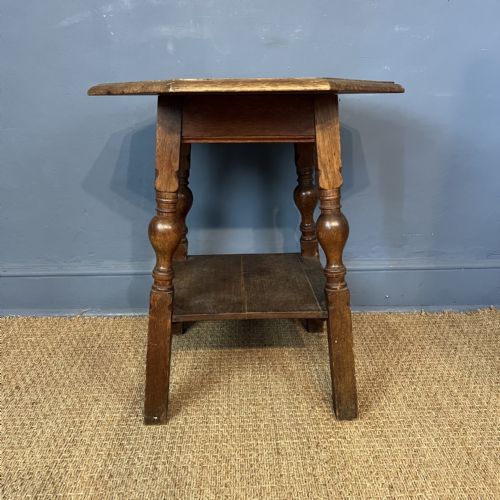


Liberty Two Tier Table
A liberty two tier table brings practical stacking surfaces and distinct Arts and Crafts character to a room.
Liberty Two Tier Table
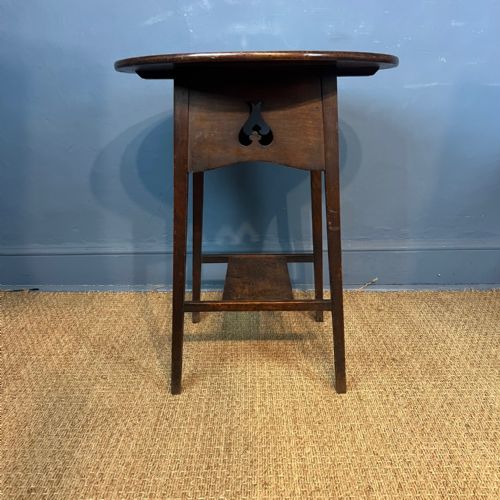
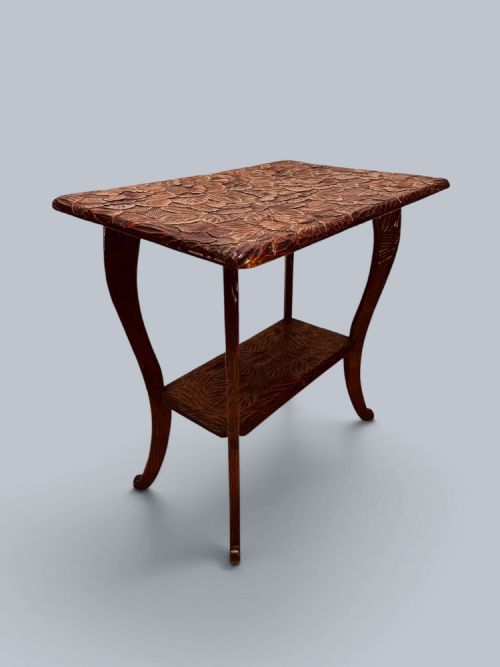
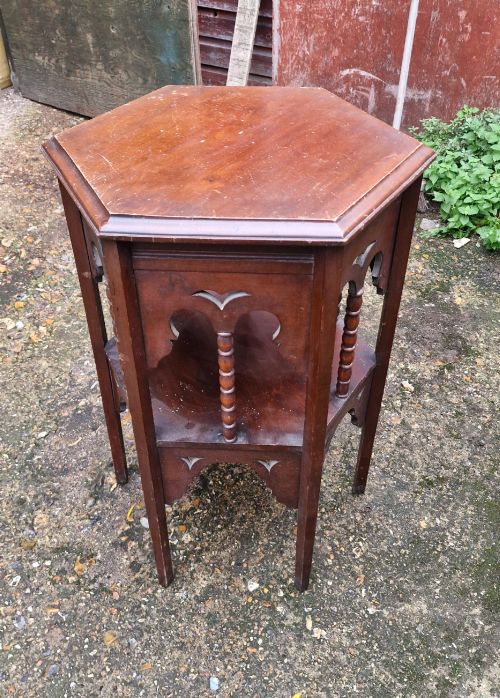
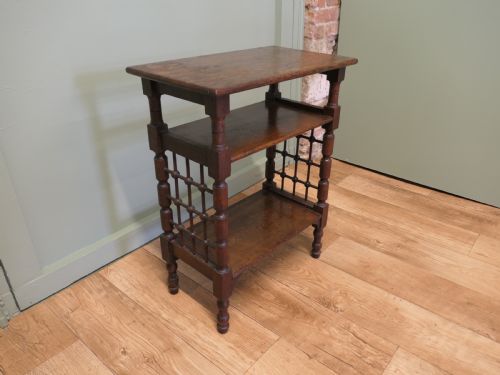
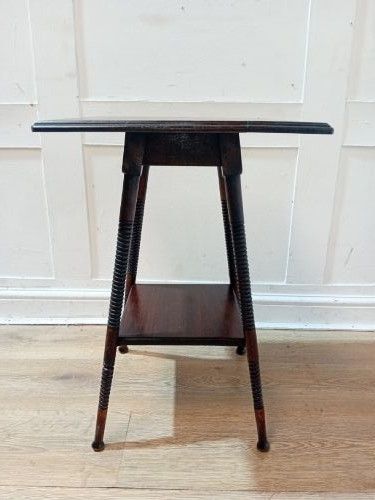
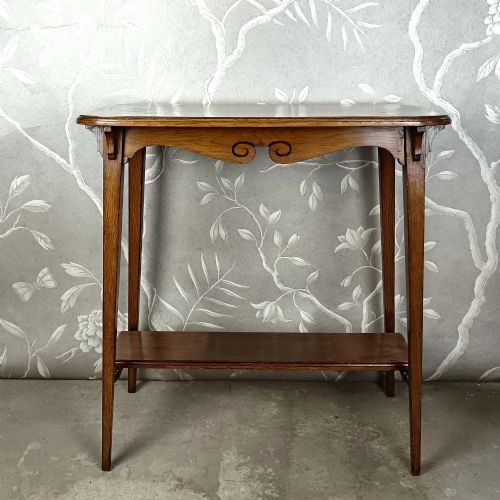
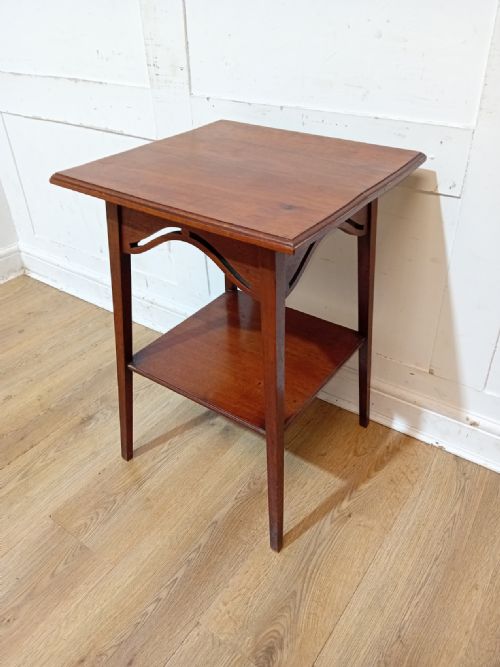
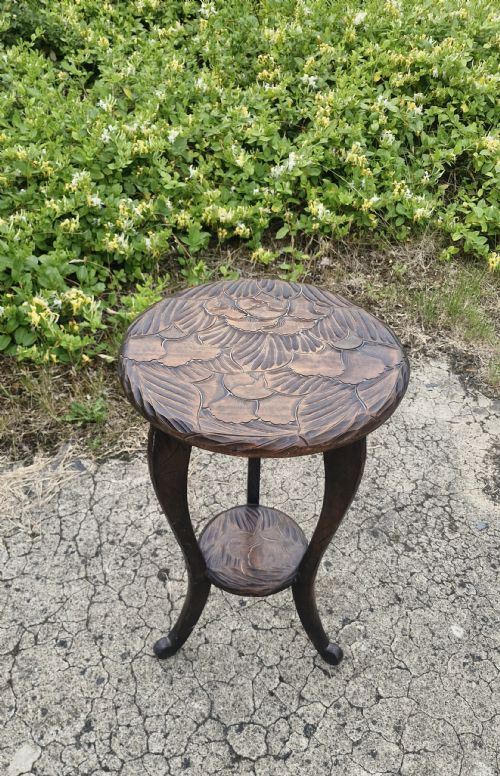
A liberty two tier table is typically encountered as a compact side or occasional table designed for domestic use during the late nineteenth and early twentieth centuries. These pieces reflect the aesthetic preferences of the period through straightforward utility combined with thoughtful decorative detail across two distinct levels.
The examples gathered here span the Aesthetic Movement and Arts and Crafts styles, moving from the 1880s through the Edwardian era and up to 1920. Most pieces are side tables or occasional tables constructed from oak, mahogany, or walnut, often featuring carved elements or fretwork.
Buyers seeking a liberty two tier table will find forms that range from simpler regional interpretations to specific pieces associated with Leonard Wyburd, William Birch, and Liberty and Co. The selection demonstrates how these makers utilised standard woods to create functional double-decked furniture for contemporary homes.
Materials and construction
Construction relies primarily on timbers such as oak, mahogany, and walnut, alongside occasional uses of bamboo, leather, and stained hardwood. These materials were selected for their durability and grain, providing a stable foundation for the characteristic two-tier configuration.
Makers employed traditional joinery to support the secondary lower shelf, ensuring the structure remained rigid despite its slender profile. Surface detailing often involved hand carving, fretwork, or simple turned supports that united the upper and lower decks.
Liberty Two Tier Table Retail Price Guide 2026
Typical asking prices for liberty two tier table among the pieces listed under this phrase on Sellingantiques today, from the lower quarter to the upper quarter. They describe what is for sale here now, not the wider market.
Even a modest side table could find itself lined with leather to stop a stray teacup from sliding during a lively Victorian debate.
Distinctions in quality
Quality in these pieces is dictated by the crispness of the timber selection and the execution of details like hand carving or fretwork. Stronger examples show tighter grain alignment in woods like oak and mahogany, along with secure, well-fitted joinery between the two tiers.
Attribution also plays a role in distinction, as pieces linked directly to workshops like William Birch or designers such as Leonard Wyburd exhibit a higher level of structural resolution. Simpler production pieces lack this refined hand, relying instead on basic utilitarian assembly.
Leonard Wyburd·William Birch·Liberty and Co
The Liberty Two Tier Table Glossary
- Arts and Crafts
- A design movement spanning the late nineteenth and early twentieth centuries that prioritised traditional craftsmanship and simple forms. It rejected mass-produced ornamentation in favour of honest construction.
- Aesthetic Movement
- A late Victorian design phase focused on beauty and artistic expression rather than narrative or moral function. Furniture from this movement often shows simpler lines and Japanese influences.
- Occasional table
- A small, movable table designed for specific, intermittent domestic tasks such as holding a lamp or books. These versatile pieces appear frequently in multiple room settings.
- Fretwork
- Ornamental perforated or cut-out woodwork patterns used to decorate panels and aprons. This technique adds visual lightness to the sides and supports of small tables.
- Two tier
- A furniture configuration featuring a primary upper surface and a secondary lower shelf for storage or display. This layout maximises utility in compact domestic spaces.
Liberty Two Tier Table: Frequently Asked Questions
What is a liberty two tier table?
A liberty two tier table is a compact side or occasional table featuring an upper surface and a lower shelf, produced during the late Victorian and Edwardian periods.
These tables were designed to provide practical surface area in smaller domestic spaces while reflecting Arts and Crafts or Aesthetic Movement design principles.
How were these tables used originally?
They functioned primarily as versatile side or occasional tables placed beside seating or in hallways to hold lamps, books, or decorative items.
The lower tier offered additional space for stacking small items, keeping surfaces tidy in the Victorian home.
How do I identify an Arts and Crafts table?
Arts and Crafts tables are identified by their use of solid timbers like oak, mahogany, or walnut, and an emphasis on honest construction rather than heavy ornamentation.
Details such as exposed joinery, hand carving, or fretwork often point toward this design tradition.
What materials are common on these tables?
Oak and mahogany form the vast majority of the structural timber, alongside walnut, bamboo, and stained hardwoods.
Some specialised pieces also incorporate secondary materials like leather inserts on the top surface.