


Liberty London Side Table
These liberty london side table pieces bring distinctive Arts and Crafts and Aesthetic Movement character into a room.
Liberty London Side Table
A liberty london side table represents the creative output associated with the famous London firm through various periods from the late nineteenth century into the early twentieth century.
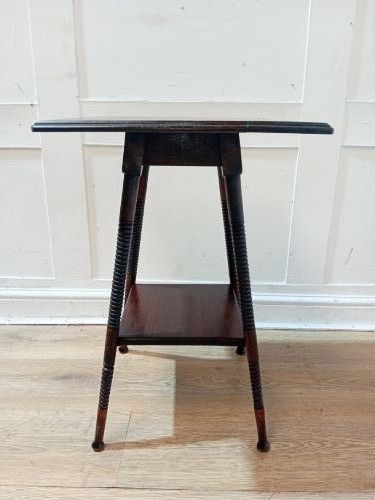
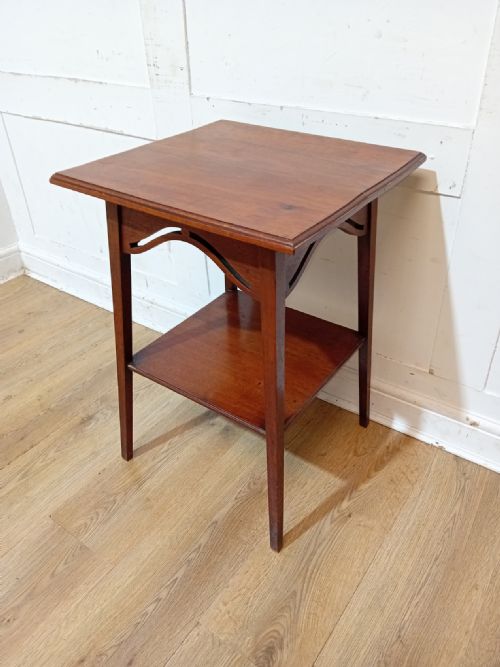
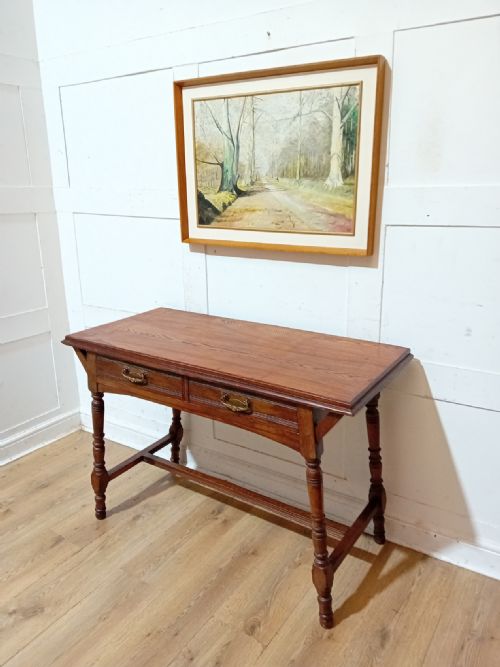
The pieces on this page span side tables, occasional tables, plant stands, and stools, reflecting the diverse domestic forms retailed or produced by Liberty.
Design influences range across Arts and Crafts, Anglo-Japanese, Japonisme, Aesthetic Movement, and Anglo-Moresque styles.
What varies in quality
The refinement of the hand carving and the selection of timber dictate the distinction between standard production and superior examples.
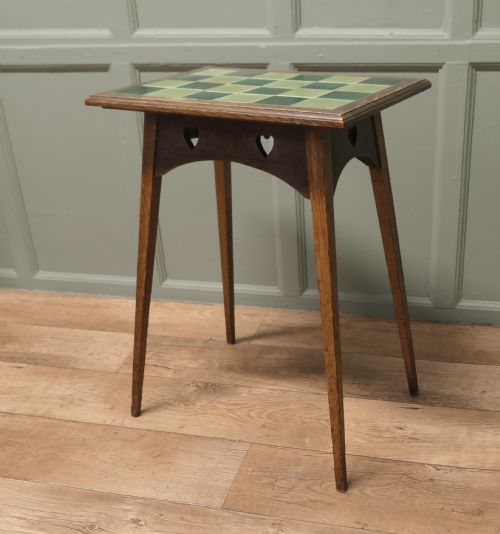
The presence of original ceramic tile insets and makers' labels adds considerable interest to individual pieces.
Heart motifs appear frequently on these tables, offering a charming touch of domestic sentiment from the late nineteenth century.
William Birch
The Liberty London Side Table Glossary
- Arts and Crafts
- A design movement prioritising traditional craftsmanship and simple forms. It rejected mass production in favour of visible construction and honest materials.
- Aesthetic Movement
- A late nineteenth-century movement that promoted art for art's sake in interior decoration. It drew heavily on Japanese and exotic motifs.
- Anglo-Japanese
- A style combining British furniture forms with Japanese decorative principles. It often featured ebonised wood and incised gilt detailing.
- Anglo-Moresque
- A style incorporating Islamic and Moorish architectural motifs into British furniture design. These pieces often feature intricate geometric fretwork.
- Ebonised wood
- Timber treated with a dark stain or finish to resemble expensive ebony. This technique was popular in nineteenth-century Aesthetic furniture.
Liberty London Side Table: Frequently Asked Questions
What periods do these tables come from?
The available pieces date from the late nineteenth century through to the early twentieth century. This spans the main periods of the Aesthetic Movement and the Arts and Crafts era.
Design styles shifted from early Moorish and Japanese influences toward plainer oak and ash furniture as the twentieth century approached.
How were these tables used originally?
These versatile items served as occasional tables for holding books, lamps, or tea services in Victorian and Edwardian drawing rooms. Plant stands and stools also provided functional display spaces.
Drop-leaf variants allowed households to adjust surface space according to immediate domestic requirements.
How do I spot an original Liberty piece?
Look for distinctive construction details such as hand-carved floral or heart motifs, specific timber choices like dark oak or walnut, and distinct stylistic crossovers like Anglo-Japanese elements.
Original retailer labels where present offer the most definitive proof of origin.
How should I care for an antique wooden table?
Keep the wood nourished with appropriate wax polishes and avoid placing the furniture in direct sunlight or near heat sources. Sudden changes in temperature can cause historic timber to split.
Use coasters and mats to protect tiled and wooden surfaces from moisture damage.