

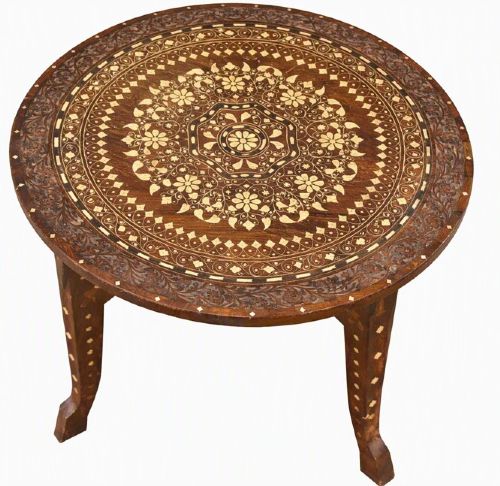


Liberty Accent Table
A liberty accent table brings distinct Arts and Crafts and Moorish character into a room, offering practical surface space with artistic pedigree.
Liberty Accent Table
When searching for a liberty accent table, you encounter compact occasional pieces, side tables, and plant stands rooted primarily in the late nineteenth and early twentieth centuries. These designs emerge directly from the aesthetic movements championed by Liberty & Co., encompassing domestic side furniture that served practical household roles.
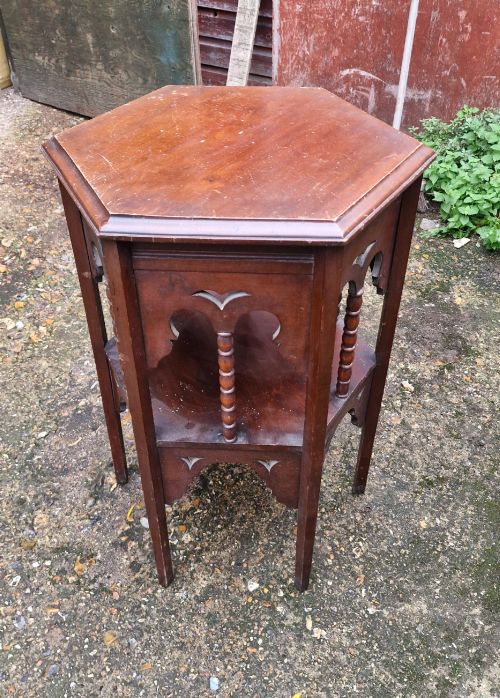
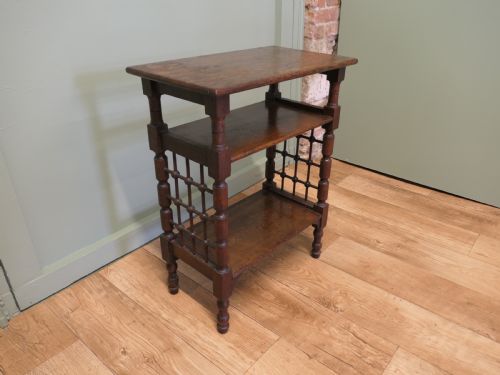
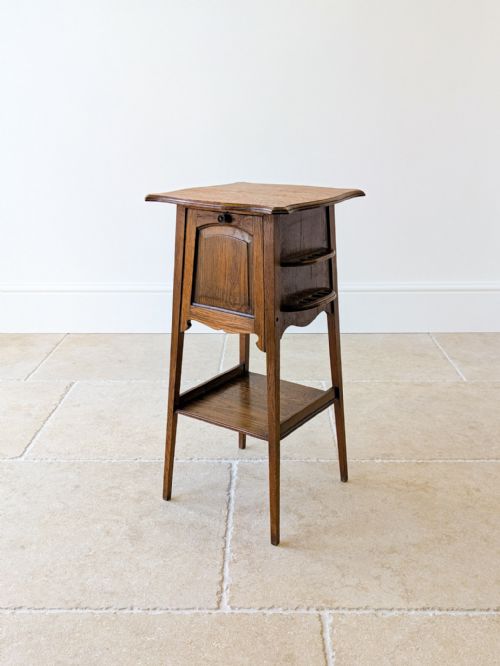
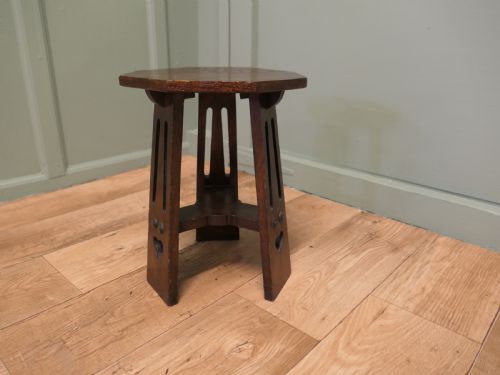
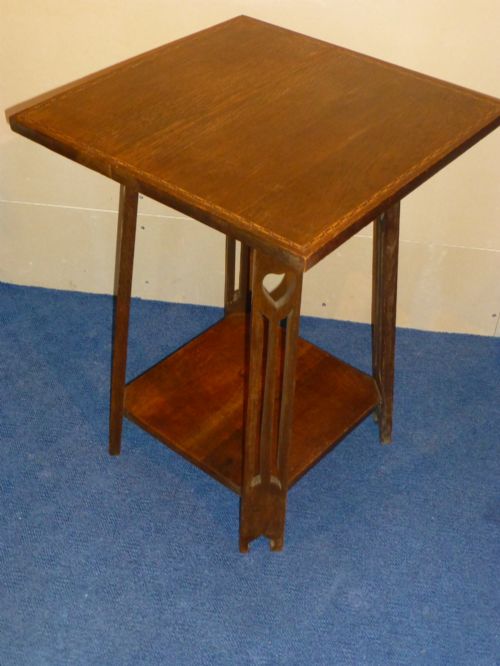
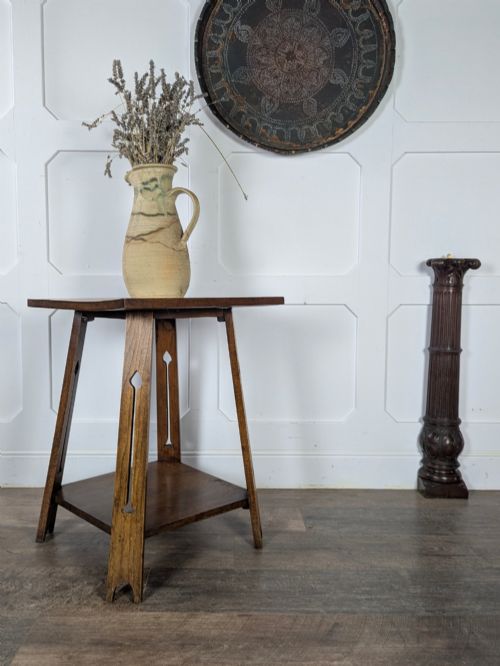
The versions most frequently met on this page span the 19th Century through the Edwardian period, heavily reflecting Arts and Crafts principles alongside Moorish and Anglo-Indian influences. You will regularly find octagonal forms, two-tier structures, and lamp tables constructed to fit flexibly into domestic interiors.
Makers associated with these pieces range from Leonard Wyburd and William Birch to Baillie Scott, whose designs defined the retailer's output. Their work translates into functional furniture intended to punctuate a room with architectural and decorative interest.
Materials and construction
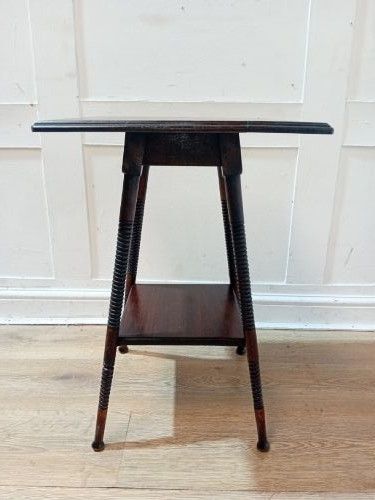
Solid oak and mahogany form the structural core of these items, frequently complemented by ebonised wood or walnut. Artisans employed these dependable timbers to support both straightforward joinery and complex decorative schemes.
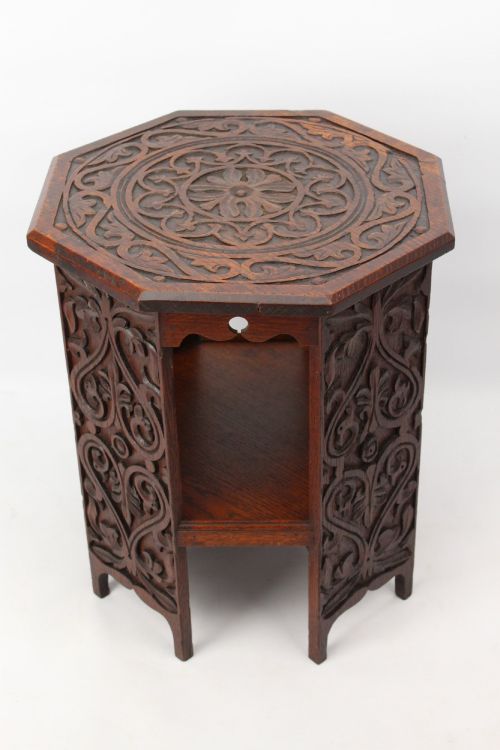
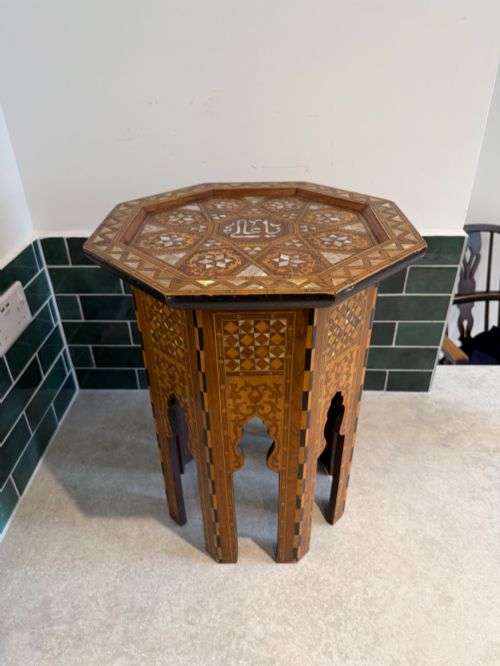
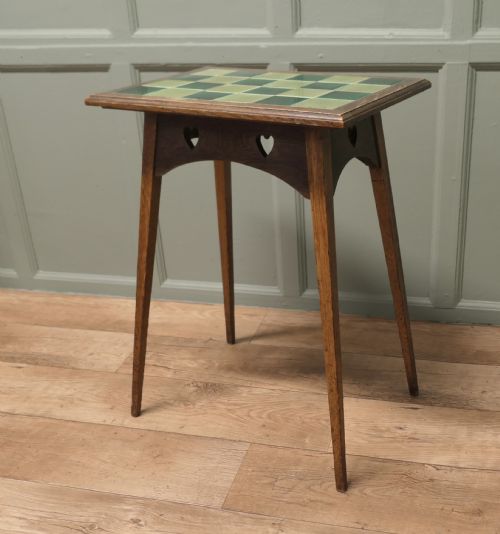
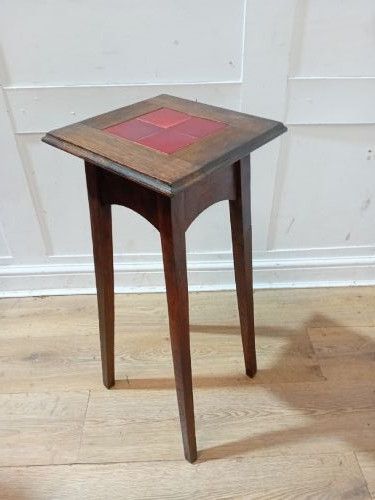
Surface ornamentation distinguishes the manufacture, utilising inlaid mother-of-pearl, bone, and chequered patterns alongside inset ceramic tiles and copper tops. Carved details and drop flaps further demonstrate the diverse woodworking techniques applied across different stylistic influences.
Liberty Accent Table Retail Price Guide 2026
Typical asking prices for liberty accent table among the pieces listed under this phrase on Sellingantiques today, from the lower quarter to the upper quarter. They describe what is for sale here now, not the wider market.
Listings here demonstrate a heavy concentration of solid oak construction paired with decorative copper and ceramic tile insets.
Assessing quality
The standard of a liberty accent table rests on the precision of its decorative inlays and the integrity of its carved woodwork. Pieces that exhibit finely fitted bone, mother-of-pearl, or ceramic tiles demonstrate a higher degree of workshop execution.
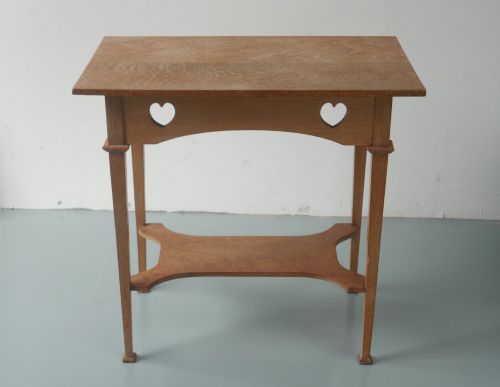
Structural honesty and the selection of timber dictate the upper tier of these furnishings. Solid oak and walnut frames with crisp, well-defined joinery command greater appreciation than simpler, mass-produced adaptations of the retailer's style.
Leonard Wyburd·William Birch·Baillie Scott
The Liberty Accent Table Glossary
- Arts and Crafts
- A design movement valuing handcraftsmanship, simple utility, and honest construction over industrial mass production. This style heavily influences the oak side tables and plant stands seen in these listings.
- Moorish Revival
- An architectural and decorative style incorporating geometric patterns, intricate woodwork, and Islamic design motifs. It appears in octagonal occasional tables and bazaar pieces associated with late nineteenth-century retail.
- Anglo-Indian
- Furniture made in India by native craftsmen adapting traditional techniques to British colonial tastes. These pieces often feature extensive surface carving and bone inlay.
- Occasional table
- A small, movable table designed for specific, intermittent use in a room, such as holding a lamp or displaying plants. They form the majority of the compact surfaces found here.
- Ebonised wood
- Timber treated with a chemical stain or finish to simulate expensive ebony. It provides a dark, contrasting backdrop for lighter inlay materials like bone and mother-of-pearl.
Liberty Accent Table: Frequently Asked Questions
What defines a liberty accent table?
These pieces are compact domestic furnishings produced or retailed during the late 19th and early 20th centuries, heavily tied to Arts and Crafts and Moorish design aesthetics.
They combine functional utility as side tables or plant stands with distinctive decorative elements like inlaid bone, copper tops, and carved woodwork.
How were these tables used originally?
Households utilised them as versatile surfaces for holding lamps, displaying decorative items, or serving afternoon tea in reception rooms.
Their compact footprints allowed them to fit easily into corners or beside seating areas where larger furniture would prove impractical.
How do I live with one?
Integrating an accent table into a modern interior works best by treating it as a focal point rather than crowding it with heavy objects.
Because many feature delicate inlays or metal tops, placing them away from direct heat sources and using coasters protects their historic surfaces.
How can I tell periods apart?
Earlier nineteenth-century examples often lean towards Moorish or Anglo-Indian styles with dense carving and intricate bone or mother-of-pearl inlay.
Later Edwardian and 1910s variants tend to emphasise clean oak construction, sometimes incorporating ceramic tiles or copper elements characteristic of the Arts and Crafts movement.