


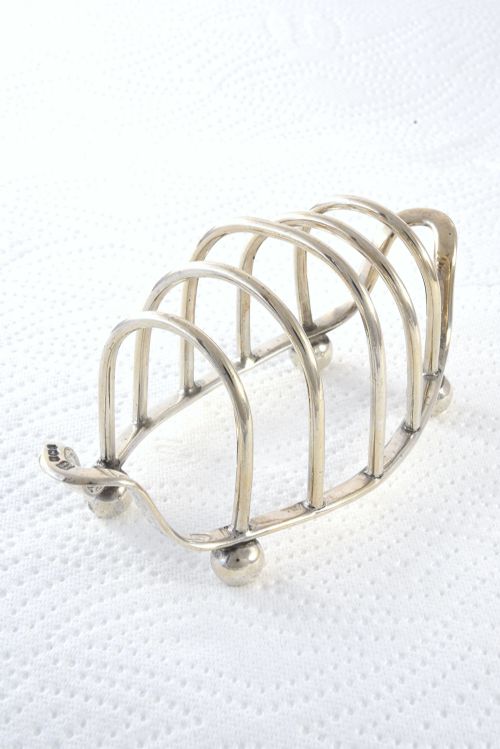


Letter Rack Stand
A letter rack stand keeps correspondence ordered on a desk, bringing period metalwork and timber into daily use.
Letter Rack Stand
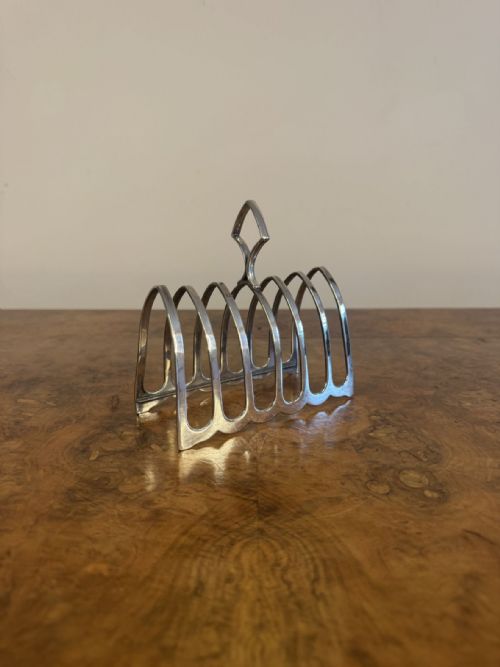
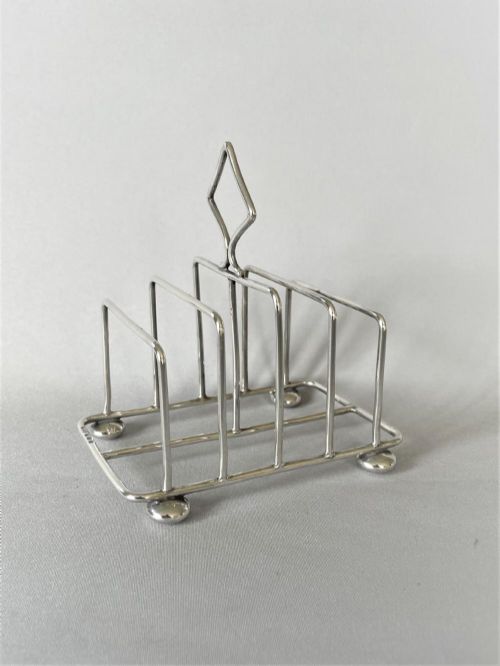
A letter rack stand is designed to organise correspondence and paperwork on a desk or hall table. When exploring the category, a buyer encounters forms ranging from compact Victorian and Edwardian desk tidies to larger magazine and newspaper stands.
The material palette spans sterling silver, silver plate, brass, oak, mahogany, and lacquer. Origins cover English, French, and American workshops from the nineteenth and twentieth centuries, encompassing styles from Rococo Revival to Art Deco.
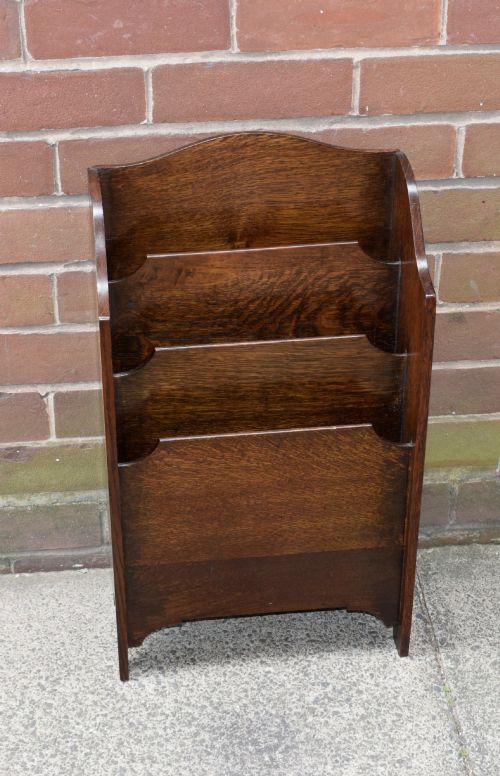
Forms include dedicated letter stands, stationery tidies, and multi-compartment racks. Many examples integrate brass with oak or pitch pine, combining utilitarian storage with decorative presence.
Materials and construction
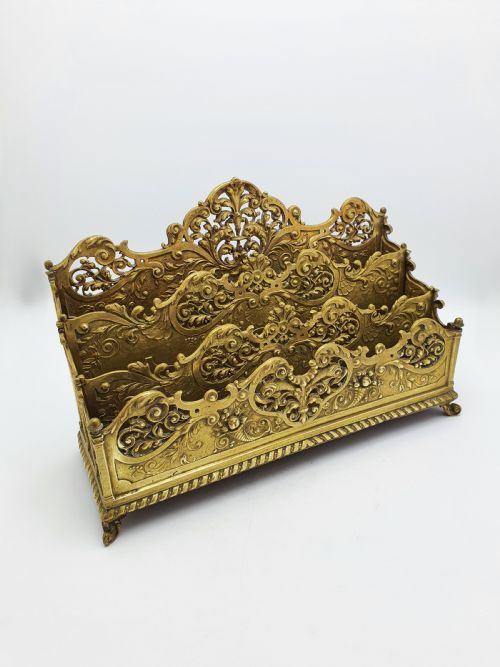
Metals such as sterling silver, silver plate, and brass are cast, pierced, or soldered to form rigid dividers and frames. Silver pieces often carry hallmarks indicating the assay office and year of production, while brass items frequently employ elaborate Rococo or neoclassical casting.
Timber examples utilise oak, mahogany, and pitch pine, shaped through carving, turning, and joinery. Compartments are fixed into stable bases, sometimes augmented with brass carrying handles or galleries.
Surface finishes include applied lacquer, floral paintwork, and guilloche enamel, adding colour and texture to metal and wood bases.
Letter Rack Stand Retail Price Guide 2026
Typical asking prices for letter rack stand among the pieces listed under this phrase on Sellingantiques today, from the lower quarter to the upper quarter. They describe what is for sale here now, not the wider market.
Several brass swans double as reading material holders.
Judging quality in a letter rack stand
Quality rests on the crispness of casting in metalwork and the precision of joinery in timber pieces. Superior examples display clean solder joints, crisp piercing, and well-fitted dividers that remain rigid under use.
Material thickness and weight distinguish finer items from lighter commercial production. Sterling silver and substantial brass or hardwood constructions offer greater durability and presence than plated or veneered alternatives.
The integrity of decorative details, such as enamel panels, carved mahogany foliage, or applied brass mounts, defines the upper tier of the selection.
The Letter Rack Stand Glossary
- Sterling silver
- A silver alloy containing 925 parts of pure silver per thousand. It provides a durable medium for desk accessories and carries official hallmarks.
- Guilloche enamel
- A decorative technique where transparent enamel is layered over engine-turned metal. It creates intricate geometric patterns beneath coloured glass.
- Toleware
- Painted or lacquered sheet metal items. This technique produces durable decorative household objects with smooth coloured surfaces.
- Rococo Revival
- A nineteenth-century design style reviving eighteenth-century scrollwork, asymmetry, and naturalistic floral motifs. It appears frequently on mid-Victorian brasswork.
- Chinoiserie
- European decorative style imitating Chinese artistic traditions. It employs painted lacquer scenes and motifs on wooden desk tidies.
Letter Rack Stand: Frequently Asked Questions
What is a letter rack stand used for?
These pieces organise incoming mail, stationery, and small documents on a desk or hall table. They keep papers upright and separated for easy sorting.
In domestic settings, they transitioned from formal studies to living rooms and hallways as correspondence increased. Their compartmentalised design prevents clutter on writing surfaces.
How do I clean a brass letter rack?
Maintenance depends on the existing finish and whether a protective lacquer remains intact. Gentle dusting with a soft cloth removes everyday particles.
Harsh metal polishes should be avoided on lacquered surfaces to prevent stripping the protective coating. Unlacquered brass may be treated sparingly with a mild metal cleaner if patina reduction is desired.
How do I date an Edwardian piece?
Edwardian items date from the reign of King Edward VII between 1901 and 1910. Stylistic cues often include lighter oak timbers and simpler Arts and Crafts influences.
Silver components frequently feature clear date letters within their hallmarks. Comparing construction methods with documented period examples confirms the era of manufacture.
Can I use an antique rack for modern mail?
Most historical compartments accommodate standard envelopes and modern stationery without difficulty. Heavier timber and metal models provide stable support for daily paperwork.
Care should be taken with oversized modern envelopes in compact nineteenth-century slots. Selecting a piece with wider dividers ensures contemporary utility.