

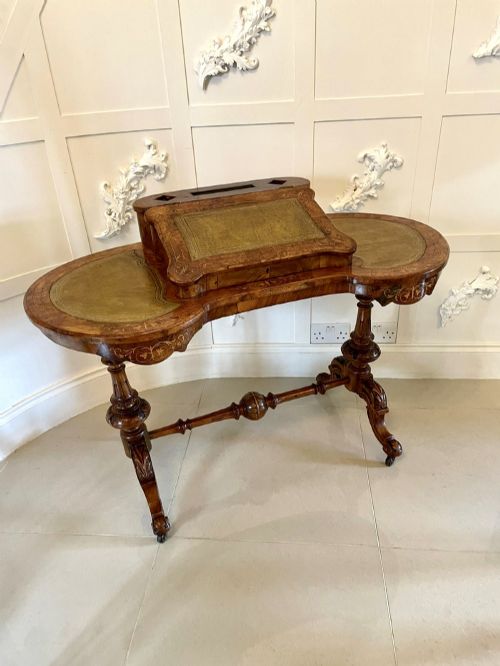
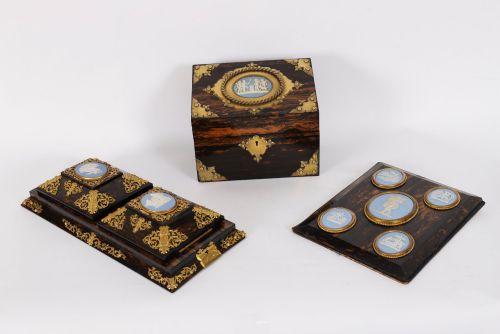




Leather Writing Box
When you search for a leather writing box, you are looking at portable desks and correspondence cases designed to hold paper, pens and documents securely.
Leather Writing Box
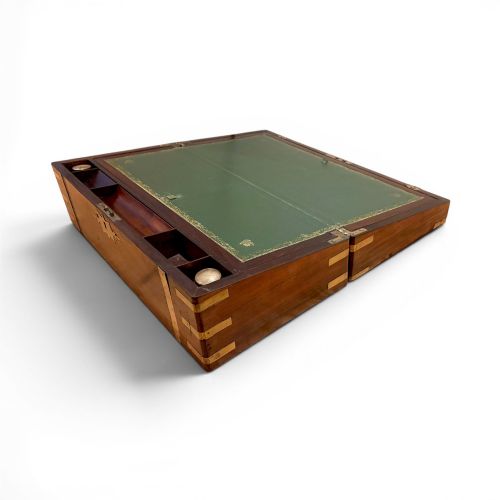
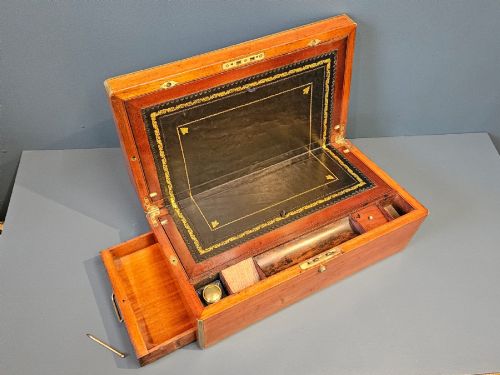
A leather writing box serves as a portable desk, correspondence cabinet or stationery holder, designed for travelling or desktop organisation during the nineteenth and early twentieth centuries. These pieces appear frequently from the Victorian and Regency periods, spanning forms such as writing slopes, document boxes, and multi-section stationery cases.
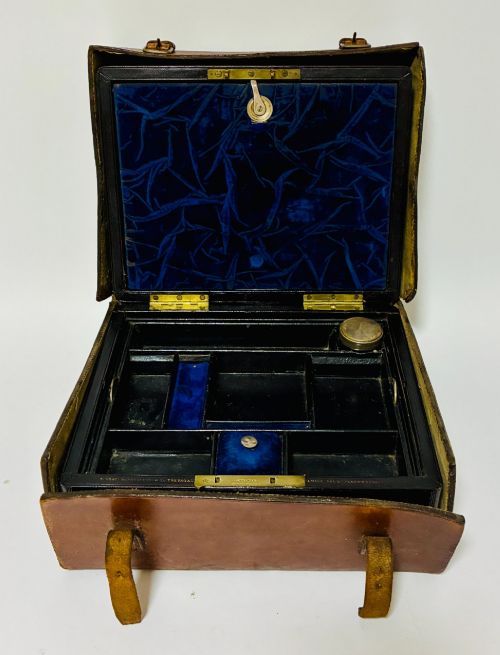
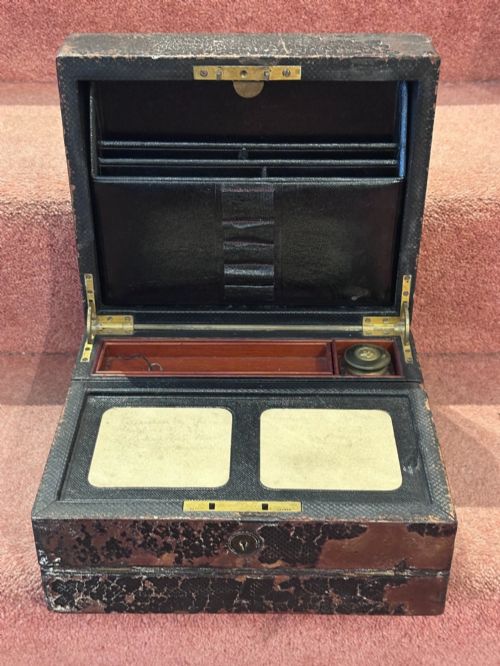
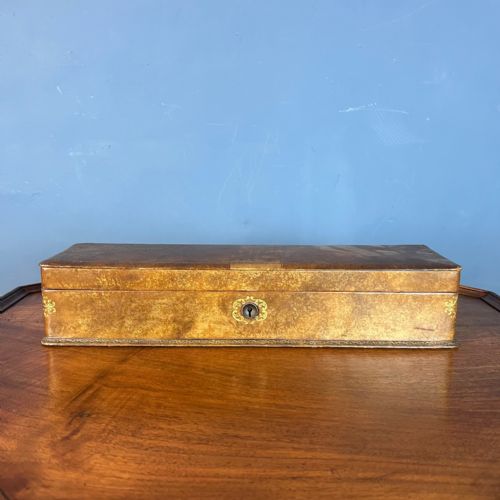
The most common examples on this page are Victorian and nineteenth-century leather-bound or leather-covered boxes, often housing fitted wooden interiors, velvet surfaces, and compartments for inkwells and pens. Many items combine a timber carcase of mahogany, walnut or oak beneath an outer skin of morocco, roan or embossed leather.
How they were made
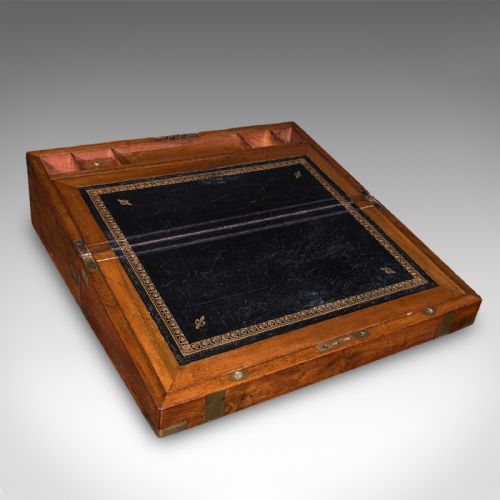
Makers constructed the primary carcase using hardwoods such as mahogany, walnut, oak or rosewood, then applied exterior coverings of morocco, pebble-grained or tooled leather. Brass binding, campaign corners and flush carrying handles were integrated to protect the box during travel.
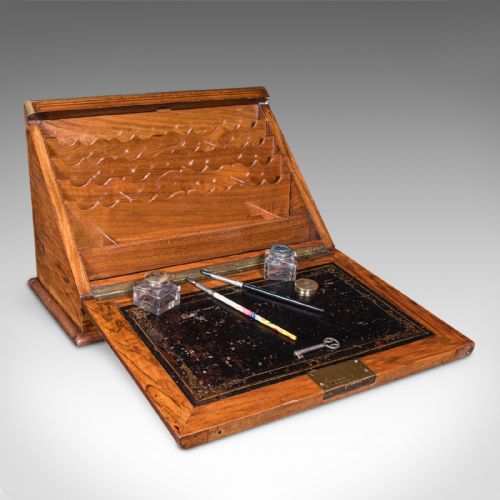
Interiors frequently incorporate velvet or silk linings, gilt-tooled leather writing surfaces, glass inkwells with brass or silver-plated lids, and secret compartments concealed beneath stationery partitions.
Leather Writing Box Retail Price Guide 2026
Typical asking prices for leather writing box among the pieces listed under this phrase on Sellingantiques today, from the lower quarter to the upper quarter. They describe what is for sale here now, not the wider market.
Listings feature writing boxes surfaced in morocco, calf, and crocodile leather, enclosing fitted interiors of mahogany, walnut, and rosewood.
What varies in quality
Quality separates through the precision of the leather tooling, the crispness of the gilt work, and the integrity of the original interior fittings such as matching glass inkwells and working locks with keys. Finer examples retain their original leather protectors and internal silk or velvet linings without heavy replacement.
Construction standards show in the choice of cabinet timbers beneath the leather skin and the complexity of the mechanism, such as double-action opening actions or integrated calendar slates.
F. West·Fitzmaurice West·Finnigans·W & J Milne·A. Forster·Lund of London·Vickery London·Sampson Mordan·Houghton & Gunn·P&F Shafer
The Leather Writing Box Glossary
- Writing slope
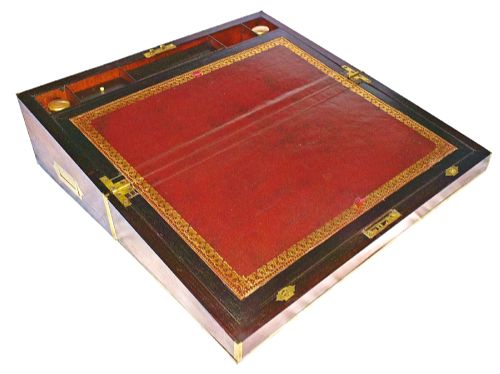
- A box with a hinged sloping lid that opens to reveal a writing surface and internal compartments for stationery. This design provided a comfortable angle for handwriting while travelling.
- Campaign writing box
- A robust box fitted with brass corners, straps and flush handles designed for military use in the field. These pieces prioritise durability and secure locking mechanisms.
- Stationery box
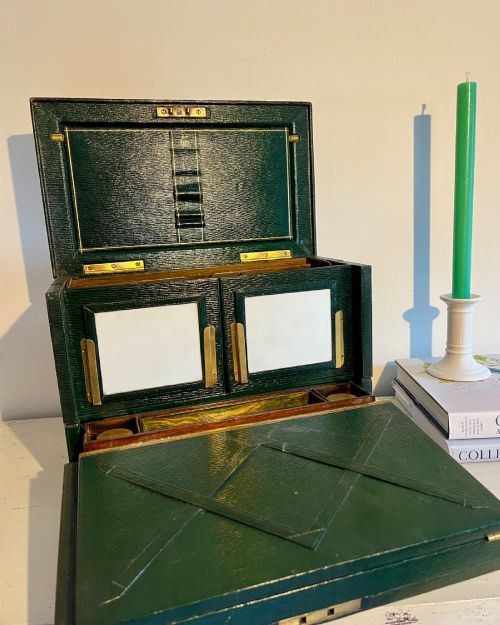
- An upright desktop cabinet or box designed to hold envelopes, paper and correspondence upright rather than flat. They often feature tiered compartments or drop-front doors.
- Morocco leather
- A fine goatskin leather traditionally tanned with sumac and characterised by a distinctive pebble grain. It accepts gilt tooling cleanly and was favoured for luxury luggage and desk accessories.
- Gilt tooling
- The technique of impressing gold leaf into leather using heated brass stamps or rolls. This decorative finish frames the edges of lids and writing surfaces.
Leather Writing Box: Frequently Asked Questions
What is a leather writing box?
A leather writing box is a portable desk or document case used for holding writing materials, letters and personal papers. They were essential desk accessories when correspondence relied entirely on handwritten letters.
Most examples feature a hinged lid or sloping front that opens to create a writing surface, accompanied by compartments for inkwells, pens and stamps.
How were these boxes used?
Owners used them for writing letters, storing important documents, and keeping stationery organised either at home or while travelling. The portable nature allowed writers to set up a functional desk in hotels, carriages or campaign tents.
Many incorporate compartments specifically shaped for glass inkwells, nibs, sealing wax and paper sheets.
How do I date a leather writing box?
Dating relies on combining the construction style of the internal fittings, the type of wood visible beneath the leather, and any maker marks or registration numbers present on the locks and hinges. Regency and Victorian examples often show distinct cabinet-making traits.
Details such as brass brasswork design, paper maker labels inside the lid, and tooling patterns help narrow the period of manufacture.
How do I care for a antique leather box?
Keep leather writing boxes away from direct sunlight and extreme heat sources to prevent the leather and internal wood from drying out. Maintaining a stable room humidity preserves both the outer skin and the silk or velvet interior linings.
Apply specialist leather dressings sparingly only when the hide feels dry, avoiding the gilt tooling and fabric sections.