

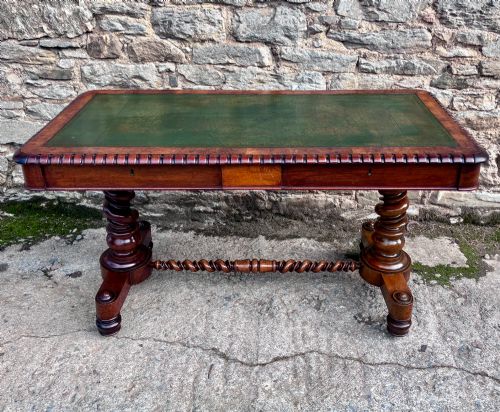
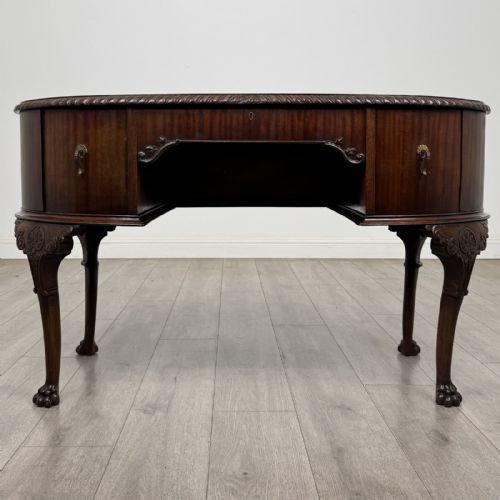
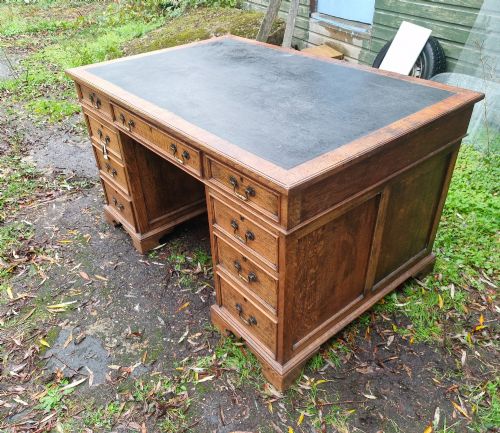
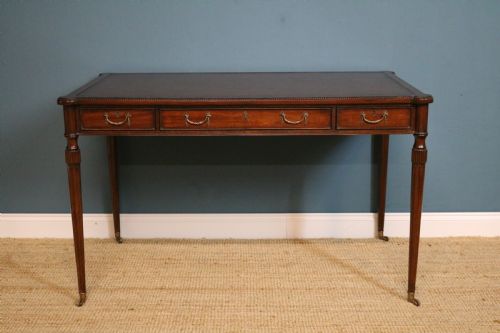
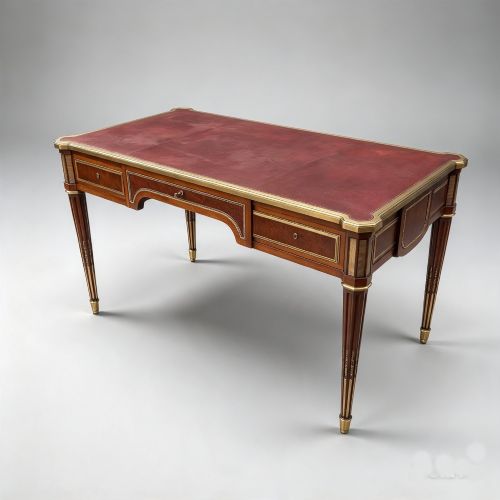
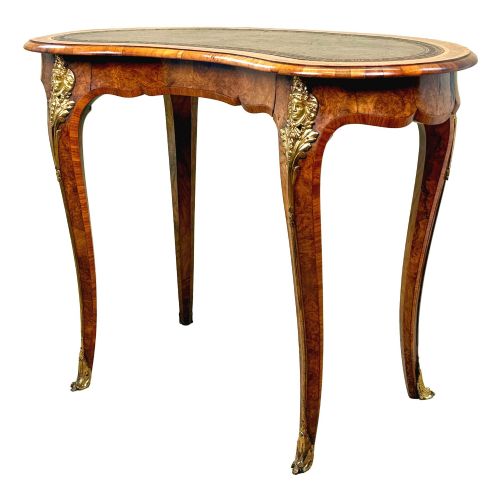
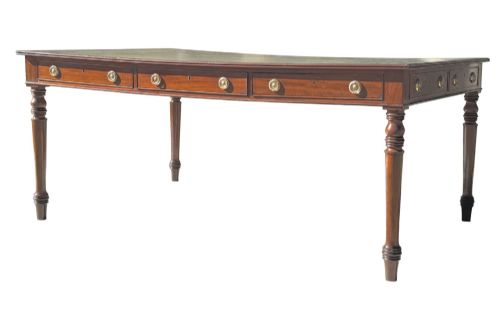
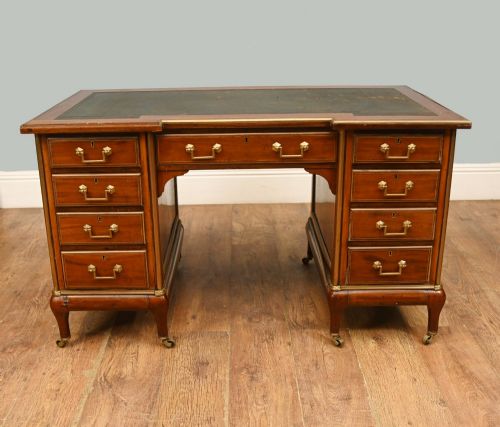
Leather Top Table Desk
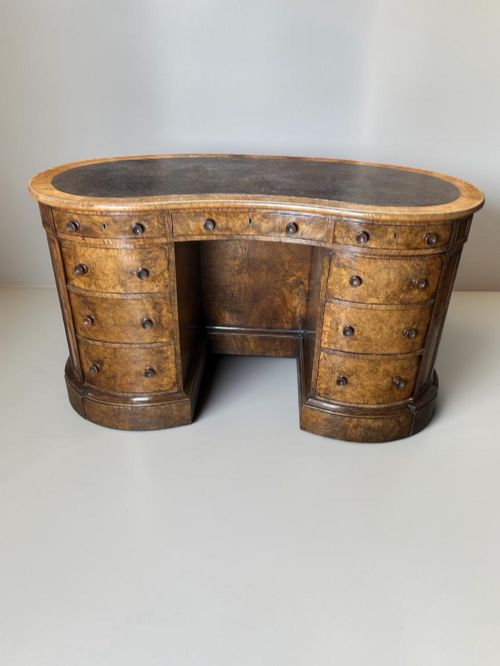
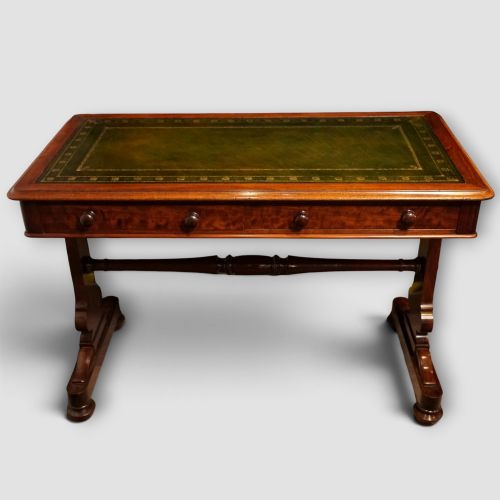
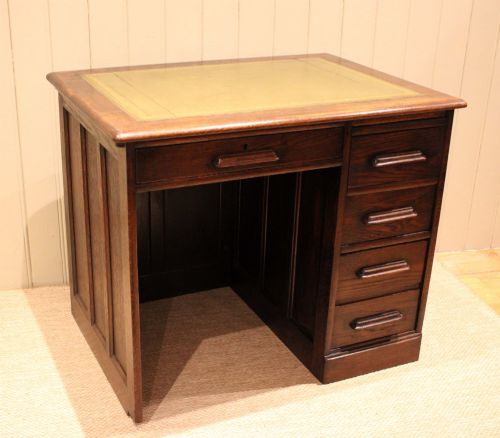
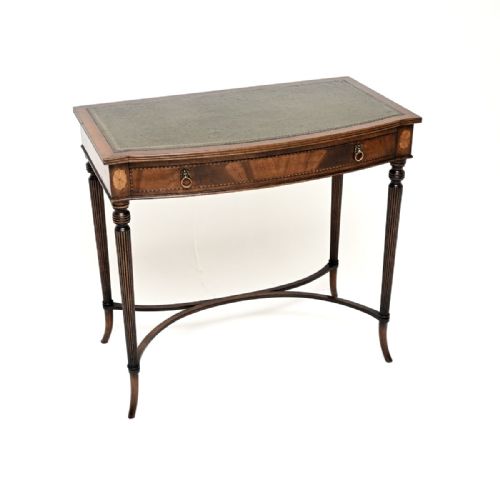
These leather top table desk examples combine practical writing surfaces with period craftsmanship, offering sturdy workspaces defined by traditional timbers and inset hides.
Leather Top Table Desk
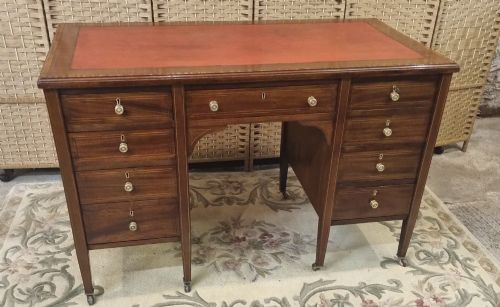
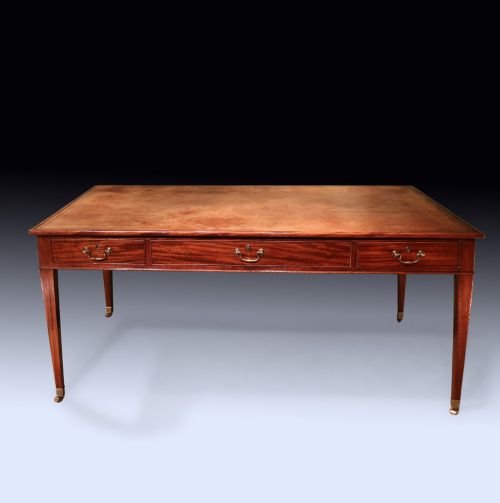
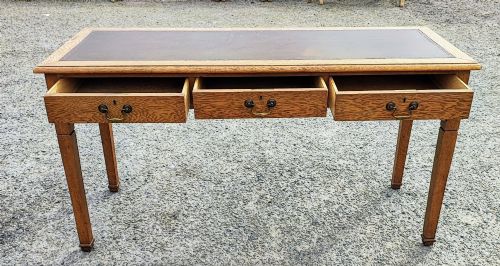
A leather top table desk serves as a dedicated workspace, bringing together traditional writing furniture and inset hide panels. When exploring this selection, buyers encounter formats ranging from compact ladies' writing desks to large partners tables.
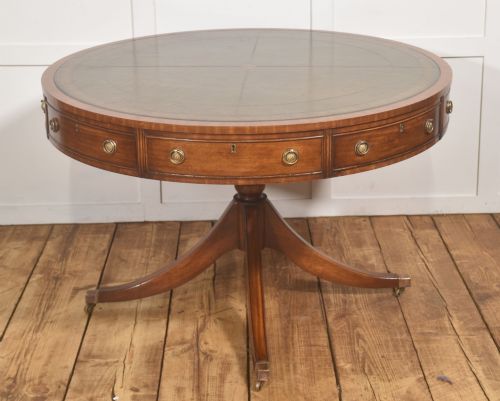
The pieces listed span multiple eras, with Victorian and nineteenth-century examples appearing frequently alongside Georgian, Edwardian, and later twentieth-century iterations. Forms vary from simple writing tables and drum tables to intricate kneehole pedestals and bonheur du jour styles.
Origins include English workshops and French cabinets, incorporating regional styling such as barley twist legs, neoclassical mounts, or parquetry. Buyers select these tables for home studies, libraries, and offices where period character is desired.
How they were made
Cabinet makers utilised dense hardwoods such as mahogany, oak, walnut, and satinwood to construct the structural carcass and drawers of each desk. Timber selection dictated the weight and durability of the finished piece, often enhanced through burr walnut or kingwood veneers.
Writing surfaces were inset with panels of leather, frequently tooled with gilt borders to frame the working area. Ormolu, gilt bronze, and brass mounts, handles, and drawer pulls were integrated to accent the woodwork across French and English designs.
Leather Top Table Desk Retail Price Guide 2026
Typical asking prices for leather top table desk among the pieces listed under this phrase on Sellingantiques today, from the lower quarter to the upper quarter. They describe what is for sale here now, not the wider market.
Listings feature woods including mahogany, oak, burr walnut, satinwood, and kingwood across Victorian, Georgian, and Arts and Crafts styles.
What varies in quality
Construction standards separate standard utilitarian office furniture from fine cabinet work, evident in the precision of drawer dovetails and the thickness of timber used in the carcase. Superior pieces retain original hardware, fitted stationery drawers, and writing slides that operate smoothly.
The choice of secondary woods and the intricacy of inlay, parquetry, or carving distinguish exceptional workshops from mass production. The condition of the leather inset and the depth of the grain in mahogany or burr walnut dictate the visual refinement of the table.
Gillow·Maple and Co·Howard and Sons
The Leather Top Table Desk Glossary
- Partners desk
- A large double-sided desk designed for two people to work opposite one another, featuring drawers on both faces.
- Drum table
- A circular library table with a rotating or fixed top surrounded by drawers, supported on a central pillar and tripod base.
- Pedestal desk
- A freestanding desk comprising a top surface resting on two supporting columns of drawers.
- Ormolu
- Gilded bronze ornamentation applied to furniture, popular in French nineteenth-century neoclassical and Empire designs.
- Bonheur du jour
- A light lady's writing desk featuring a tiered superstructure with small drawers and compartments above the main writing surface.
- Parquetry
- Geometric wood inlay patterns used to decorate the exterior surfaces of cabinet furniture.
Leather Top Table Desk: Frequently Asked Questions
What is a partners desk?
A partners desk is a large double-sided workspace built with drawers and cupboards accessible from both faces. This configuration allowed two individuals to sit and work opposite each other in a shared office or library.
These pieces typically date from the Georgian and Victorian eras and require substantial floor space to accommodate their generous proportions.
How do I care for the leather top?
Leather writing surfaces require gentle cleaning with a damp cloth and occasional treatment with appropriate leather balms to prevent drying and cracking. Avoiding direct sunlight helps preserve the colour and gilt tooling.
Protecting the hide from sharp objects and excessive moisture ensures the surface remains functional and retains its appearance over time.
Where were these desks used?
These desks served in grand libraries, administrative offices, country house studies, and private drawing rooms. Larger pedestal and partners models belonged in professional or domestic workspaces, while smaller Davenport and ladies desks suited private correspondence.
Their placement reflected the social standing and daily administrative needs of the original owners.
How do I identify a Victorian desk?
Victorian desks are typically constructed from heavy mahogany, walnut, or oak, often featuring pedestal configurations or turned legs. Stylistic revivals such as Jacobean barley twist legs or Chippendale details frequently appear during this period.
Examining the drawer construction, timber selection, and hardware style helps distinguish these pieces from earlier Georgian or later Edwardian examples.