
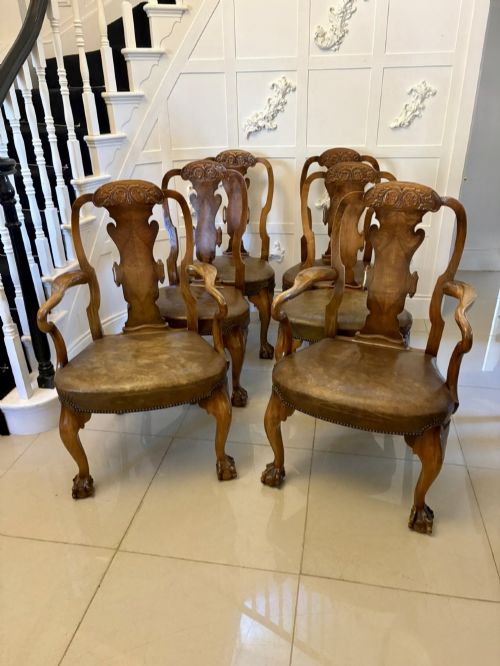
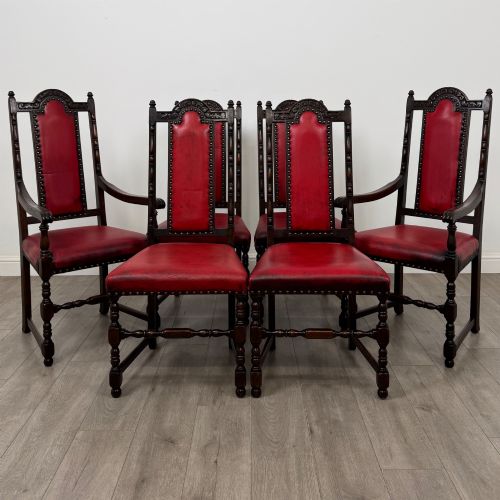
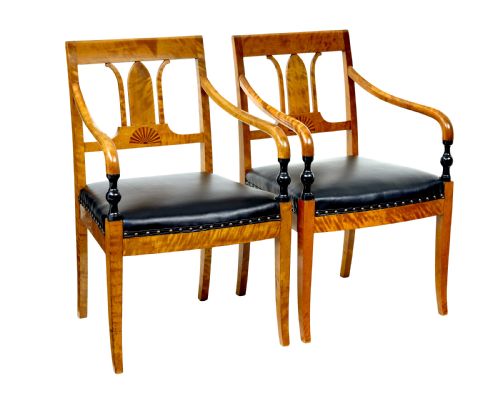
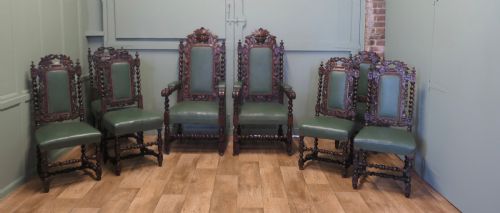
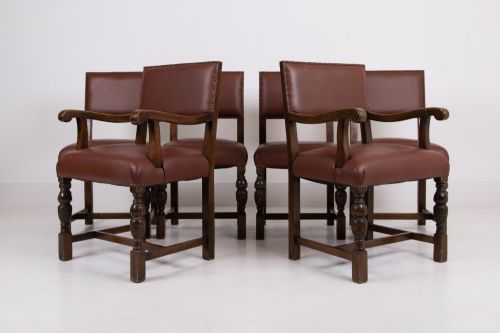
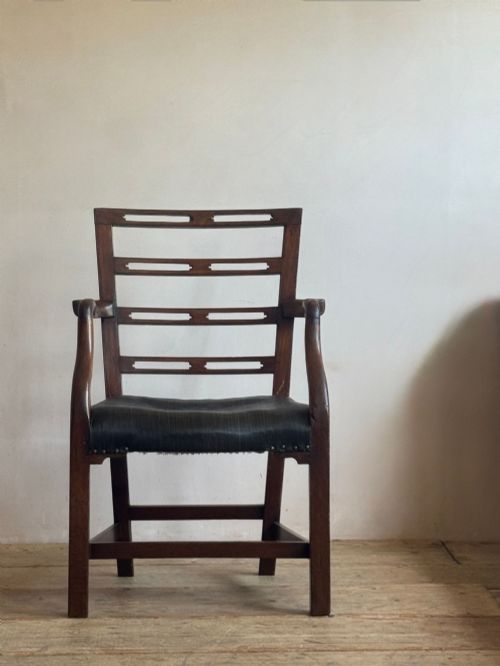
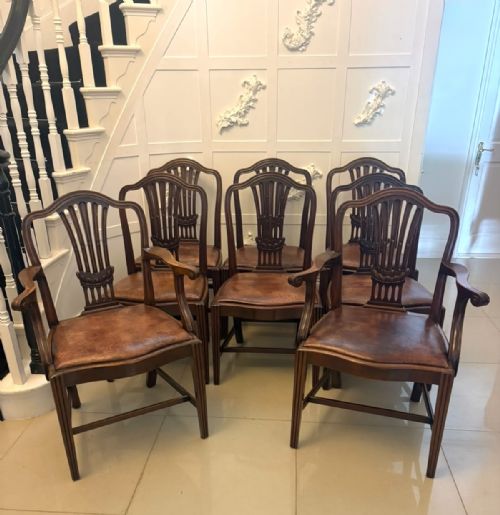
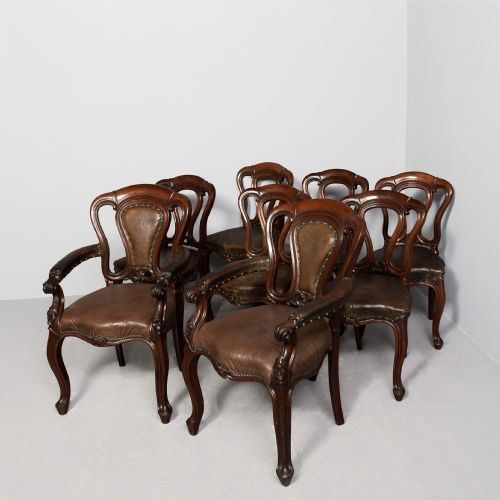
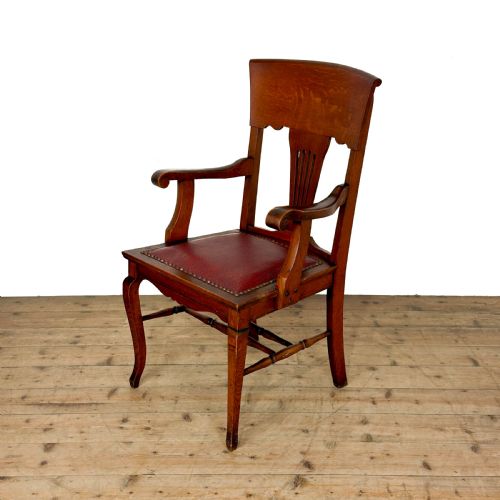

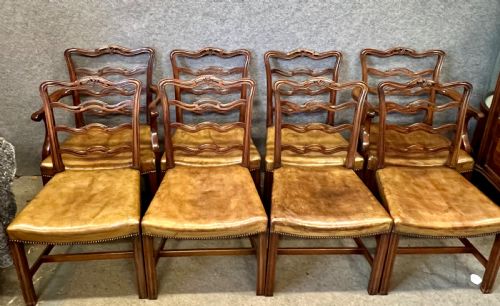

Leather Seat Carver Chair
A leather seat carver chair brings sturdy timber and durable hides together for a traditional seating choice.
Leather Seat Carver Chair
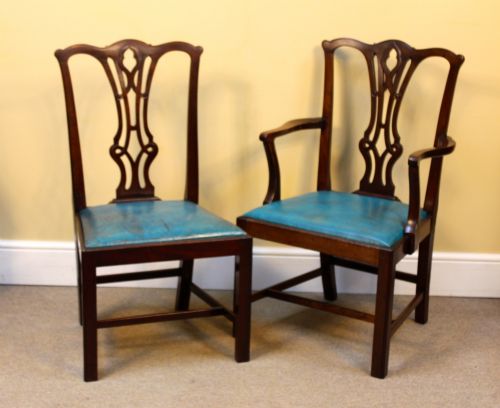
A leather seat carver chair combines a sturdy timber frame with a durable upholstered seating surface, designed to stand at the head of a dining table or serve as an occasional desk chair. These pieces emerge across several periods including the 18th century, Victorian era, and Edwardian decades, reflecting the shifting tastes of cabinetmakers over generations.
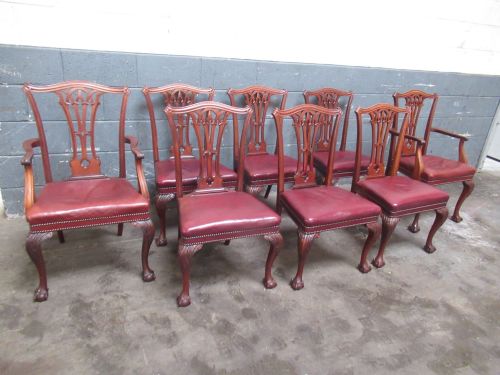
The materials span mahogany, oak, and walnut, frequently shaped into revival styles such as Chippendale, Jacobean, and Hepplewhite alongside Art Deco forms. Buyers will encounter both individual armchairs and matched pairs intended for domestic studies or formal dining rooms.
How they were made
Cabinetmakers utilised solid timbers such as mahogany, oak, and walnut to construct the primary frames, often employing traditional joinery like mortise and tenon to ensure stability. Decorative elements included carved details, curved ladder-backs, and shaped armrests.
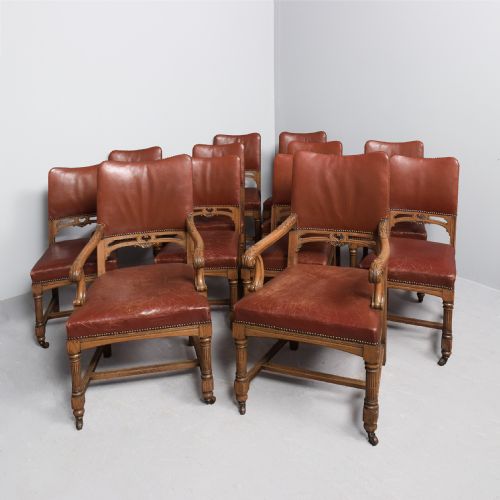
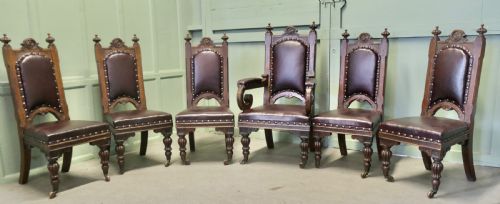
Leather was stretched over the seat frames and routinely secured with brass studs, providing a firm yet resilient surface for daily use. Woods were occasionally ebonised or polished to highlight the natural grain of flame birch, walnut, and oak.
Some oak armchairs feature woven leather seats designed to keep studying scholars firmly planted during long hours.
What varies in quality
The standard of a leather seat carver chair depends heavily on the precision of the timber carving and the integrity of the underlying frame construction. Finer examples display crisp detail in revival motifs and balanced proportions between the open arms and the sturdy legs.
The treatment of the leather also distinguishes finer pieces, where hand-dyed hides and careful studwork demonstrate superior craftsmanship compared to plain or heavily replaced upholstery.
William Walker And Sons·Shoolbred
The Leather Seat Carver Chair Glossary
- Carver chair
- An armchair, typically heavier and more substantial than a side chair, designed historically for the head of a dining table. These pieces often feature open arms and substantial timber construction.
- Shield back
- A chair back shaped in the outline of a heraldic shield, popularised during the late 18th century. This design frequently incorporates carved splats and mahogany framing.
- Ebonised
- Wood treated with a dark stain or finish to imitate ebony. This technique was frequently applied to birch and other timbers during the 19th century.
- Stretcher
- A horizontal support connecting the legs of a chair to provide structural rigidity. These can be plain, turned, or arranged in an H-pattern.
Leather Seat Carver Chair: Frequently Asked Questions
How are these chairs dated?
Chairs are dated by examining the timber species, construction methods, and stylistic revival influences. Cabinetmakers changed their decorative vocabulary across the 18th, 19th, and 20th centuries.
Details such as hand-dyed leather, ebonised wood, and specific joinery offer clear clues to a piece's age and origin.
Can I use them at a desk?
Many of these armchairs function well as desk or study chairs due to their supportive arms and sturdy wooden frames. Historical examples were often built specifically for office or morning room use.
The combination of timber and leather provides a practical surface for regular daily seating.
Are the leather seats original?
Leather upholstery is frequently replaced over long periods of use, though some pieces retain early or original hand-dyed hides secured with brass studs. The presence of older leather depends on the care the chair received.
Studded edges and patinated surfaces are common characteristics found across Victorian and Edwardian examples.