

Leather Partners Desk
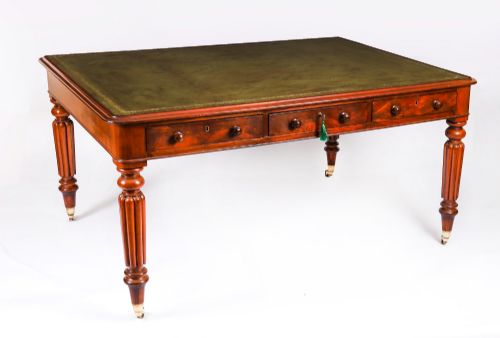
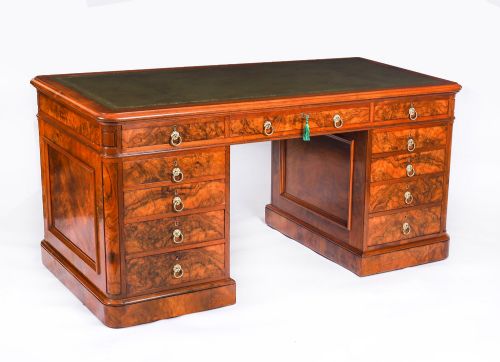
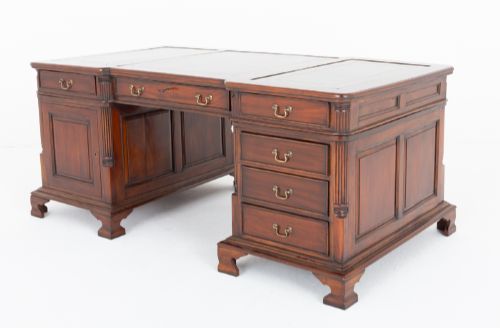
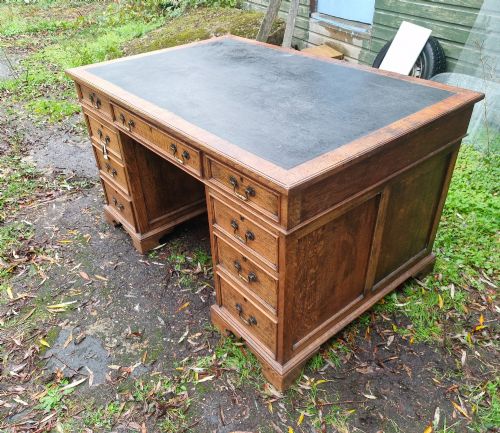
A leather partners desk is a substantial double-sided workspace designed for two people to face one another, combining rich timber with a supple hide writing surface.
Leather Partners Desk
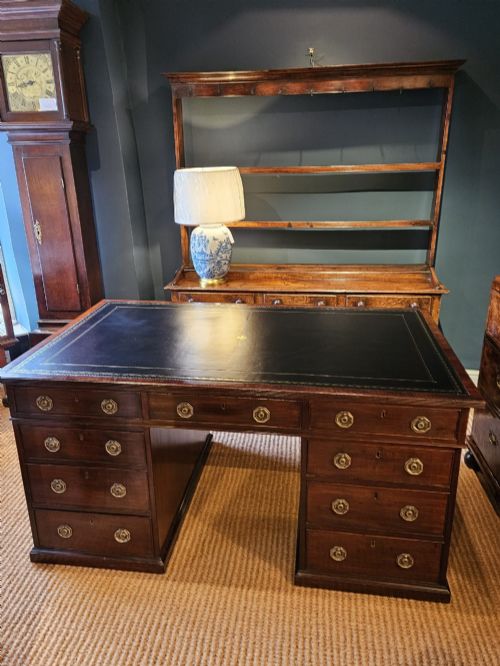
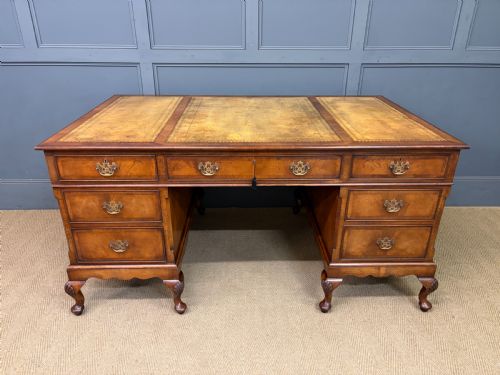
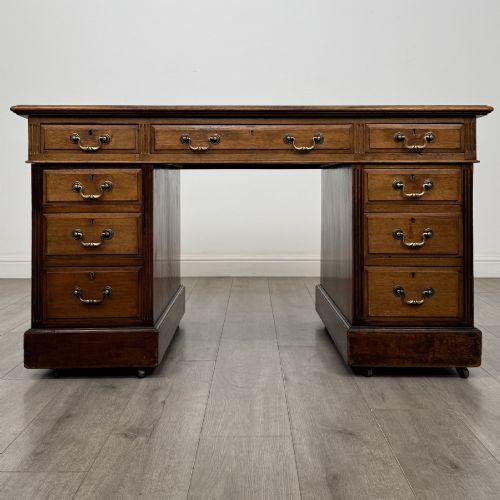
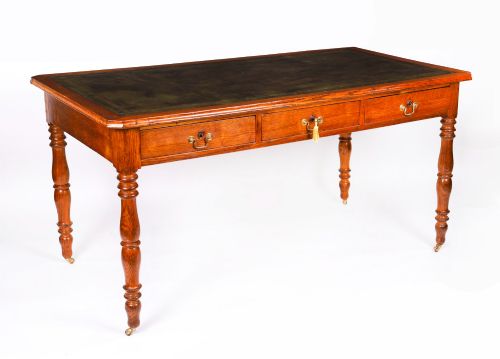
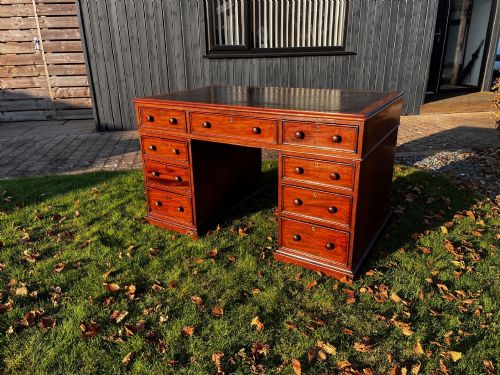
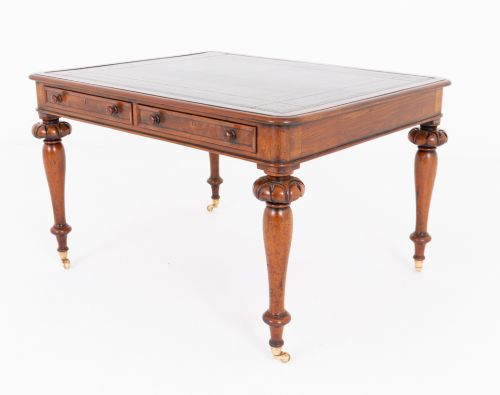
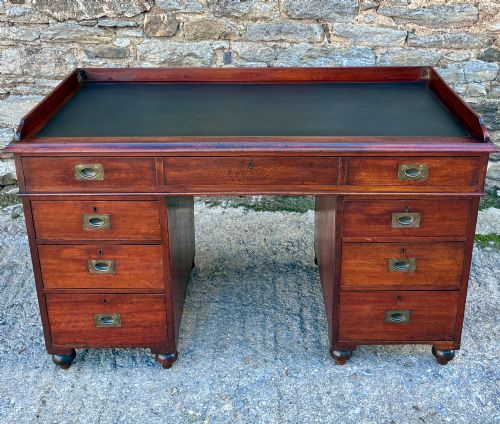
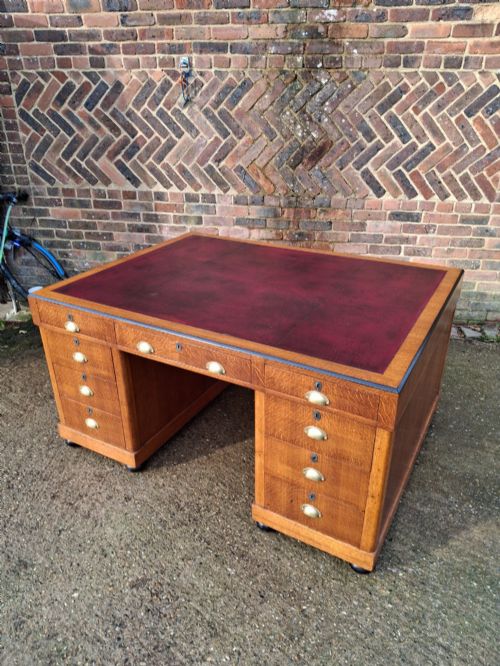
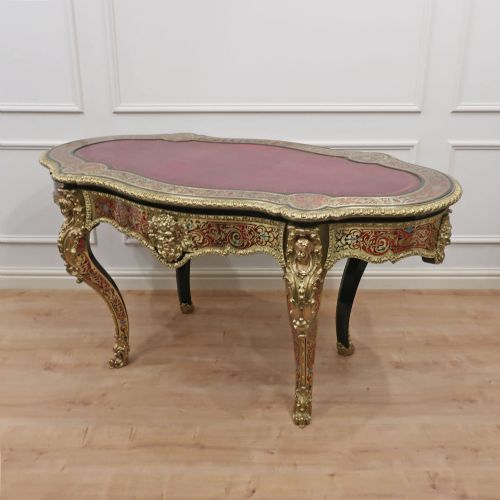
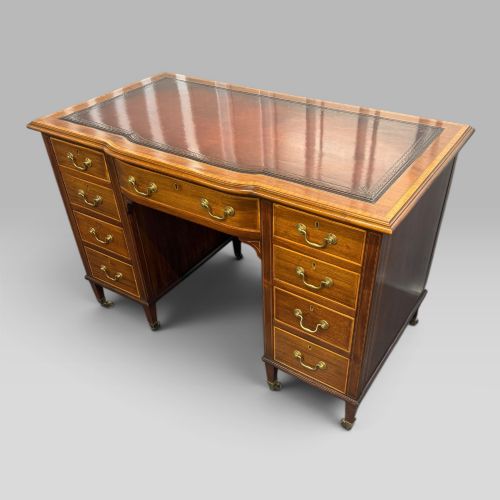
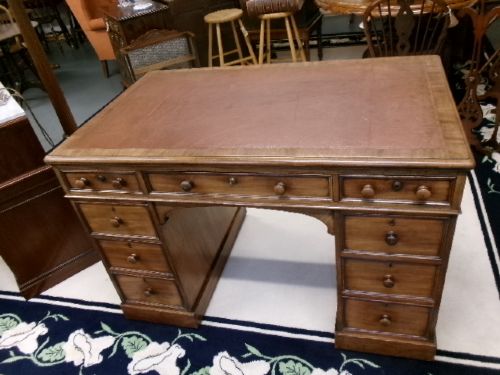
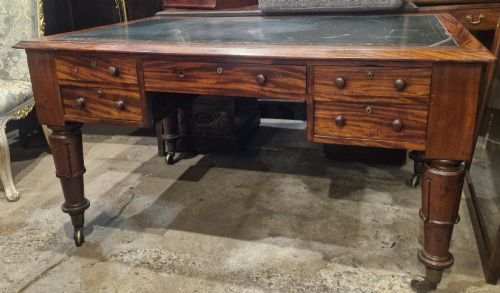
A leather partners desk offers dual-sided access with drawers and cupboards arranged on both flanks, allowing two people to work opposite each other. The pieces seen here span the 18th century, Regency era, and Victorian period, alongside Edwardian and later revivals.
Most examples encountered on this page utilise twin pedestals supporting a wide top inset with a leather writing surface. Formats range from large partners writing tables to fitted pedestal desks equipped with stationery drawers and writing slides.
How they were made
Cabinet makers built these desks primarily using solid timbers and veneers of mahogany, oak, and walnut, frequently accented with burr walnut, satinwood, and ebonised wood. Brass hardware such as handles and escutcheons complemented the heavy wooden construction.
The inset writing surfaces are formed from leather, bordered by blind or gilt tooling. Specialised examples incorporate decorative elements like ivory inlay and Wedgwood plaques alongside structural hardwoods.
Leather Partners Desk Retail Price Guide 2026
Typical asking prices for leather partners desk among the pieces listed under this phrase on Sellingantiques today, from the lower quarter to the upper quarter. They describe what is for sale here now, not the wider market.
The selection spans George III, Regency, Victorian, Edwardian, and Art Deco styles.
What varies in quality
Quality rests in the choice of timber and the precision of the cabinet work, particularly in how finely the pedestals and drawers are joined. Desks featuring figured veneers like burr walnut or satinwood demonstrate greater ambition than standard mahogany or oak versions.
The presence of secondary details, such as freestanding finished backs, integrated writing slides, and maker attribution through stamps or labels, elevates an ordinary workspace to the top of the range.
Howard and Sons·Trollope & sons·Charles Andrea Nosotti·Jackson & Graham·Edwards & Roberts
The Leather Partners Desk Glossary
- Partners desk
- A large double-sided desk designed with drawers and cupboards on both sides so two individuals can sit opposite one another.
- Pedestal desk
- A freestanding desk comprising a top supported by two independent stacks of drawers.
- Bureau plat
- A freestanding French writing table, typically featuring a leather inset top and multiple frieze drawers.
- Writing slide
- A pull-out shelf housed beneath the desk top to provide auxiliary workspace for writing or holding papers.
- Escutcheon
- A protective plate surrounding a keyhole, frequently cast in brass on these desks.
Leather Partners Desk: Frequently Asked Questions
What is a leather partners desk?
A leather partners desk is a large, double-sided piece of furniture featuring drawers and cupboards on opposite faces. It was historically designed for business partners or professionals who needed to work facing each other.
These desks are distinguished by their leather writing surfaces and substantial timber construction, often utilising mahogany, oak, or walnut across various 19th-century and revival periods.
How were partners desks used?
Partners desks served as executive workspaces in large libraries, studies, and counting houses where two people required simultaneous access to storage and writing space. The dual configuration allowed colleagues or clients to sit face to face.
Writing slides and multiple frieze drawers provided ample room for documents, inkwells, and stationery without cluttering the main leather surface.
How do I style a partners desk?
Because these desks are finished on all sides, they are traditionally placed in the centre of a room rather than pushed against a wall. This allows the double-sided architecture and timber grain to be fully visible.
Pairing the desk with a suitable office chair or leather armchair creates a focal point that suits traditional studies and large open rooms alike.
How do I tell Victorian desks apart from earlier periods?
Victorian desks often display heavier proportions and darker mahogany or oak finishes, sometimes incorporating decorative inlay, ebonised wood, or walnut veneers. Earlier George III and Regency examples tend to exhibit lighter mahogany grains and more restrained classical lines.
Examining the construction of the drawer linings and the style of the brass hardware helps determine whether a piece originates from the 18th century or later revival periods.