
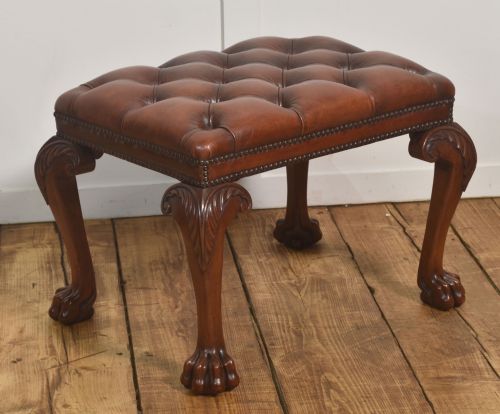
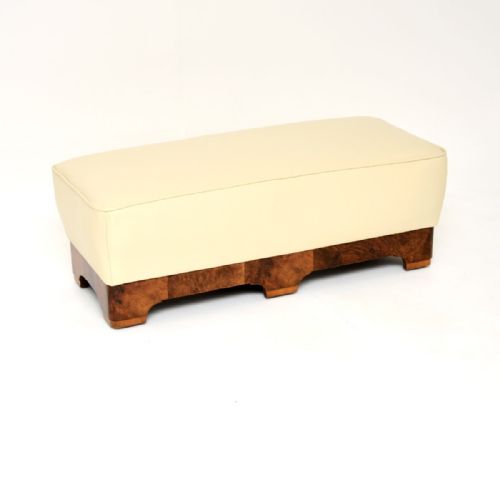
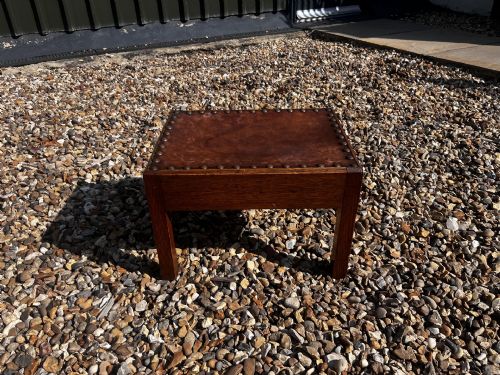
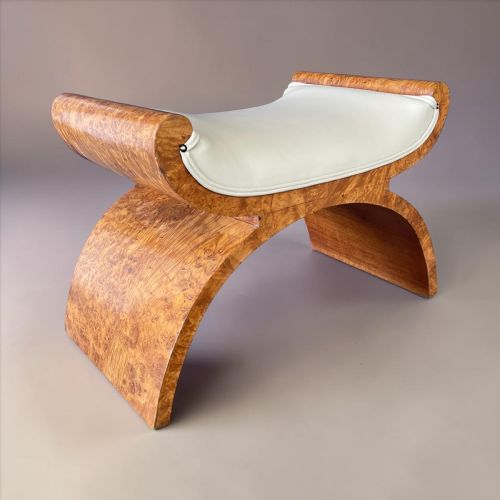
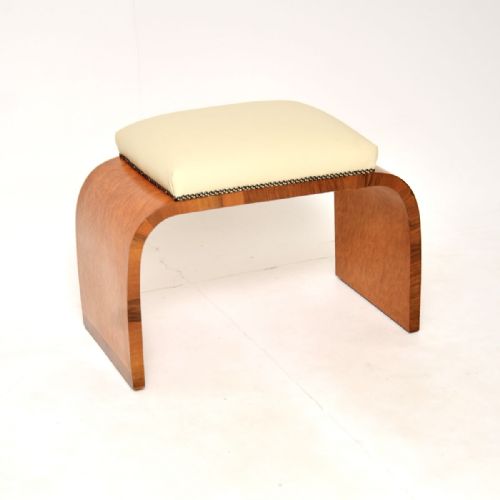


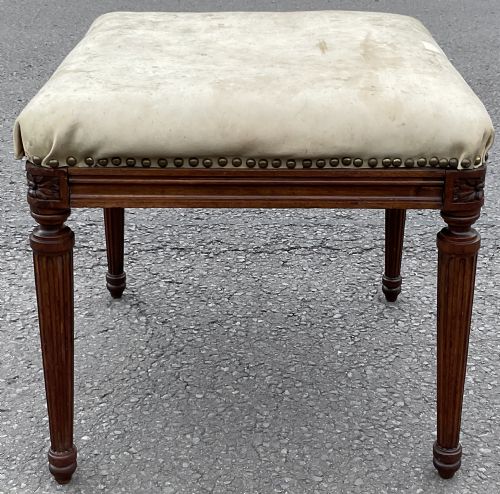


Leather Low Stool
These leather low stool designs combine practical comfort with rich timber frames, offering a neat seat for fireside or dressing use.
Leather Low Stool
A leather low stool serves as a compact seat or footrest, appearing across nineteenth and twentieth-century periods in forms such as dressing stools, footstools, and low hall seats. When you search for a leather low stool, you encounter pieces designed for varied domestic tasks, from piano practice to fireside repose.
The selections span traditional Victorian and Edwardian timber frames alongside crisper Art Deco and Arts and Crafts designs. Oak and mahogany dominate the earlier centuries, while burr walnut and birds-eye maple emerge in later twentieth-century iterations.
Makers such as Arthur Simpson of Kendal and Harry and Lou Epstein appear alongside unattributed workshop pieces. These seating forms range from simple joint stools to heavily carved or buttoned examples with brass castors.
What varies in quality
The refinement of the timber carving and the choice of secondary woods set superior pieces apart from plain production. Figured veneers like burr walnut and birds-eye maple demand greater skill in application than standard mahogany or oak.
The handling of the leather upholstery, from the tension of the buttoning to the regularity of the metal studwork, reveals the maker's hand. Heavier gauge frames and signed workshop pieces naturally command deeper interest from collectors.
Listings feature pieces spanning the Victorian and Edwardian eras, alongside Art Deco and Arts and Crafts examples.
Arthur Simpson Of Kendal·Harry and Lou Epstein·Gillows
The Leather Low Stool Glossary
- Joint stool
- An early form of wooden stool constructed with mortise and tenon joints rather than turned legs. These sturdy seats date back centuries and often feature simple rectangular tops.
- Cabriole leg
- A furniture leg that curves out and then in, resembling the leg of an animal. This classic shape appears frequently on eighteenth-century and revival seating.
- Buttoned leather
- An upholstery technique where depressions are formed in the leather by pulling thread or twine deep into the padding. Secured points often feature fabric-covered or plain metal buttons.
- Jointed frame
- A skeletal timber structure held together by interlocking woodworking joints. The integrity of these joints determines the stability of the seat.
- Castor
- A small wheel mounted on a swivel attached to the foot of a piece of furniture. Nineteenth-century examples often use brass mountings for smooth rolling.
Leather Low Stool: Frequently Asked Questions
How do I clean antique leather?
Use a soft, dry cloth to remove dust from the surface of the hide. Avoid harsh chemical cleaners that strip natural oils from old leather.
Condition the leather periodically with a specialist wax or balm to maintain flexibility. Test any product on a hidden area first.
Were these stools used as footstools?
Many low stools functioned primarily as footrests or gout stools rather than for sitting. Their compact height matched the low seating arrangements of Victorian parlours.
Heavier frames with buttoned tops served double duty as occasional seats. Check the upholstery wear to determine its original function.
How do I date an oak stool?
Examine the timber colour, tool marks, and construction methods used in the frame. Early pieces utilise pegged mortise and tenon joints.
Revival pieces from later periods often mimic earlier styles but reveal machine sawing or modern fixings upon close inspection.
Can I reupholster a vintage stool?
Upholstery can be replaced if the original leather is beyond conservation. Traditional materials like horsehair padding and hand-hammered studs preserve historical integrity.
Consult a restorer to assess whether the existing hide holds collectible value before undertaking changes.