






Leather Insert Library Table
A leather insert library table is a substantial writing piece scaled for grand rooms, combining rich timber with a tactile surface for everyday use.
Leather Insert Library Table
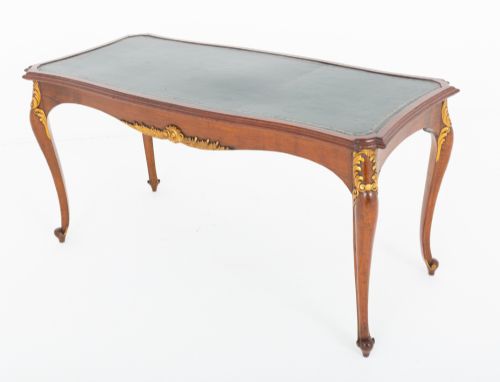
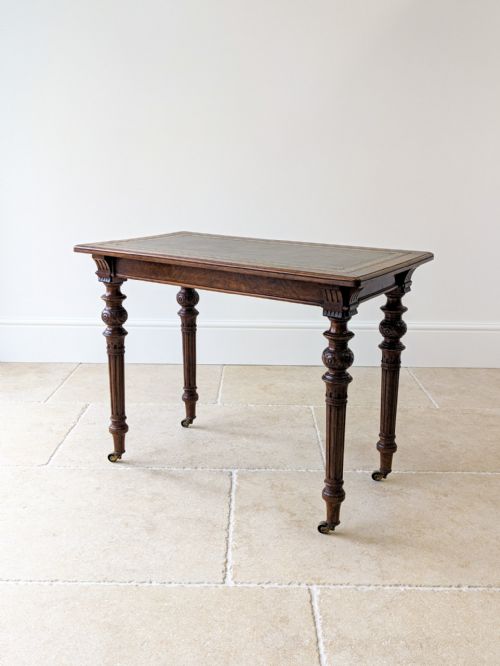
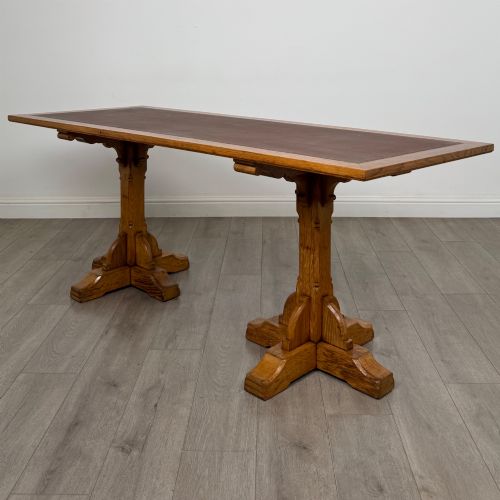
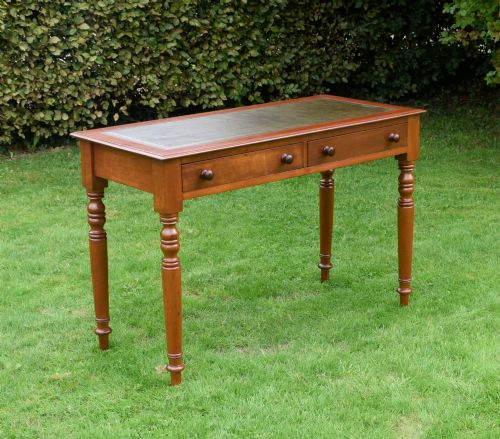
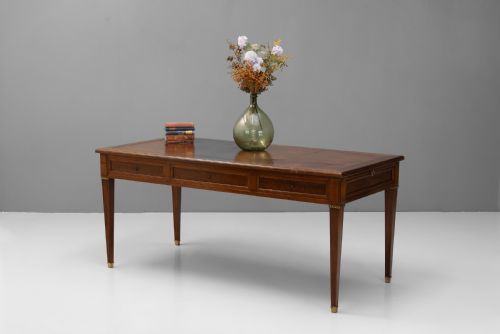
A leather insert library table functions as a central writing surface or freestanding desk within a study or sitting room. Buyers searching for a leather insert library table will encounter forms spanning the Regency and Victorian eras, alongside Edwardian examples.
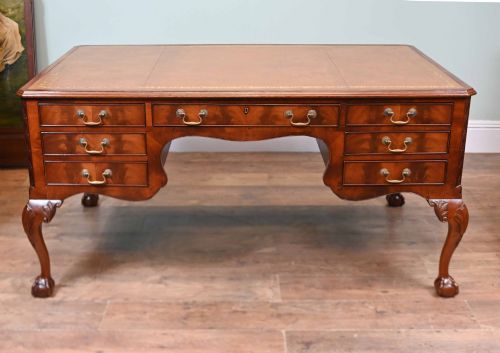
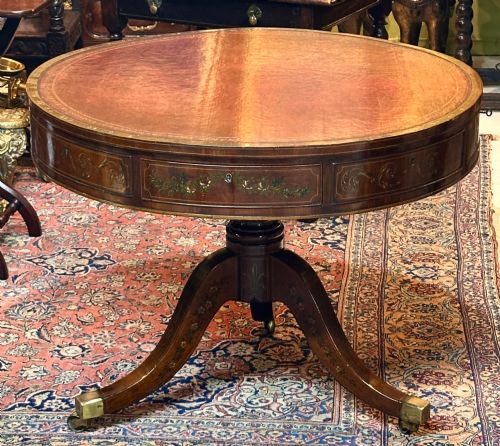
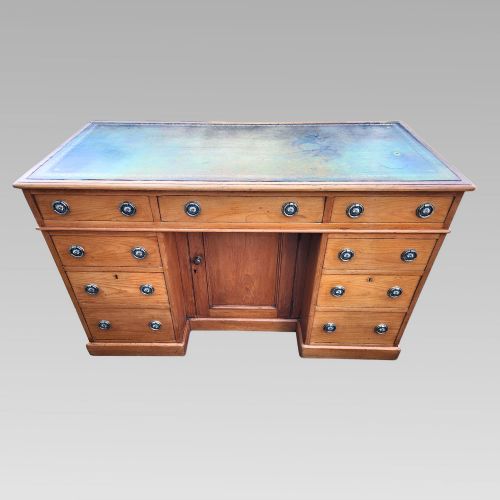
The construction typically manifests as writing tables, twin pedestal desks, or drum tables designed to occupy the middle of a room. These pieces reflect the heavy use of nineteenth-century libraries, combining structural timber with a fitted hide top.
How they were made
Cabinetmakers utilised dense timbers such as mahogany, oak, rosewood, and burr walnut for the primary frames and surfaces. These woods were often carved or polished to highlight the natural grain.
The working surface incorporates leather, frequently detailed with gold leaf tooling around the perimeter. Brass fittings, castors, and structural pedestals complete the assembly.
Leather Insert Library Table Retail Price Guide 2026
Typical asking prices for leather insert library table among the pieces listed under this phrase on Sellingantiques today, from the lower quarter to the upper quarter. They describe what is for sale here now, not the wider market.
The listings show materials ranging from pine and oak to luxury timbers like rosewood, burr walnut, and satin birch.
What varies in quality
The distinction between standard and superior pieces rests on the choice of timber and the depth of carving. Fine examples employ figured woods like rosewood or burr walnut with careful joinery.
Execution of the details, including the precision of the gold leaf tooling on the leather and the integration of brass hardware, separates utilitarian workshop production from distinguished cabinet work.
Howard & Sons·Gillows of Lancaster·Maple & Co
The Leather Insert Library Table Glossary
- Drum table
- A circular library table with a rotating or stationary top fitted with drawers around the deep frieze. It usually sits on a central pillar supported by splayed legs.
- Partners desk
- A large double-sided desk designed for two people to work opposite one another, featuring drawers and cupboards on both faces.
- Frieze
- The horizontal band beneath the top edge of a table, often containing one or more concealed drawers.
- Pedestal desk
- A heavy desk comprising two freestanding pedestals of drawers with a central desktop spanning the gap between them.
- Gold leaf
- Extremely fine gold beaten into sheets, utilised for tooling decorative borders around the perimeter of the leather surface.
Leather Insert Library Table: Frequently Asked Questions
Where should I place a library table?
These tables are traditionally designed to sit freestanding in the centre of a room rather than pushed against a wall. Their finished backs and panelled pedestals allow them to be viewed from all angles.
Ensure there is sufficient clearance around the piece for chairs and movement, as their substantial proportions require adequate floor space.
How do I care for the leather top?
The leather surface benefits from occasional dusting and the application of appropriate leather balms to maintain suppleness. Avoid harsh cleaning agents that might damage the gold leaf tooling.
Keep the timber frames polished with traditional wax to nourish the grain and protect against excessive dryness.
What is the difference between a writing table and a library table?
Writing tables are generally lighter forms meant for correspondence and lighter tasks, often featuring slender legs and delicate proportions. Library tables tend to be heavier, sturdier pieces intended for holding large volumes and heavy reference materials.
Both types frequently incorporate leather inserts to provide a smooth writing surface.
How do I identify a Regency period table?
Regency pieces often display classical architectural influences, featuring rosewood or mahogany with brass inlay, carved scroll supports, and sabre legs. The lines tend to be clean and inspired by ancient Greek and Roman forms.
Proportions are balanced, and the craftsmanship relies on heavy timber construction rather than elaborate surface veneers.