

Leather High Chairs
Leather high chairs bring substantial historical seating and elevated children's forms into contemporary interiors.
Leather High Chairs
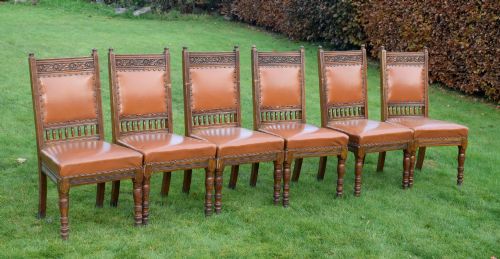
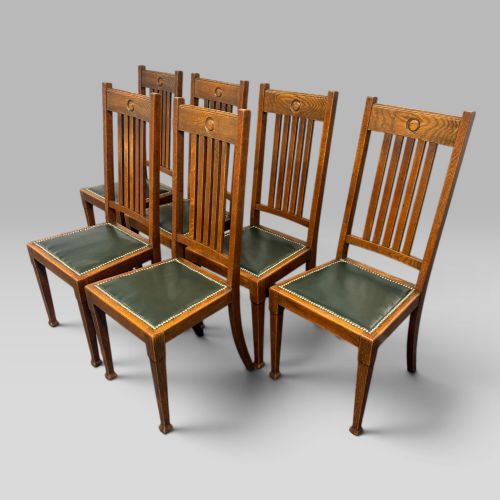
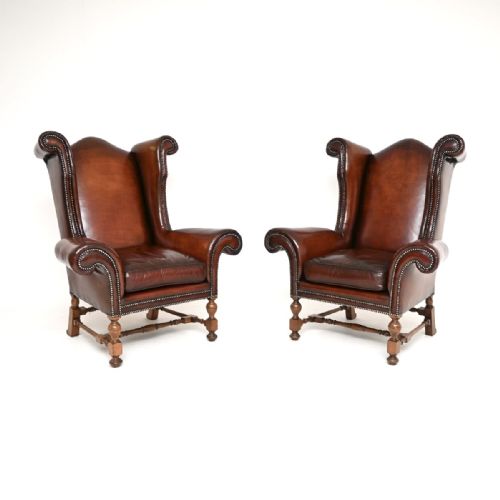
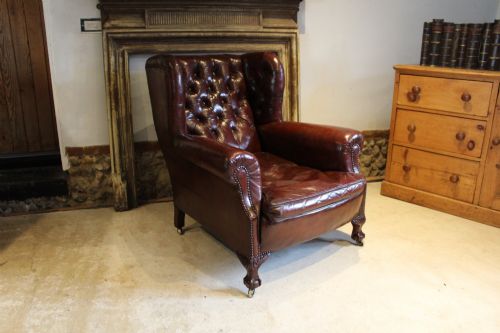
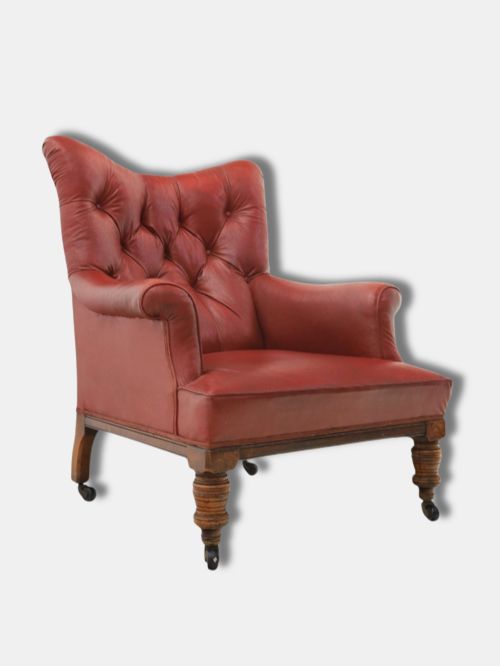
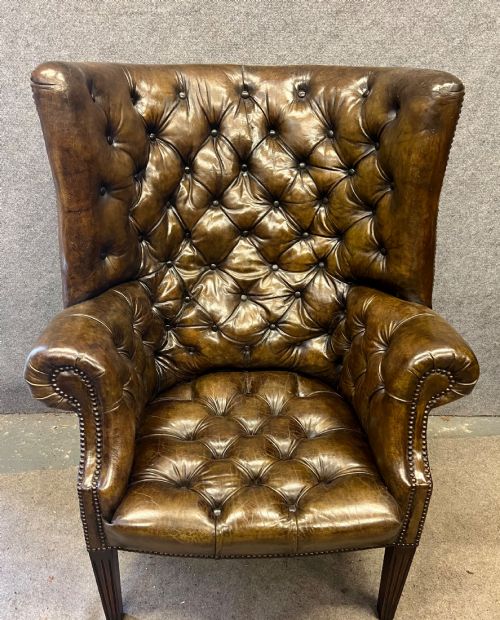
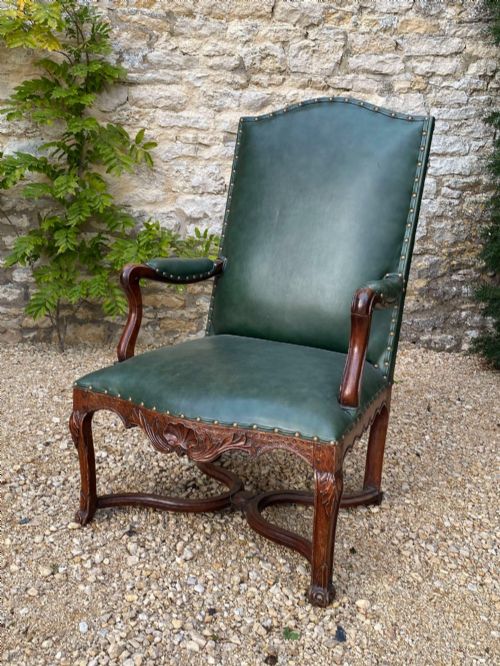
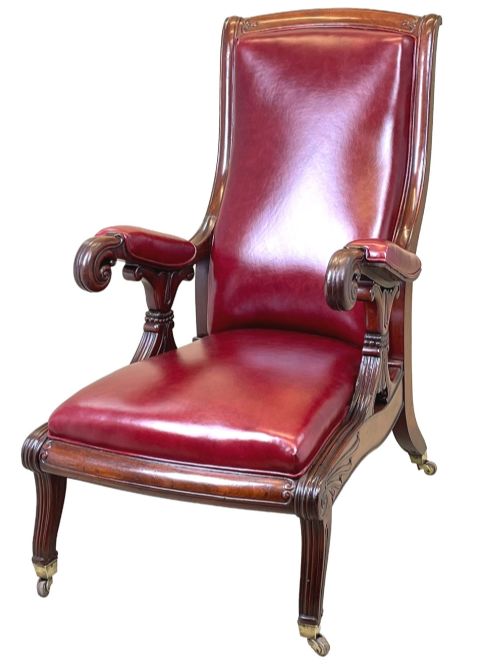
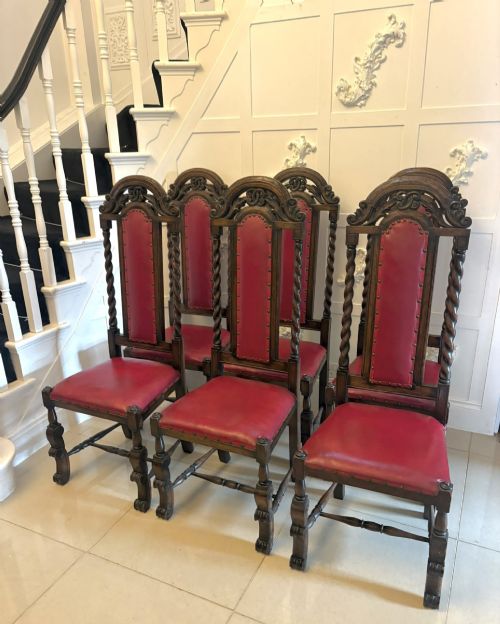
Leather high chairs encompass both elevated children's seating from the nineteenth century and the broader category of heavy leather seating found in the evidence. Buyers seeking leather high chairs will encounter sturdy timber frames combined with leather upholstery, spanning periods from the seventeenth century through to the 1930s. The selection heavily draws upon Victorian, Edwardian, and revival aesthetics.
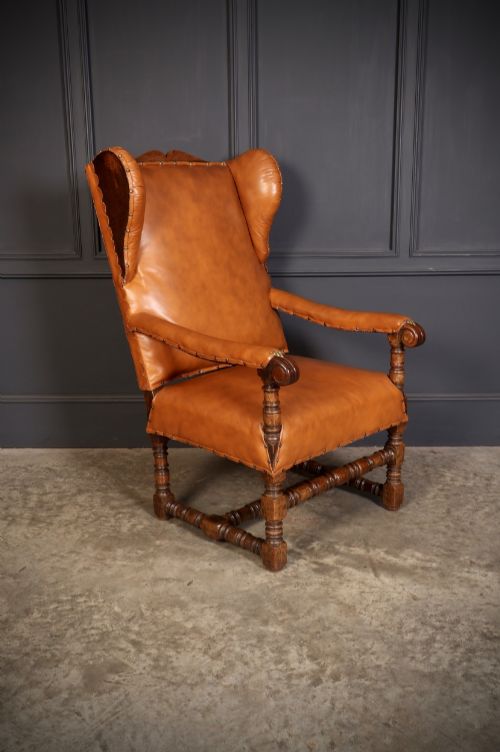
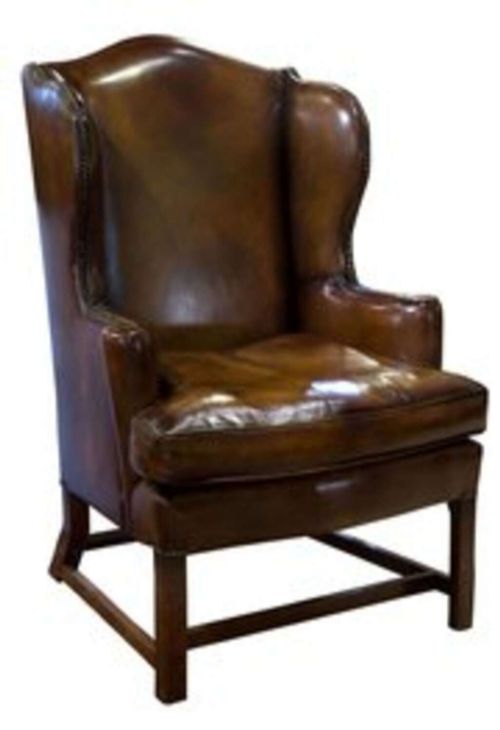
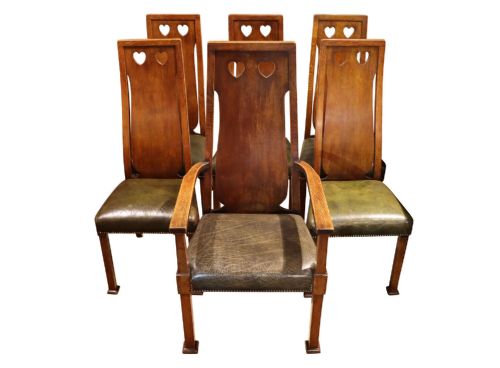
Forms extend from metamorphic children's high chairs in mahogany to library chairs, dining sets, and winged armchairs utilising similar materials. Oak and mahogany dominate the structural timberwork, while the upholstery ranges from plain tan leather to embossed and painted panels. These pieces reflect diverse stylistic revivals including Gothic, Jacobean, and Georgian influences.
How they were made
Construction relies heavily on solid hardwoods such as oak, mahogany, walnut, and fruitwood, shaped through hand carving and joinery. Timber frames frequently incorporate turned elements like barley twists alongside structural brass components.
Upholstery methods combine vegetable-tanned or hand-dyed leather secured with brass detailing, buttoning, or embossed ornamentation. Makers matched these durable hides to substantial wooden armchairs, library chairs, and dining seating.
Leather High Chairs Retail Price Guide 2026
Typical asking prices for leather high chairs among the pieces listed under this phrase on Sellingantiques today, from the lower quarter to the upper quarter. They describe what is for sale here now, not the wider market.
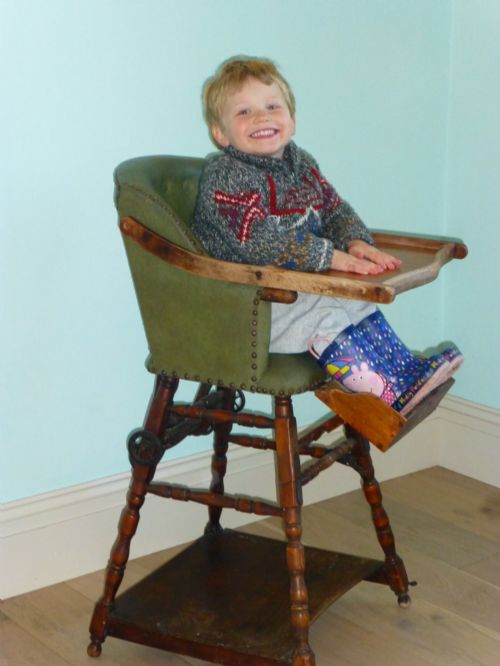
Children dined at height alongside adults using ingeniously engineered timber frames that doubled as play tables.
What varies in quality
Quality rests upon the integrity of the timber framing and the depth of hand carving executed across the oak, mahogany, or walnut structures. Pieces bearing attribution to notable workshops or specific design movements demonstrate superior execution in their joinery and proportions.
The character of the leather hide and the precision of its application - whether through buttoning, embossing, or hand-dyeing - distinguish standard production from finer examples. Original surface patination and cohesive period detailing elevate the standing of individual chairs.
Gillows·Bruce James Talbert·Goodyers London·A.W.N. Pugin
The Leather High Chairs Glossary
- Metamorphic
- Describing furniture designed to transform its function, such as a child's high chair that converts into a low stroller or standalone table. This mechanism allowed multi-use practicality in period nurseries.
- Gainsborough chair
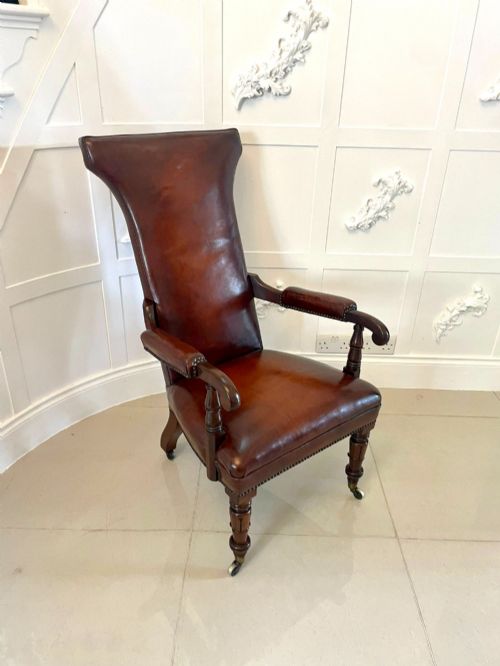
- A type of wide-seated, open-armed desk or armchair originating in the eighteenth century, typically upholstered in leather. They often feature mahogany frames and padded armrests.
- Barley twist
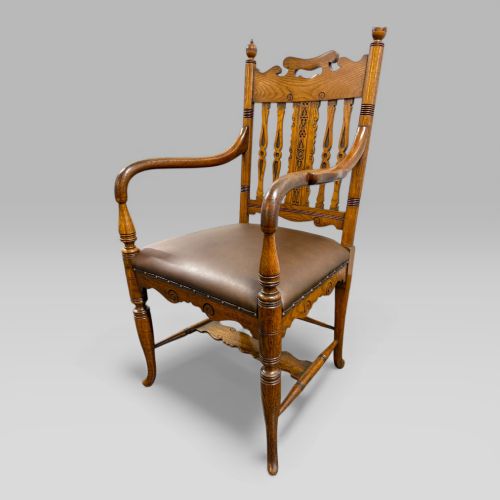
- A decorative turning technique resembling a spiralling rope, commonly found on the wooden legs and stretchers of seventeenth-century and revival oak furniture. It adds textural movement to structural supports.
- Embossed leather
- Leather stamped with raised patterns using metal dies and pressure, frequently seen on Spanish, Portuguese, and Victorian decorative panels. This technique adds ornate surface relief to chair backs and seats.
- Wingback
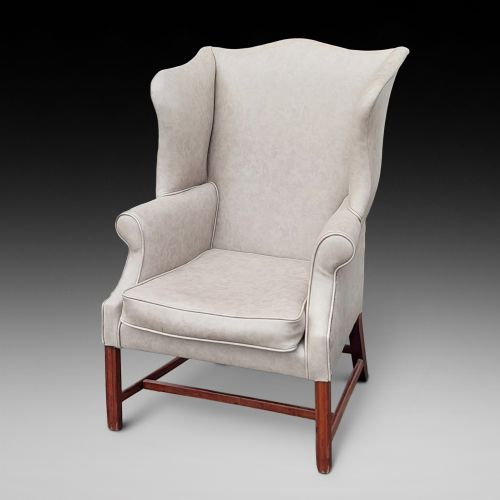
- An armchair style featuring protective side panels designed to shield the occupant from draughts. These upholstered wings extend from the high backrest down to the armrests.
Leather High Chairs: Frequently Asked Questions
What is a metamorphic high chair?
A metamorphic high chair is a convertible piece of children's furniture designed to alter its configuration for different uses. These nineteenth-century designs typically shift between an elevated seating position and a lower play chair or table.
Such engineering provided domestic versatility before modern mass-produced nursery items became common. They remain appreciated for their clever mechanical ingenuity.
How do I identify a Gainsborough chair?
A Gainsborough chair is characterised by its generous upholstered seat, open padded arms, and short mahogany or walnut legs. They were traditionally used at writing desks or in libraries.
Unlike standard armchairs, their open sides kept voluminous period clothing from crushing against wooden frames. The style persists across Georgian revival pieces.
What woods were used in these chairs?
Makers relied predominantly on native and imported hardwoods like oak, mahogany, and walnut. Oak forms the basis of heavy Gothic and Jacobean revival pieces, while mahogany and walnut appear in library and Gainsborough chairs.
Alternative timbers such as fruitwood occasionally feature in Arts and Crafts examples. Each wood was chosen for its structural strength and grain pattern.
How should I care for antique leather?
Antique leather benefits from regular dusting with a dry cloth and occasional treatment with specialist conservation waxes or balms. Avoid placing these chairs near direct heat sources or strong sunlight to prevent the hide from drying out.
Preserving the natural oils maintains the suppleness of hand-dyed and embossed surfaces. Gentle upkeep ensures the historical patina remains intact.