


Leather Fireside Wing Armchair
A leather fireside wing armchair brings deep seat comfort and high-backed warmth to a room, drawing on centuries of library and drawing-room tradition.
Leather Fireside Wing Armchair
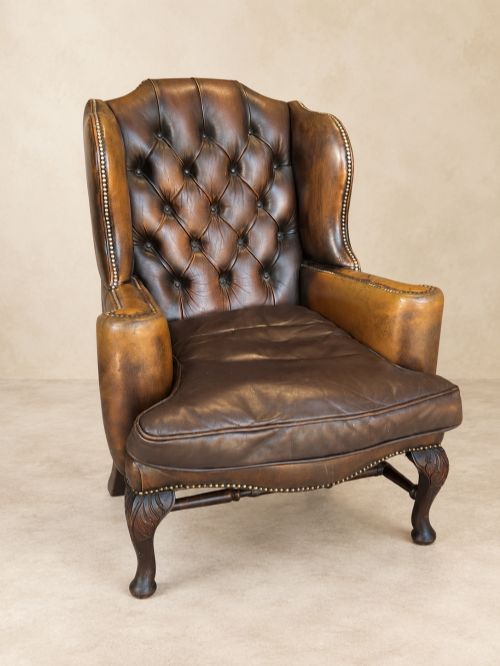
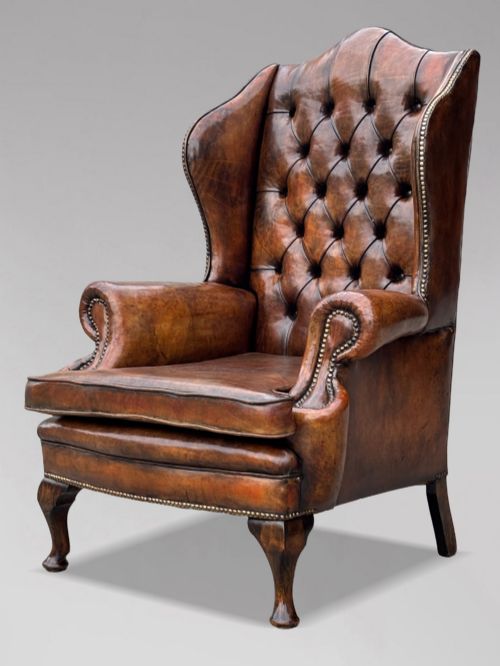
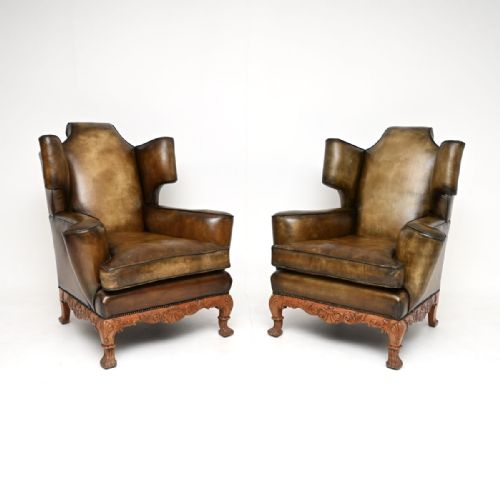
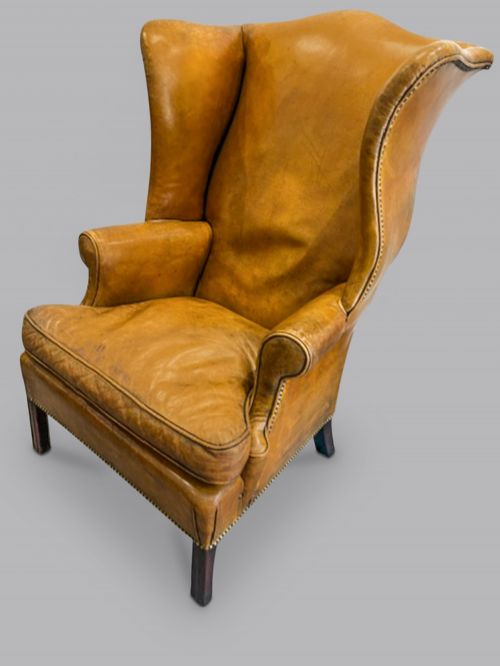
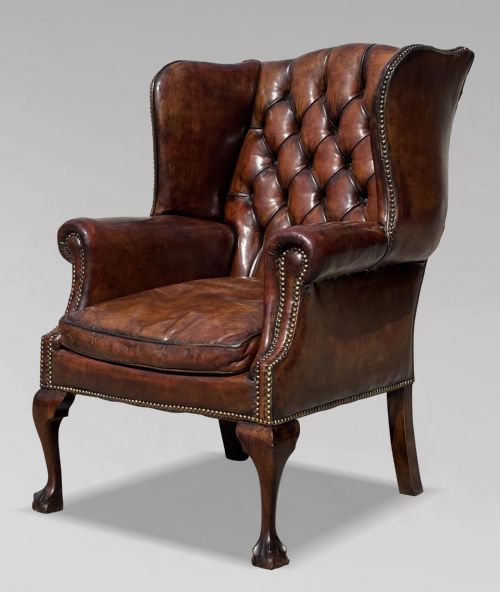
A leather fireside wing armchair is built around a high padded back with protective side wings designed to shield the sitter from draughts and radiate heat from an open hearth. The versions on this page span several distinct eras, from eighteenth-century originals to nineteenth-century brown leather button designs and later twentieth-century revival pieces.
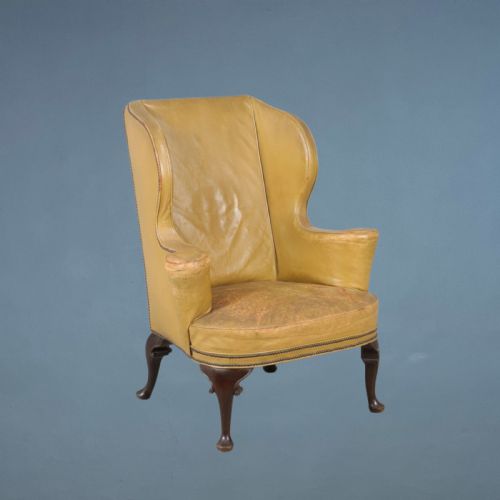
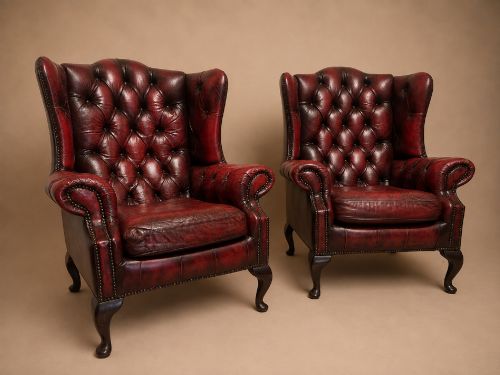
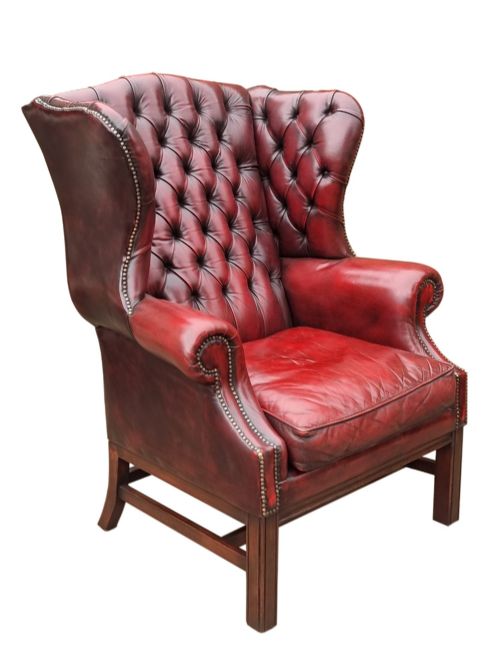
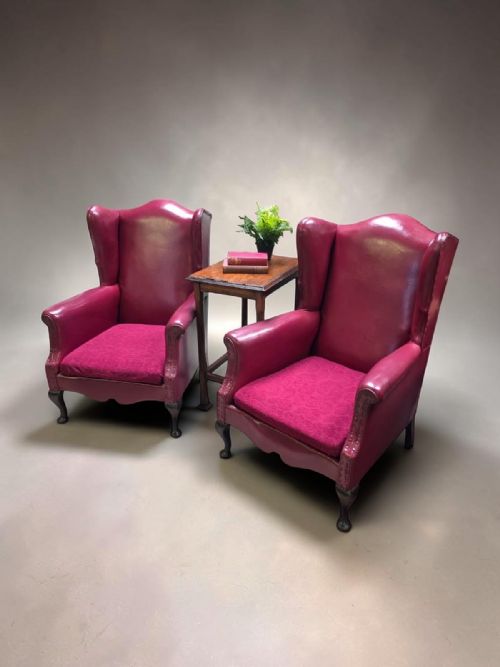
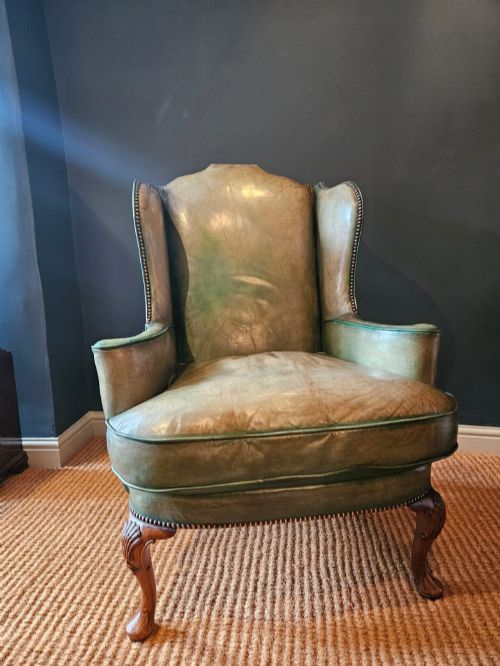
Buyers will encounter single seats alongside matched pairs, often upholstered in tan, brown, oxblood or green leather. The forms range from grand library chairs with deep buttoning and carved mahogany frames to compact Edwardian examples and George III style interpretations standing on cabriole legs.
The enduring appeal of these armchairs lies in their combination of sturdy wooden framing and tactile hide upholstery. They function equally well as reading seats in a study or as statement fireside chairs in a main reception room.
How They Were Made
Makers constructed the foundational frames of these armchairs using sturdy hardwoods such as oak, mahogany, and walnut, often shaping the exposed legs into cabriole or straight forms. Traditional joinery methods ensured the structural integrity required to support deep upholstery and heavy daily use.
The seat and high wings were traditionally stuffed with natural materials and secured with durable leather hides, sometimes finished with brass nail tacking or deep buttoning. Hand-coloured and hand-dyed treatments were frequently applied to the leather to achieve rich patination over time.
Upholstery choices across the available seating range from traditional tan and brown leather to distinctive green and oxblood hide finishes.
What Varies in Quality
The distinction between standard examples and the finest pieces often rests in the grace of the frame proportions and the sculptural quality of the woodwork. Chairs with finely carved mahogany or walnut legs and well-balanced wing profiles demonstrate superior craftsmanship from their period.
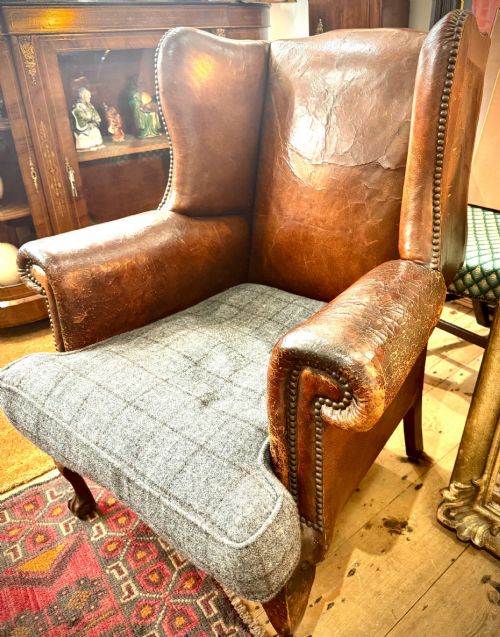
The condition and depth of the leather hide significantly influence the character of each chair. Richly patinated, hand-dyed, or hand-coloured surfaces that show natural ageing without losing their structural suppleness represent the upper tier of quality.
The Leather Fireside Wing Armchair Glossary
- Wingback
- A high-backed armchair featuring projecting side panels designed to trap heat and block cold draughts. These wings became a hallmark of eighteenth-century comfort.
- Cabriole leg
- A furniture leg that curves outward at the knee and tapers inward at the ankle, ending in a pad or claw foot. This form draws heavy inspiration from eighteenth-century design.
- Button-back
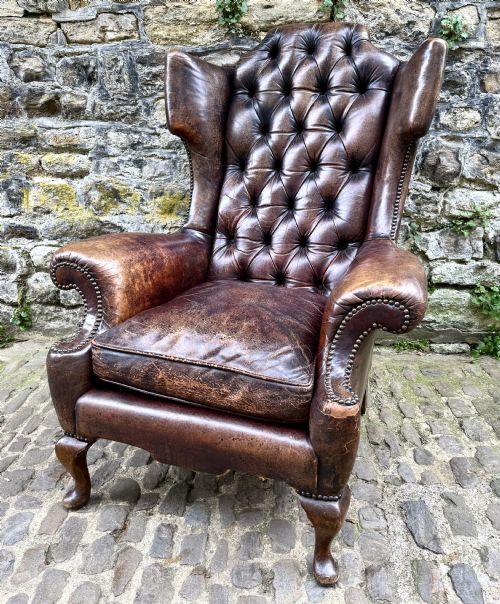
- An upholstery technique where indentations are formed across the leather by pulling tufting cords deep into the padding. This secures the filling while creating a geometric pattern.
- Chesterfield
- A traditional style of upholstered seating characterised by deep buttoning and arms matching the height of the back. It remains heavily associated with nineteenth-century club and library furnishings.
- Hide
- The natural leather skin used to upholster the chair frame. High-grade hide develops a softer tactile quality and deeper tonal variation over decades of use.
Leather Fireside Wing Armchair: Frequently Asked Questions
How do I care for antique leather?
Maintain antique leather by applying suitable nourishing waxes or balms periodically to prevent the hide from drying and cracking.
Keep the armchair away from direct sunlight and strong heat sources to preserve the original colour and suppleness of the material.
Are these chairs comfortable for daily use?
These armchairs offer supportive high backs and deep seat proportions designed for long periods of reading or resting by the fire.
Individual comfort depends heavily on the firmness of the internal padding and the specific ergonomic proportions of each historical period.
How do I distinguish eighteenth-century styles?
Eighteenth-century and revival pieces often feature characteristic leg forms, such as walnut cabriole supports or straight mahogany stretchers.
Examining the underlying construction methods and the wear patterns on the wooden frame helps indicate whether a piece is an early original or a later revival.
What rooms suit a wing armchair best?
These armchairs suit studies, libraries, and traditional living rooms where their high backs create a strong visual anchor.
Pairs of chairs work well placed opposite each other by a fireplace or flanking a central hearth.