

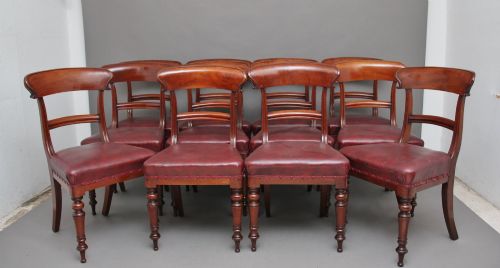
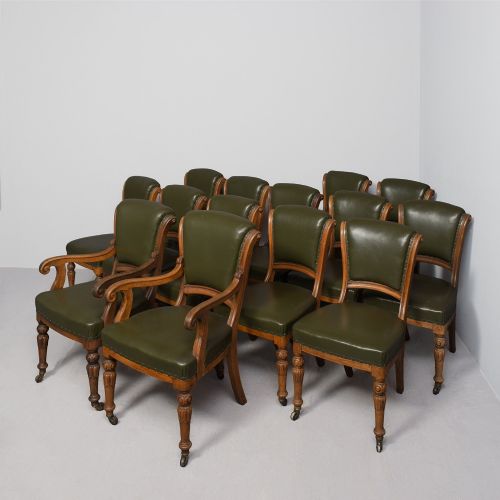
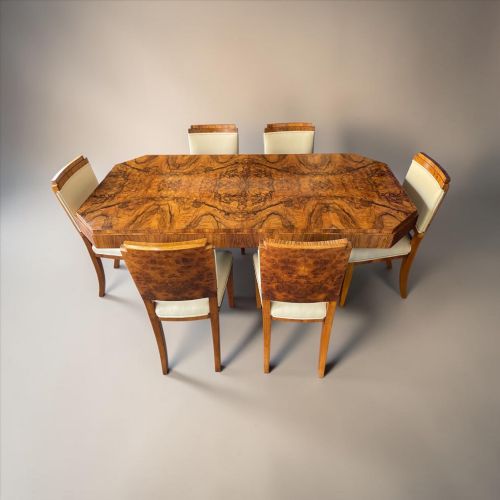
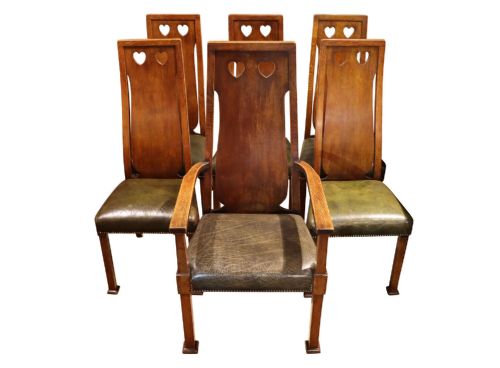
Leather Dining Chairs Set
A leather dining chairs set provides matching seating around a table, uniting period timber with durable hides for daily use.
Leather Dining Chairs Set
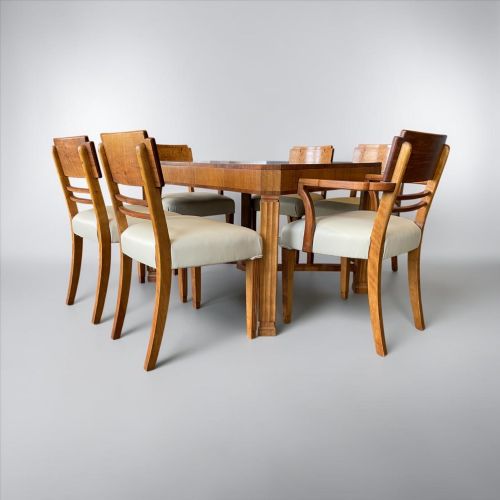
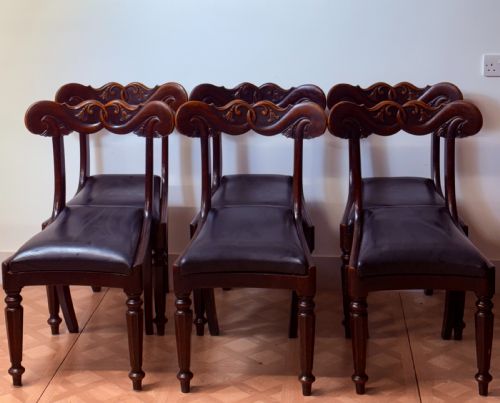
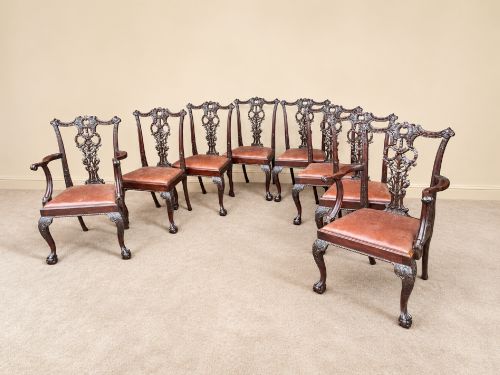
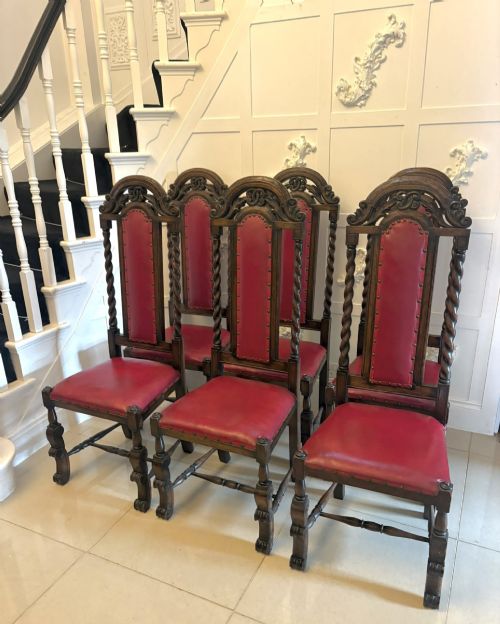
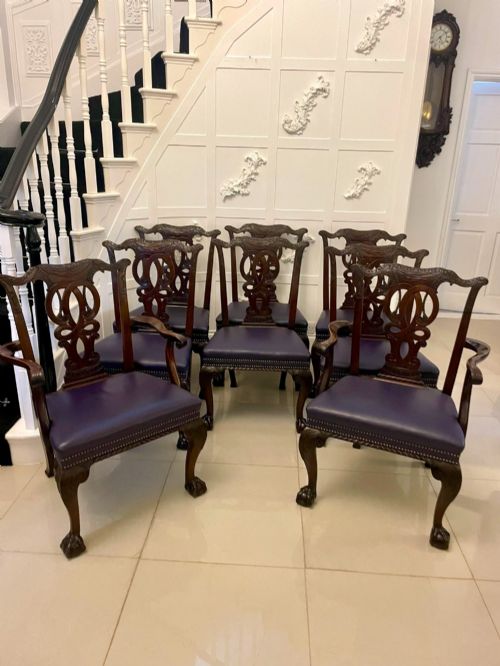
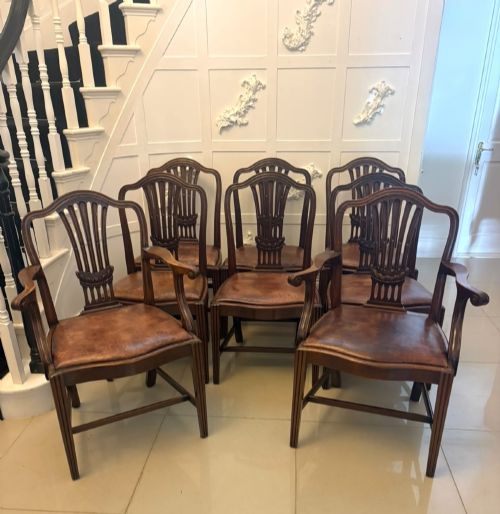
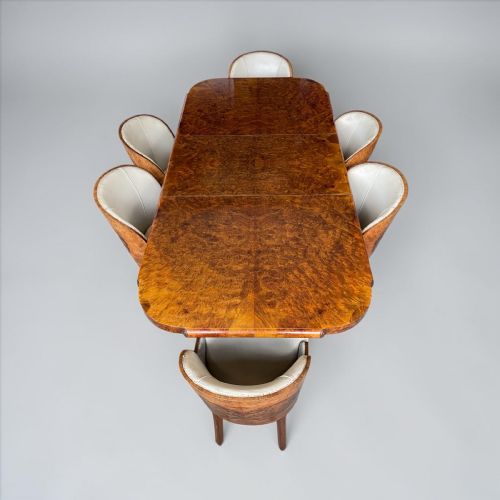
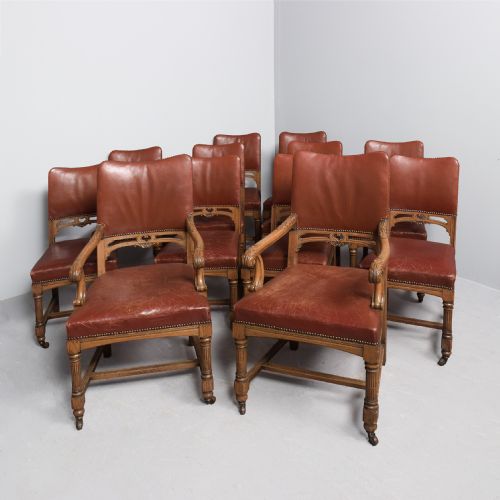
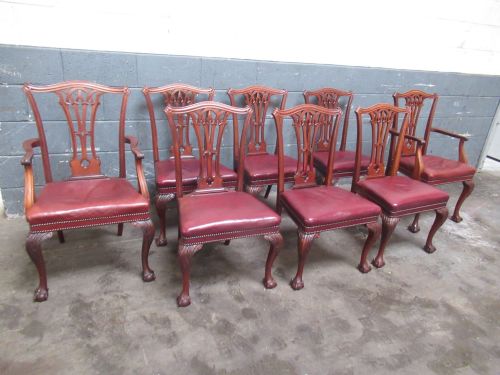
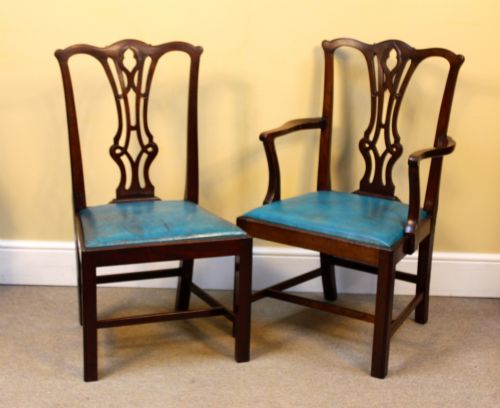
A leather dining chairs set brings together multiple matching seats, most frequently found in groups of six or eight from the Victorian, Edwardian, and Art Deco eras. These collections often include a mix of standard chairs and armed carvers designed for the heads of the table.
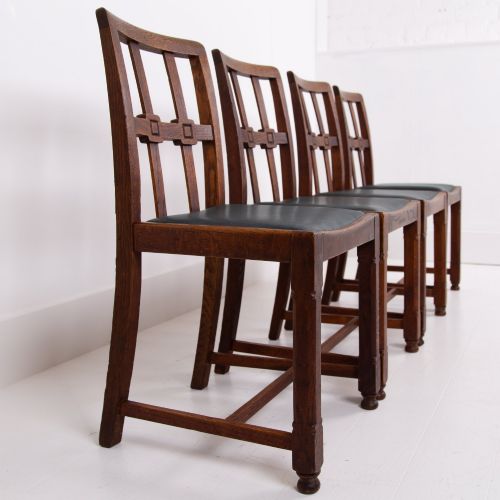
The aesthetic ranges from formal revival designs in mahogany, such as Chippendale and Hepplewhite styles, to sturdy oak frameworks reflecting Jacobean, Tudor, or Gothic influences. Sets from the early twentieth century introduce streamlined Art Deco forms alongside oak Arts and Crafts models.
Buyers encounter matching groups sourced from various English, Scottish, French, and Spanish traditions, demonstrating how dining arrangements evolved from heavily carved nineteenth-century frames to cleaner twentieth-century lines.
Materials and Construction
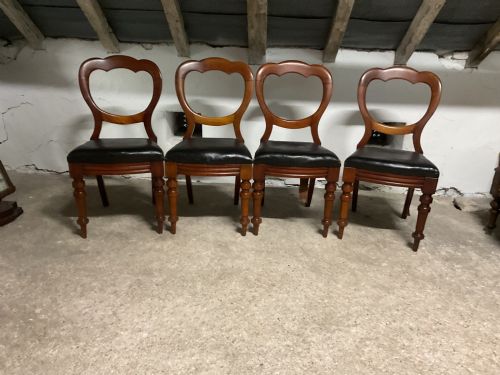
Makers utilised dense hardwoods like mahogany, walnut, and oak to build frames that could withstand daily sitting, often incorporating carved details such as barley twists, shield backs, or balloon shapes. These timbers were joined using traditional woodworking methods to ensure structural longevity across every chair in the set.
Hides formed the primary upholstery surface, occasionally embossed or secured with brass tacking, paired with supportive stuffing within the seat pads. Some pieces combine the warmth of leather with secondary woods like satinwood, maple, or gilded accents.
Leather Dining Chairs Set Retail Price Guide 2026
Typical asking prices for leather dining chairs set among the pieces listed under this phrase on Sellingantiques today, from the lower quarter to the upper quarter. They describe what is for sale here now, not the wider market.
Several dining sets include subtle maker stamps hidden beneath the seat rails, left by cabinetmakers who clearly took pride in their joinery.
Quality and Consistency
The integrity of a matching group depends on whether the timber frames share identical proportions, carving depth, and ageing without mismatched replacements entering the suite over time. Complete sets where every carver and standard chair originates from the same workshop command greater interest.
The treatment of the upholstery and the crispness of the original woodwork separate standard utilitarian seating from finer parlour examples. Subtle variations in the depth of hand-carving and the quality of the timber grain distinguish standard production from exceptional cabinet work.
Goodyers London·Maurice Adams·Harry and Lou Epstein·John Taylor and Son
The Leather Dining Chairs Set Glossary
- Carver
- An armchair designed with armrests, traditionally placed at the head and foot of a dining table. These matching seats form part of larger sets alongside armless standard chairs.
- Barley Twist
- A turned woodwork detail resembling a twisted rope, common in seventeenth-century styles and nineteenth-century oak revival furniture. Artisans carved this helical pattern on chair legs and stretchers.
- Embroidery
- Decorative needlework sometimes found on period upholstery, though distinct from the plain or tooled leather surfaces seen across these specific dining suites.
Leather Dining Chairs Set: Frequently Asked Questions
How many chairs come in a set?
Sets typically range from four to twelve chairs, frequently including two carvers alongside several standard dining seats. The exact count depends on the original commission and how many survived together.
Buyers often select numbers that match the proportions of their dining room tables, keeping in mind that larger sets of eight or ten remain scarcer.
Are these chairs comfortable for daily use?
Period dining chairs feature solid timber frames and padded leather seats designed for upright posture during meals. Their ergonomic support reflects the domestic habits of the nineteenth and early twentieth centuries.
Placing them around a modern table works well, provided the seat height and apron clearance align with contemporary dining standards.
How do I care for antique leather?
Leather upholstery benefits from regular dusting with a dry cloth and occasional conditioning to prevent the natural material from drying out. Avoiding direct sunlight and excessive heat protects the hide from cracking.
Preserving the original surface maintains the character built up over generations of domestic use.
How can I tell different revival styles apart?
Revival furniture borrows motifs from earlier eras, such as the heavy oak turnings of the seventeenth century or the delicate tracery of eighteenth-century Chippendale designs. Examining the timber grain, construction joints, and secondary woods helps clarify the actual period of manufacture.
Chairs from the Victorian and Edwardian revivals combine historical silhouettes with the machine assistance and joinery standards of their own time.