



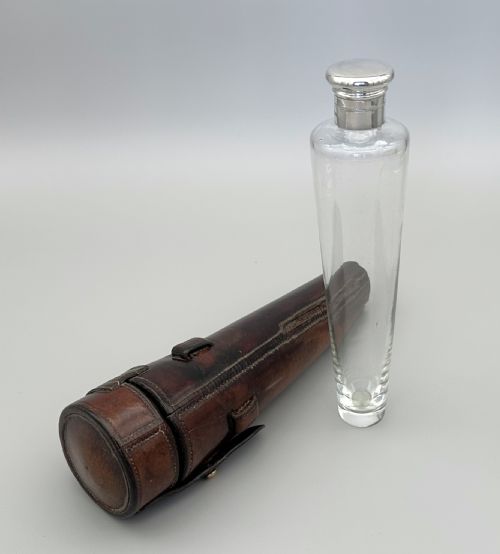


Leather Cased Glass
These leather cased glass items combine protective hide with functional vessels, serving travellers, officers and collectors across the centuries.
Leather Cased Glass
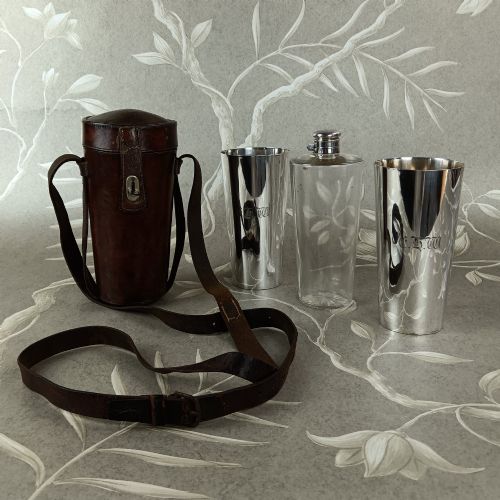
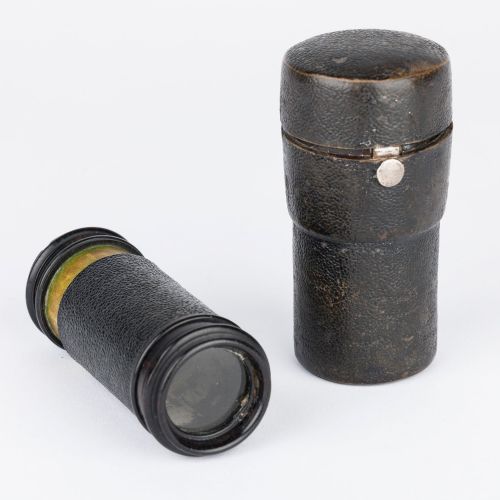
When you search for leather cased glass, you encounter objects designed for portability and protection, ranging from pocket optical equipment to spirit flasks and scent bottles. The selection spans the Georgian period through to the Art Deco era, encompassing domestic vanity items alongside robust campaign equipment.
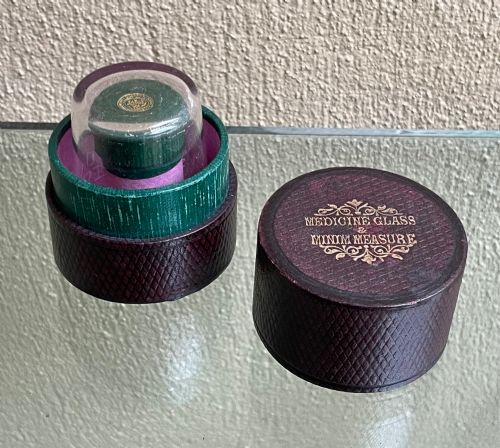
Travel and field use account for many surviving examples, particularly nineteenth-century spirit sets, carriage clocks and medicine glasses housed in fitted leather. These pieces were built for carriage journeys, military campaigns and exploration.
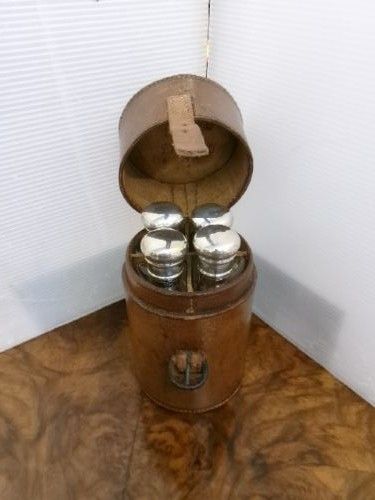
Vessels within these protective housings typically combine cut glass or clear glass with leather outer layers, frequently secured with brass or silver mounts. The forms vary from round spirit flask sets to rectangular scent bottle caskets.
Materials and construction
Makers combined thick hide or embossed leather with blown and cut glass, often incorporating brass clasps, silver plate or sterling silver mounts. Velvet or silk linings frequently cushioned the glass internal components within their rigid cases.
Stitching and tooling define the leatherwork, while the glass elements display period-specific cutting, moulding and engraving techniques. Metal components, including silver-gilt and brass fittings, provide structural security and closure for the portable containers.
Leather Cased Glass Retail Price Guide 2026
Typical asking prices for leather cased glass among the pieces listed under this phrase on Sellingantiques today, from the lower quarter to the upper quarter. They describe what is for sale here now, not the wider market.
Listings span from the 18th century to the 1930s, combining materials such as cut glass, embossed leather, silver plate and brass.
Evaluating quality and execution
Superior examples demonstrate precision in the leather stitching and the exact internal moulding required to hold glass vessels securely without movement. The weight and clarity of the glass, combined with the thickness and quality of the leather housing, separate utilitarian items from luxury travel goods.
The presence of original fitted boxes, complete sets of matching glass bottles, and intact silver or brass hardware elevates an item's standing. Finer pieces retain original linings and functional locking mechanisms with working keys.
James Dixon & Sons·Francis West of Fleet Street
The Leather Cased Glass Glossary
- Campaign equipment
- Portable items made for military officers or travellers, built for durability during transit and field use.
- Saddle flask
- A glass flask shaped to fit within a leather case designed to attach to a horse's saddle during hunting or riding.
- Carriage clock
- A portable spring-driven clock, usually brass-framed with glass panels, often travelling in a protective leather outer case.
- Silver-gilt
- Sterling silver that has been coated with a thin layer of gold on its surface, frequently found on interior bottle caps and mounts.
- Celluloid
- An early semi-synthetic plastic material used for handles and vanity items in late nineteenth and early twentieth-century travelling sets.
Leather Cased Glass: Frequently Asked Questions
What were leather cased glass flasks used for?
These flasks transported spirits, wine or water safely during travel, hunting or military campaigns. The leather outer layer protected the glass bottle from impacts while riding or moving.
The inclusion of silver or metal cups as part of the case lid allowed users to pour and drink refreshments away from home.
How should I clean the leather cases?
Maintenance requires gentle cleaning with a dry or slightly damp cloth to remove surface dust without saturating the hide. Avoid harsh chemical cleaners that can strip historical finishes.
Leather balsam or specialist feeds help maintain the suppleness of older hide when applied sparingly with a soft cloth.
Are the glass bottles usually original to the cases?
Most surviving examples retain their fitted original glass bottles, particularly where the interior velvet or leather lining is moulded precisely to the shape of the vessels. Inspecting the fit inside the case helps confirm originality.
Replacements occasionally occur in travel sets due to breakage during past use, making matching glass thickness and cut a key detail.
How do I date these travelling sets?
Dating relies on stylistic clues in the hardware, the type of leather tooling, and hallmarks on any silver mounts. Victorian pieces often feature heavy brass locks and textured black or brown leather.
Later Edwardian and Art Deco examples introduce sleeker lines, alternative materials like celluloid, and modified flask shapes suited to changing transport methods.