


Leaded Glass Bookcase Cabinet
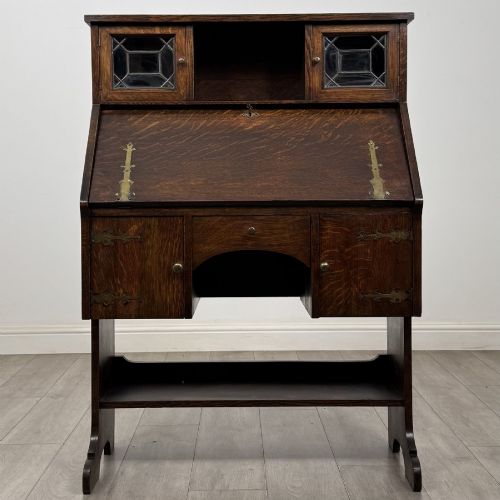
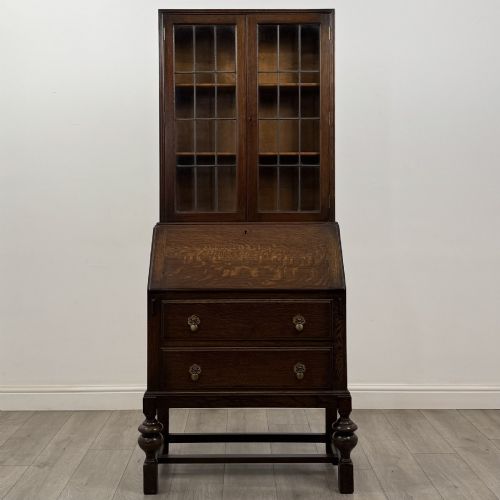
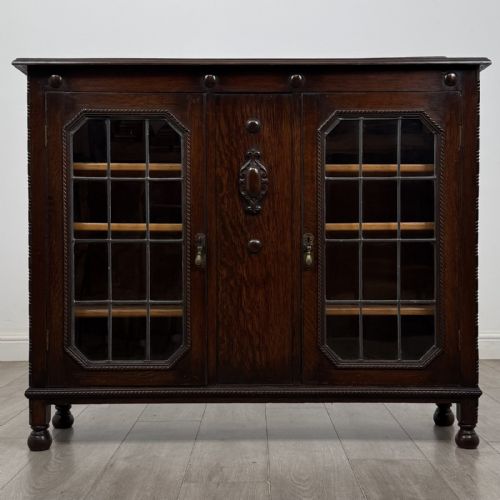
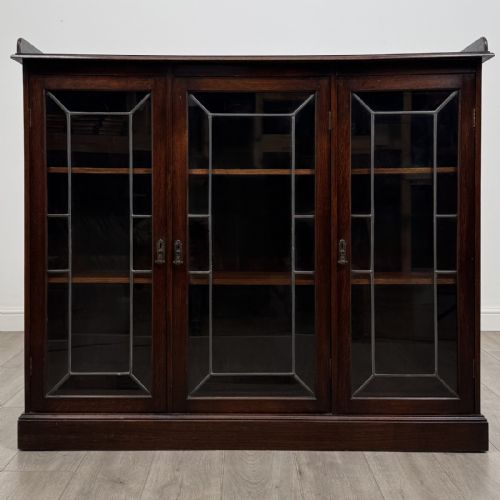
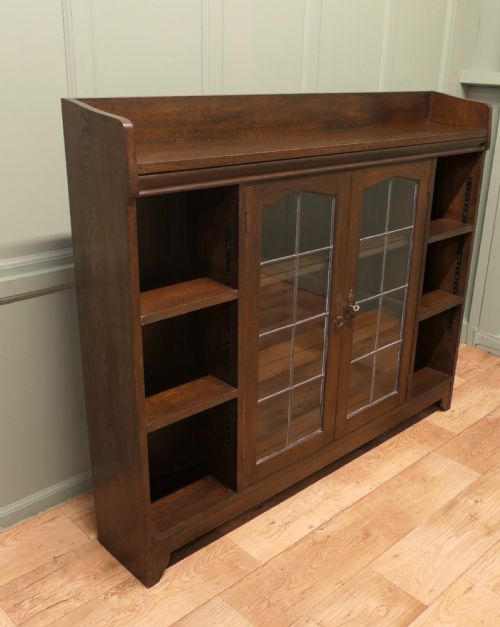
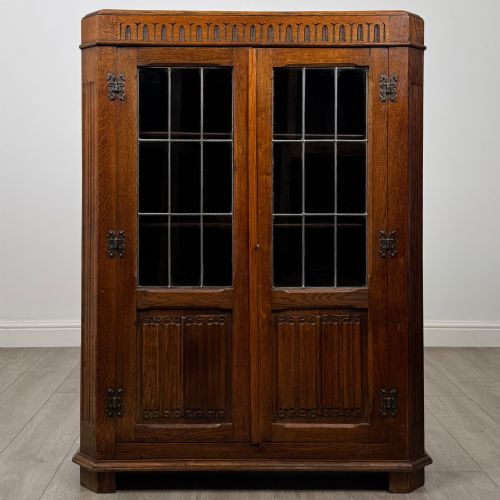
These leaded glass bookcase cabinet pieces bring compartmentalised storage and divided panes together, uniting books and display items behind soldered lead lines.
Leaded Glass Bookcase Cabinet
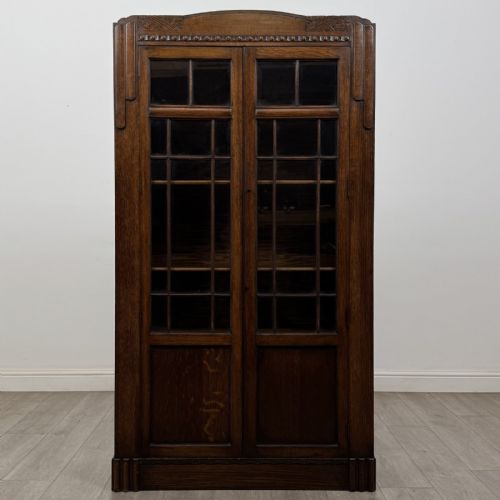
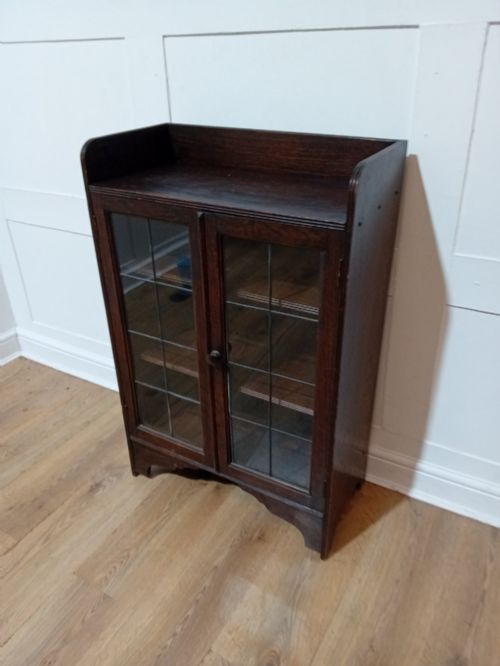
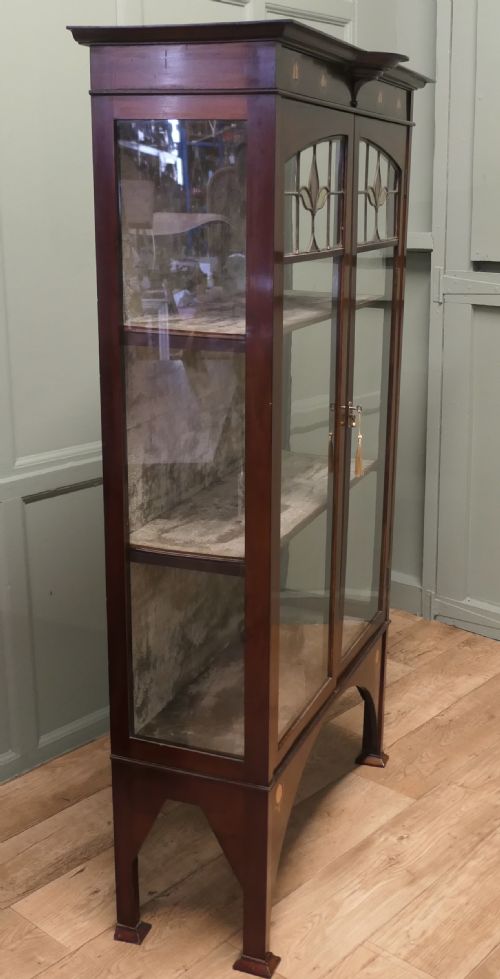
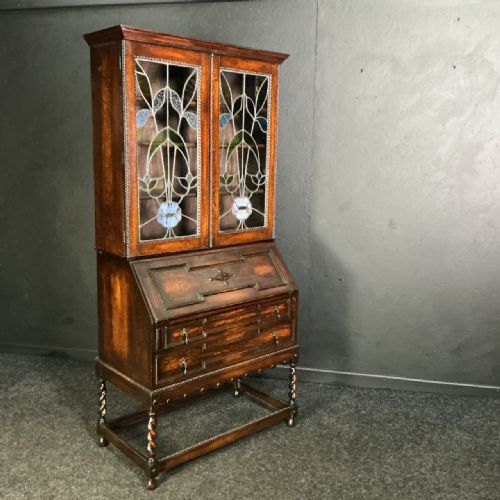
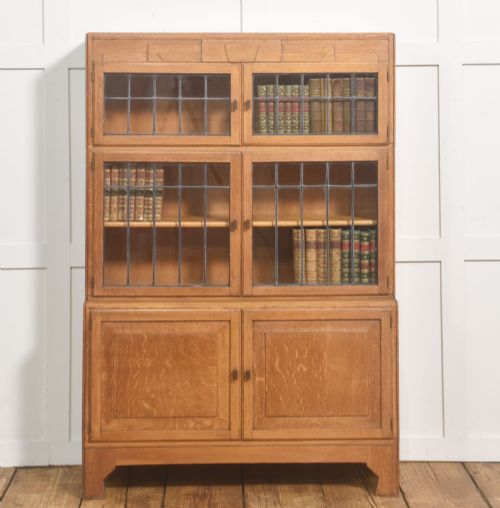
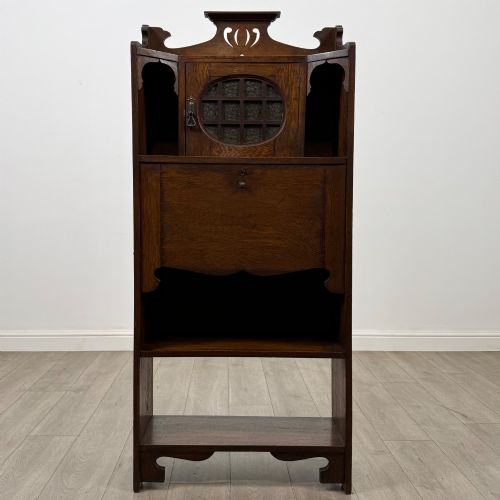
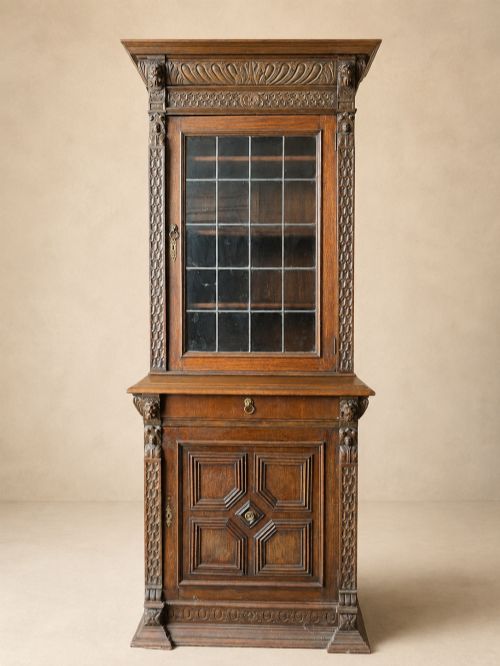
A leaded glass bookcase cabinet combines storage and display, appearing most frequently in oak across Edwardian and 1920s incarnations. These items range from stacking barristers and bureau bookcases to tall narrow glazed cabinets.
The selection encompasses Arts and Crafts, Art Deco, and Jacobean Revival styles, alongside modular Globe Wernicke configurations. Buyers encounter solid mahogany, walnut, and light oak constructions alongside standard dark oak frames.
How they were made
Craftsmen built these pieces using solid oak, mahogany, and walnut timbers, incorporating brass handles and iron fittings. Glass panes were held within individual lead cames, soldered at the joints to form geometric or stylistic patterns.
Makers utilised stacking mechanisms for sectional barristers, drop-front panels for bureaux, and carved details for Jacobean and Arts and Crafts aesthetics. Surfaces received polished finishes, highlighting the natural grain of the timber.
Leaded Glass Bookcase Cabinet Retail Price Guide 2026
Typical asking prices for leaded glass bookcase cabinet among the pieces listed under this phrase on Sellingantiques today, from the lower quarter to the upper quarter. They describe what is for sale here now, not the wider market.
Listings feature oak, mahogany, and walnut timbers across Edwardian, Victorian, and 1920s periods, incorporating lead, brass, and iron hardware.
What varies in quality
Quality rests in the precision of the timber joinery, the weight and uniformity of the lead cames, and the integrity of the stacking or door mechanisms. Finer examples display harmonious grain selection, crisp carving, and robust internal shelving.
The distinction between standard utility items and superior workshop pieces lies in the subtlety of the decorative elements, such as inlaid details, specialised brass panels, and well-executed leaded geometric designs.
Liberty & Co.·Maple & Co.·Minty·Lambs of Manchester
The Leaded Glass Bookcase Cabinet Glossary
- Globe Wernicke
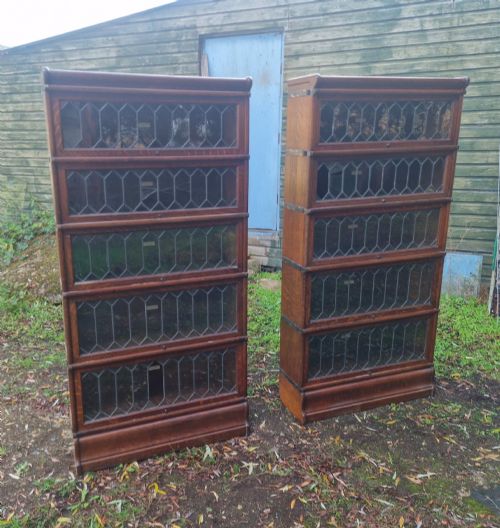
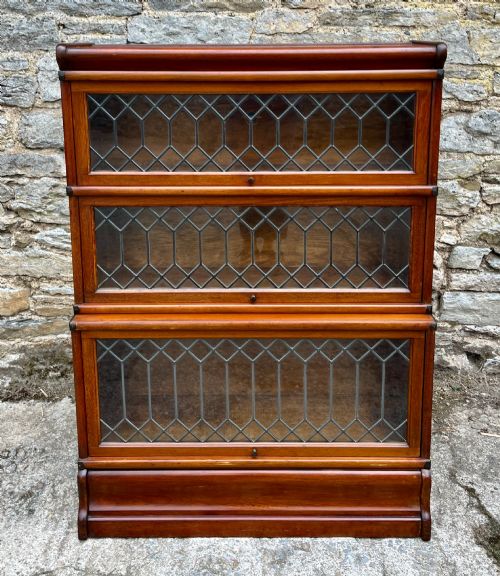
- A sectional barrister bookcase comprising stacked modular tiers with upward-lifting glass doors. This system allowed owners to add units vertically as libraries grew.
- Came
- A slender strip of cast lead with a channel profile used to hold individual pieces of glass together in a window or cabinet door. These metal lines create the geometric pattern seen across the front.
- Jacobean Revival
- A nineteenth and early twentieth century style mimicking seventeenth century English furniture. It utilises dark carved oak, panelled doors, and heavy turned supports.
- Secretaire
- A cabinet incorporating a pull-down writing flap revealing inner compartments and small drawers. This writing surface integrates seamlessly into the upper bookcase structure.
- Linenfold
- A style of wood carving representing folded drapery or linen fabric. It appears commonly on cabinet doors from the revival periods.
Leaded Glass Bookcase Cabinet: Frequently Asked Questions
What is a barrister bookcase?
A barrister bookcase is a stacking cabinet featuring multiple horizontal sections with glazed doors that lift and slide inside the top of each tier.
Originally designed for travelling legal professionals, these modular units allowed books to remain enclosed and protected during transport or relocation.
How do I date a leaded glass cabinet?
Dating relies on identifying stylistic markers, timber choices, and construction methods characteristic of periods such as the Edwardian era or the 1920s. Arts and Crafts and Art Deco influences provide specific decade markers for the design.
Examining the hinges, backing boards, and type of lead cames helps narrow down the manufacturing timeframe between the late nineteenth and mid-twentieth centuries.
Are leaded glass bookcases sturdy?
These cabinets utilise solid hardwoods like oak and mahogany, making them structurally robust for holding heavy volumes and display collections. The lead cames provide flexible support for the individual glass panes.
Sectional models benefit from weight distribution across stacked tiers, though uneven flooring may require careful levelling to ensure smooth door operation.
How should I clean leaded glass?
Cleaning requires a soft microfibre cloth and a mild glass cleaner applied directly to the cloth rather than the panes. This prevents liquid from seeping beneath the lead cames and damaging the solder.
Avoid abrasive materials that might scratch the glass surface or weaken the structural lead joints over time.