


Lattice Silver Bowl
A lattice silver bowl brings refined pierced metalwork to a table, offering a decorative vessel shaped by historic silversmiths.
Lattice Silver Bowl
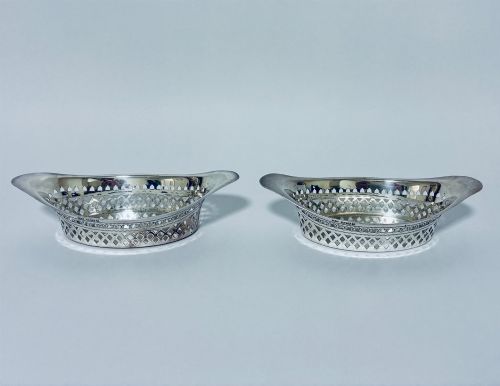
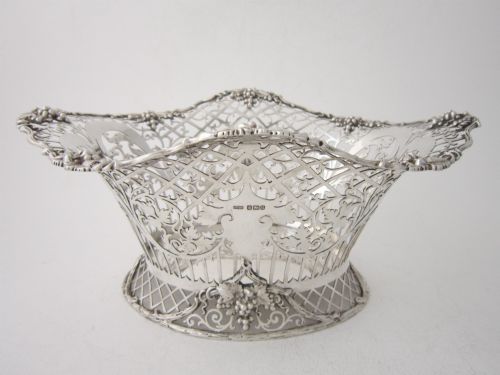
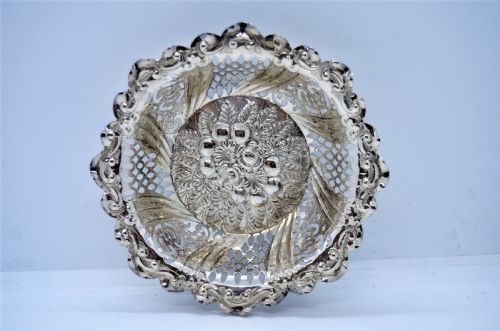
A lattice silver bowl encompasses decorative vessels designed with pierced or openwork detailing, commonly found in forms such as bonbon dishes, baskets, and centrepiece bowls. These pieces emerge across several periods, including the Georgian era, the Victorian period, and the Edwardian years.
The versions most frequently encountered on this page date from the late nineteenth century through to the interwar period. Makers utilised traditional forms like oval baskets and footed dishes, incorporating detailed piercing across sterling silver and silver plate.
Originating from British workshops and international makers, these items range from smaller domestic dishes to substantial centrespieces. Collectors find that the primary appeal lies in the intricate openwork patterns that define the surface of each bowl.
Materials and construction
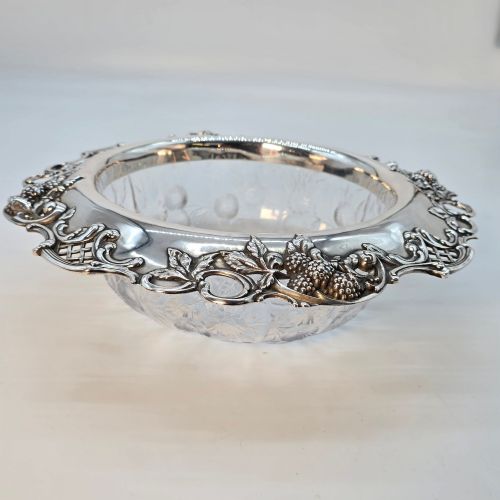
Silversmiths constructed these vessels primarily using sterling silver and solid silver, alongside occasional combinations with crystal. Workshops applied piercing techniques by hand or through early mechanical piercing to create the open lattice patterns.
Selected pieces incorporate reinforced rims and cast feet to support the weight of the pierced body. Hallmarks stamped into the metal record the assay office, maker's mark, and date of manufacture.
Listings feature periods spanning from the Georgian era through to the 1930s, utilising sterling silver, crystal, and silver plate.
Distinctions in craftsmanship
The quality of a lattice silver bowl depends heavily on the precision of the piercing work and the weight of the metal. Finer examples display crisp, uniform cut-outs executed by skilled silversmiths, whereas simpler items may show less refined piercing.
The reputation of the maker and the clarity of the hallmarking also influence the standing of the piece. Substantial items with fully articulated cast mounts and established maker attributions occupy the upper tier of the range.
Tiffany & Co.·Joseph Rodgers·Fenton·William Comyns·Walker & Hall·William Bond
The Lattice Silver Bowl Glossary
- Lattice
- A decorative openwork pattern formed by intersecting strips of metal. This technique lightens the visual weight of the vessel.
- Pierced
- Metal cut through to create a pattern or design. Silversmiths used saws and punches to achieve this open effect.
- Sterling silver
- An alloy containing 92.5 percent silver by mass. This standard material is common in antique British silver production.
- Hallmark
- A series of official marks stamped onto precious metals. These marks indicate the maker, standard of purity, and year of assay.
- Centrepiece bowl
- A large, prominent vessel designed for the middle of a dining table. These pieces often feature substantial dimensions and decorative mounts.
Lattice Silver Bowl: Frequently Asked Questions
What is a lattice silver bowl used for?
These vessels served historically for presenting fruit, sweets, or bonbons upon a dining table or sideboard. Their openwork design was intended for dry presentation rather than holding liquids.
Today, collectors use them as decorative centrepieces or display items within a room. They function well on side tables where light can pass through the pierced metalwork.
How do I date a silver bowl?
Dating relies primarily on the hallmarks stamped directly into the metal surface. These official marks provide specific symbols corresponding to the assay office and the year of manufacture.
Stylistic elements such as the shape of the basket and the pattern of the piercing also offer clues to the period. Comparing these details against known production eras helps narrow down the age.
Are these bowls made of solid silver?
Many of the pieces recorded here consist of sterling silver or solid silver construction. Maker marks and silver standards stamped on the base confirm the metal composition.
Some items combine silver with other materials, such as cut crystal liners. Silver plate also appears among the listings for pieces produced with a plated base metal.
How should I clean a lattice bowl?
Cleaning requires gentle care to protect the delicate pierced sections of the metal. Standard silver polish applied with a soft cloth helps maintain the shine without damaging the intricate details.
Harsh abrasive brushes or aggressive scrubbing must be avoided, particularly around the edges of the openwork. Professional cleaning is rarely necessary if regular, light maintenance is applied.