


Late Victorian Wool Carpet
A late victorian wool carpet brings warmth and rich pattern to a room, drawn from traditional Persian, Caucasian and tribal weaving traditions.
Late Victorian Wool Carpet
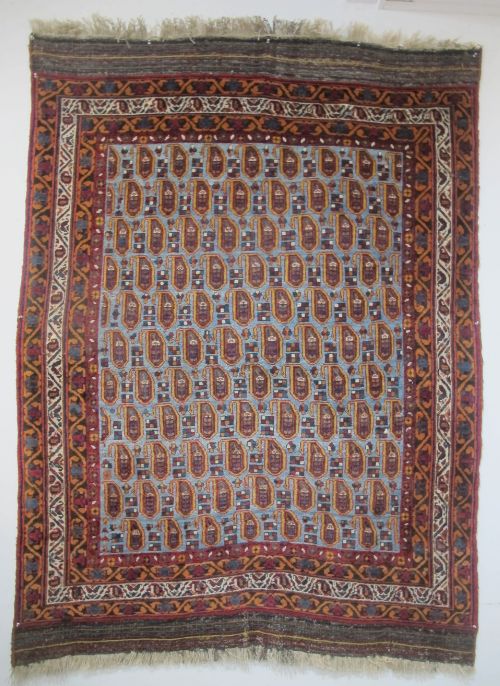
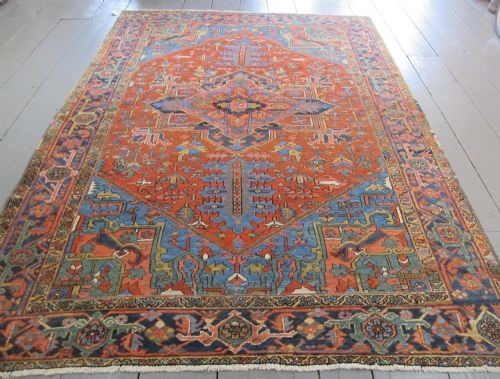
A late victorian wool carpet comprises hand-knotted floor coverings produced across Persia, the Caucasus, Turkey, India and Central Asia during the final decades of the nineteenth century. These textiles include large room-size carpets, corridor runners and smaller tribal prayer rugs created by weavers working within distinct regional traditions.
The pieces on this page span styles such as Heriz, Sultanabad, Fereghan, Serapi, Gendje, Kazak, Baluch, Kurdish, Shirvan, Milas and Agra. Buyers encounter robust village carpets with bold geometric layouts alongside finely knotted city carpets displaying elaborate floral motifs.
Most examples originate from Persian and Caucasian workshops or nomadic confederations, dated by their construction and dye palettes to the periods around eighteen eighty, eighteen ninety and nineteen hundred. They serve as functional floor coverings that introduce saturated colour and historic artistry into domestic interiors.
How they were made
These carpets rely on hand-spun wool for the pile, combined with cotton foundations used for the warp and weft threads. Weavers knotted the wool pile by hand onto the cotton or wool foundation, utilising natural dyes derived from plants and minerals to achieve deep, lasting shades of red, blue, yellow and green.
Village and tribal weavers often employed local wool and asymmetric or symmetric knots on vertical or horizontal looms, yielding robust textures with slight irregularities. City workshops maintained tighter knot densities and precise cartographic designs, resulting in smoother pile surfaces and intricate medallion or all-over field patterns.
Some weavers tucked tiny protective amulets or subtle intentional flaws into their carpets to ward off the evil eye.
What varies in quality
Quality rests upon the fineness of the knotting, the stability of the foundation and the depth of the dye work. Tighter knot density allows for sharper design outlines and greater durability under foot traffic, distinguishing fine city pieces from coarser tribal work.
The Late Victorian Wool Carpet Glossary
- Warp
- The stationary vertical threads stretched on a loom that form the structural foundation of the carpet. The exposed ends of these threads often appear as fringes at the ends of the rug.
- Weft
- The horizontal threads passed alternately over and under the warp threads after each row of knots is tied, binding the structure together. In many nineteenth-century pieces, dyed wool or cotton wefts provide additional structural stability.
- Prayer rug
- A small textile featuring a mihrab or arch design at one end, traditionally used to indicate the direction of prayer. These pieces frequently display specialised niche motifs and compact field decorations.
- Natural dyes
- Colourants extracted from organic sources such as plants, roots and insects prior to the widespread adoption of synthetic aniline dyes in the late nineteenth century. These materials produce harmonious, fading patinas as they age.
- Knot density
- The count of individual knots per square inch or decimetre, determining the fineness of the weave and the clarity of the pattern. Higher densities typically indicate urban workshop production rather than tribal weaving.
Late Victorian Wool Carpet: Frequently Asked Questions
How do I clean a wool carpet?
Gentle surface vacuuming without a rotating brush roll removes everyday dust and loose particles from the pile. Professional rug cleaning is recommended for deep washing to protect the natural wool fibres and dyes.
Water exposure should be managed carefully to prevent dye migration or shrinkage in the cotton foundation. Immediate blotting of spills with a clean, dry cloth prevents staining without scrubbing the pile.
Where were these carpets made?
Production centres span North-West and South-East Persia, Caucasian regions, Anatolia, India and Central Asian tribal territories. Village weavers and nomadic groups created rugs within specific confederations and valleys.
Towns such as Heriz, Sultanabad, Fereghan and Kerman produced larger room-size carpets for export and domestic use. Each region maintained distinct palettes, wool characteristics and geometric or floral repertoires.
Are these carpets suitable for heavy traffic?
Hand-spun wool combined with sturdy cotton foundations provides natural resilience and durability under daily foot use. Village and tribal carpets were originally built for practical, sustained use in domestic settings.
Placing an appropriate rug underlay beneath the carpet prevents sliding and reduces friction against hard flooring. This additional support protects the foundation threads from excessive wear over time.
How do I identify a tribal rug?
Tribal pieces display spontaneous geometric layouts, stylized animal and plant motifs, and coarser knotting executed on portable looms. Their designs reflect the nomadic heritage and local symbolism of groups such as the Baluch, Khamseh and Kurdish confederations.
These rugs frequently feature irregular dimensions, rich saturated colours from natural dyes, and vibrant filler ornaments across the central field. Their construction is generally sturdier and less regimented than urban workshop carpets.