


Late Victorian Brass Candlesticks
Late victorian brass candlesticks bring solid nineteenth-century weight and domestic utility to a room, forged in varied regional styles from domestic pairs to French imports.
Late Victorian Brass Candlesticks
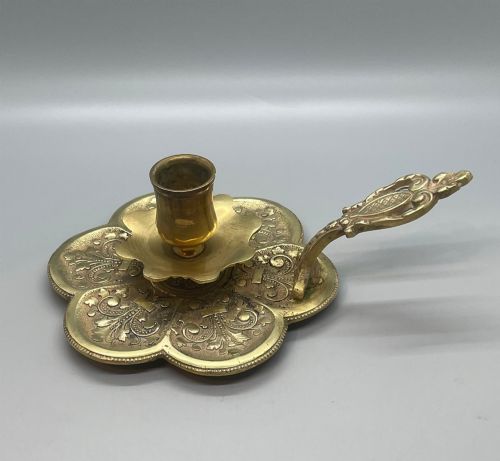
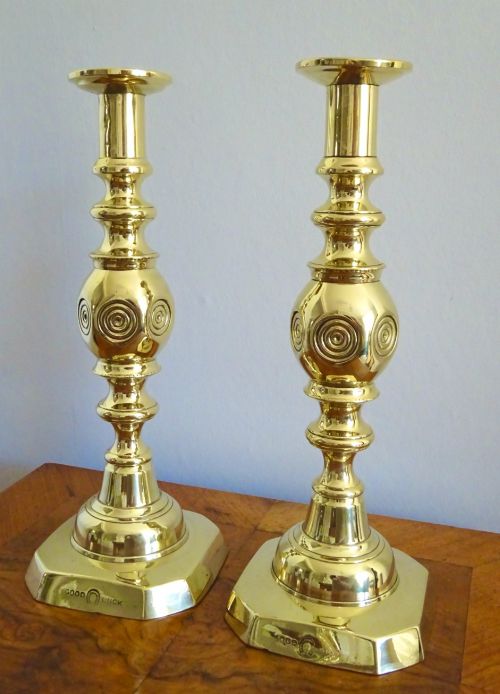
Late victorian brass candlesticks span functional domestic lighting and decorative metalwork produced from the 1870s through the turn of the twentieth century. These pieces appear in numerous forms, including standard pairs, chambersticks, adjustable candle holders, and taller pricket stands.
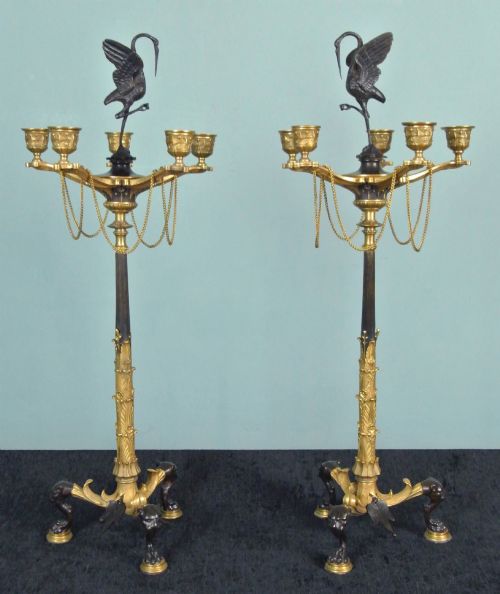
The selection on this page demonstrates broad international influence, featuring English workshops alongside French late nineteenth-century designs. Buyers regularly encounter pieces showing distinct stylistic leanings, from Gothic Revival and Rococo Revival to the clean lines of the Arts and Crafts and Aesthetic movements.
Beyond standard brass construction, many items incorporate mixed materials such as bronze, ormolu, copper, ceramic elements, mahogany, and cut glass. Certain examples take specific decorative shapes, including beehive turnings, cavalry dress swords, and figural models.
Materials and Working Methods
Makers utilised cast brass, bronze, and gilded bronze as primary structural elements, often combining them with contrasting materials like mahogany bases, ceramic inserts, or glass components. Cast brass pieces frequently relied on heavy component casting to achieve substantial weight and stable bases.
Surface finishes varied widely according to the intended aesthetic, ranging from polished bright brass to ormolu, patinated bronze, and mixed copper highlights. Specific examples integrate specialised decorative techniques such as boulle-work with tortoiseshell or intricate metal armatures.
Listings span the Victorian and Edwardian eras, with production dates centred around the 1880s and 1890s in both English and French workshops.
Distinctions in Standard
The degree of refinement in casting and chording separates standard commercial production from ambitious workshop pieces. Heavier metal gauge and crisp, deep relief work in stylistic elements like Gothic tracery or Aesthetic movement motifs indicate superior workshop output.
The integration of secondary materials, such as fitted cut glass, inlaid tortoiseshell, or articulated mechanical joints, marks the upper tier of the range. Simpler turned forms rely entirely on proportion, clean lines, and the honest wear of the metal over time.
Barbedienne·Frederick J Smith & Co·Dr Christopher Dresser·Wm Tonks & Sons·Clarkes
The Late Victorian Brass Candlesticks Glossary
- Ormolu
- Gilded bronze applied to ornamental metalwork and mountings. This technique provides a bright gold-coloured surface finish on French and English pieces.
- Chamberstick
- A short candle holder fitted with a shallow drip pan and a loop handle. These were designed for carrying safely through rooms and corridors at night.
- Pricket
- A candlestick featuring a sharp spike onto which a candle is pushed, rather than a socket that surrounds the base of the candle.
- Ejector
- A mechanism built into the stem of a candlestick that uses an internal slide to push out the remaining candle stump.
- Boulle-work
- An elaborate marquetry technique using brass and tortoiseshell inlaid into furniture and decorative objects.
Late Victorian Brass Candlesticks: Frequently Asked Questions
What is an ejector candlestick?
An ejector candlestick contains a small internal slider mechanism operated by a thumbpiece on the side of the stem. This device lifts the remaining wax stub upward for easy removal.
Such mechanical additions helped domestic staff maintain and clean metalware efficiently in late nineteenth-century households.
How do I identify an Aesthetic movement piece?
Aesthetic movement candlesticks often display stylised natural motifs, geometric incisions, and mixed metals like brass and copper. They reflect a deliberate shift away from heavy Victorian revivalism toward simpler, art-focused design.
Look for linear engraving and restrained ornamentation rather than bulky cast foliage.
Were these items used for gas or oil?
The majority of pieces listed are designed strictly for wax candles or tapers, featuring standard sockets or prickets. However, the period also produced lamp bases and candlelamps adapted for different fuel sources.
Converted pieces often show internal fittings designed to hold glass shades or chimneys securely.
How should I clean antique brass?
Antique brass generally benefits from minimal intervention to preserve its accumulated surface tone and historic patina. Gentle dusting with a dry cloth is usually sufficient for regular maintenance.
Avoid harsh chemical dips or abrasive polishing compounds that strip away the aged character of the metal.