



Late Victorian Bedside Cabinets
Late victorian bedside cabinets are compact bedroom storage pieces that provide convenient surface space and concealed compartments beside a bed.
Late Victorian Bedside Cabinets
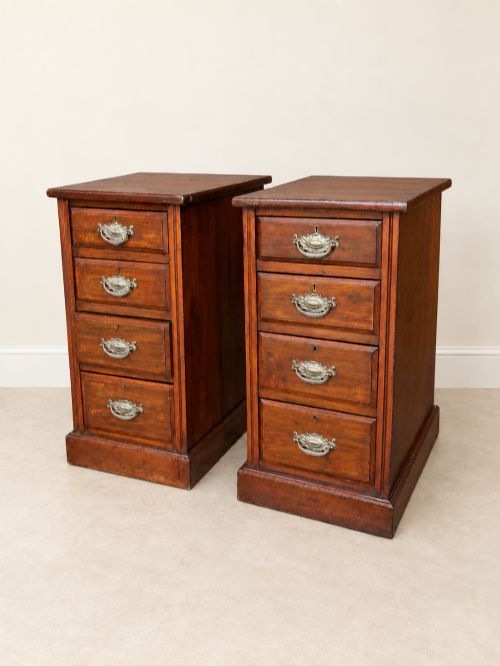
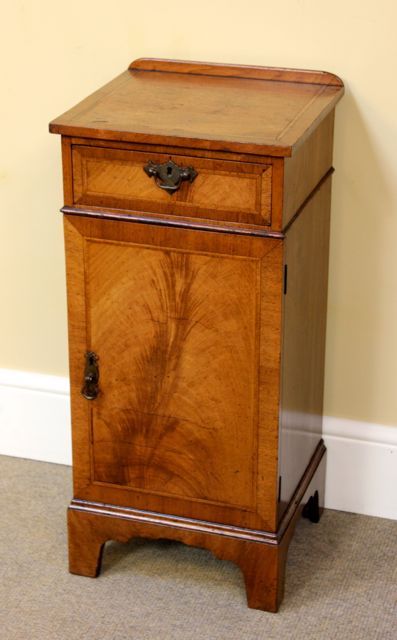
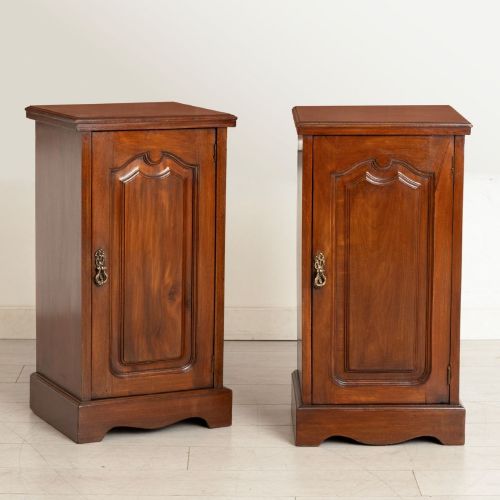
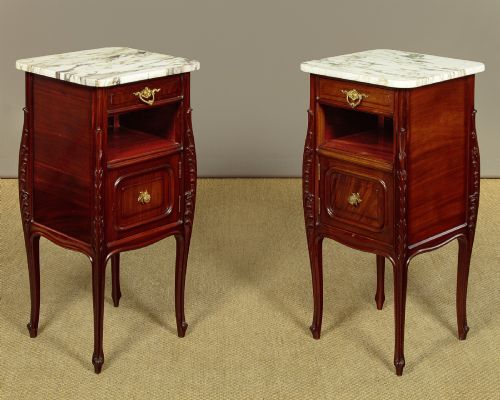
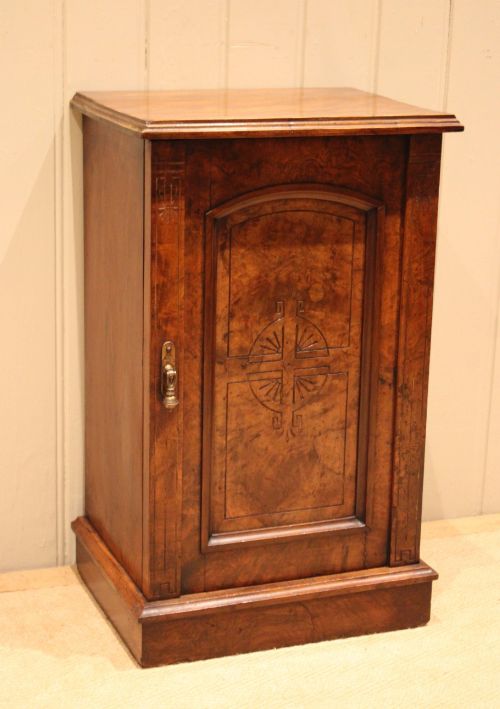
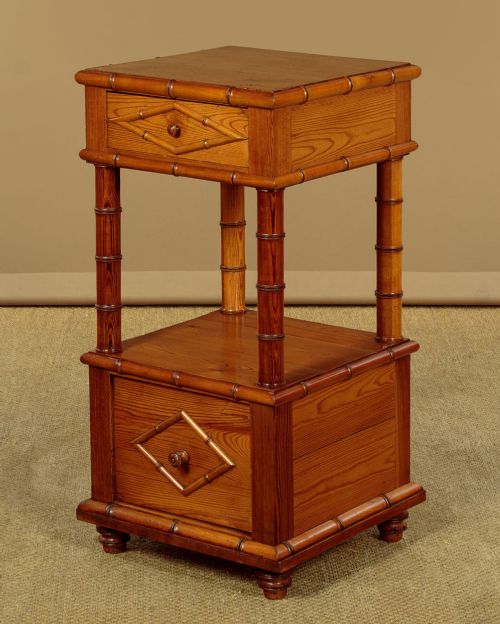
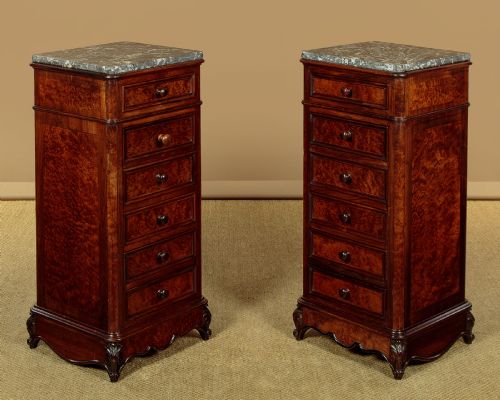
Late victorian bedside cabinets comprise enclosed cupboards, open compartments, and small drawer chests designed to stand beside a bed. You will encounter single examples and matched pairs in various heights and proportions across this selection.
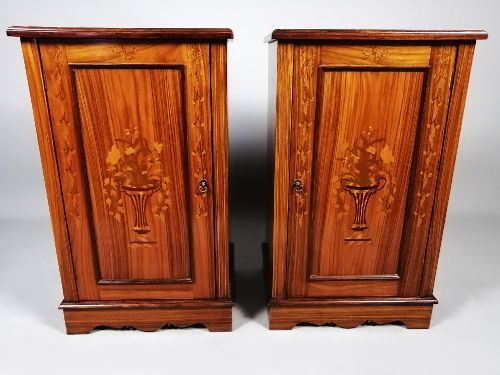
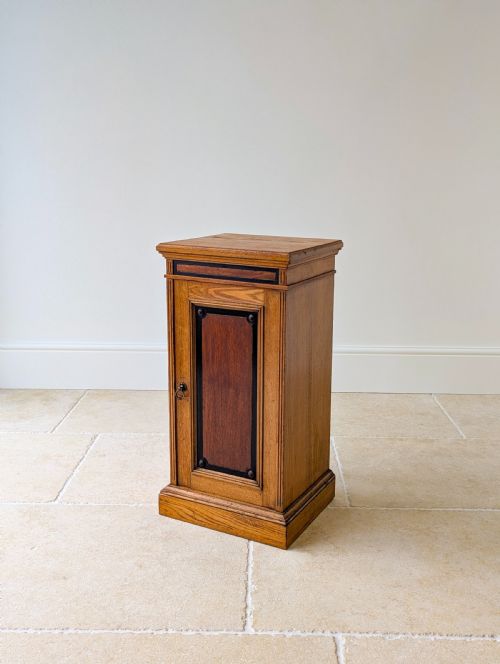
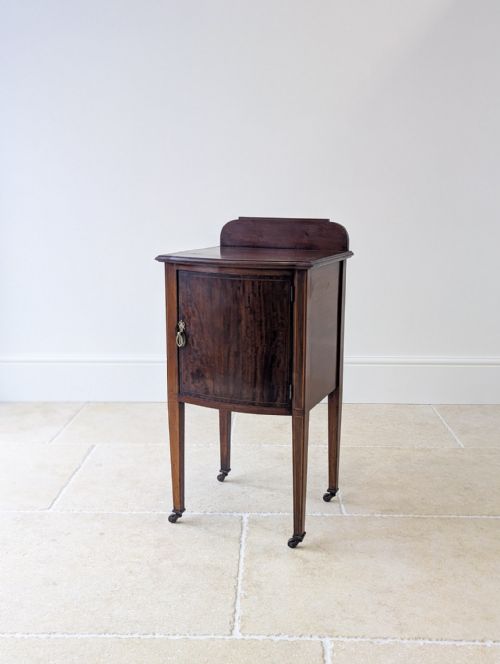
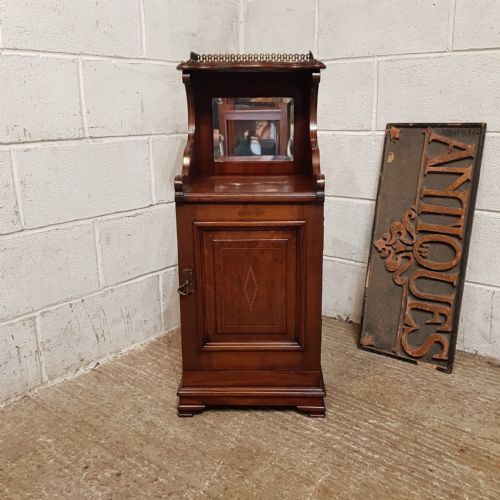
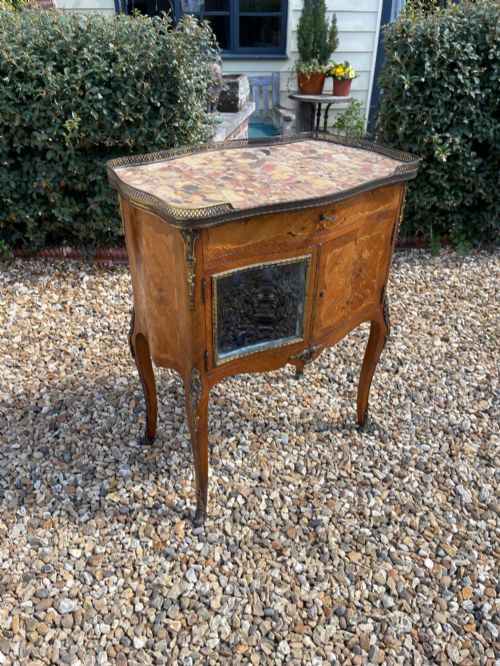
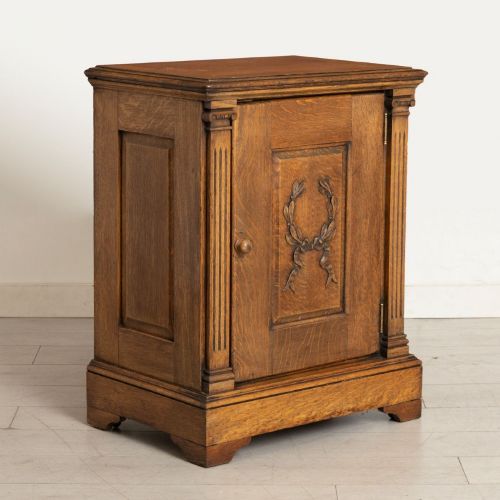
The dominant forms span simple single-door cupboards, tall pedestals, and compact drawer chests. Many examples incorporate fitted marble tops or detailed marquetry inlay.
Originating predominantly from the late nineteenth century, these pieces reflect the domestic habits of the period. They provide functional bedside storage utilising dense hardwoods and decorative veneers.
How they were made
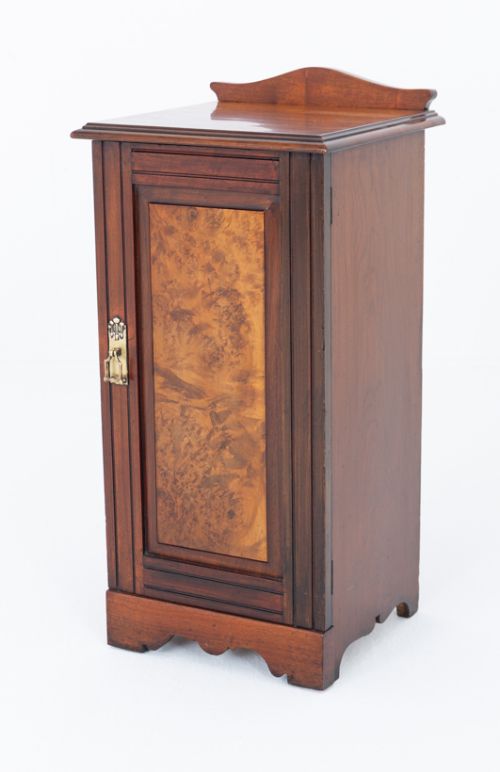
Cabinet makers utilised a range of primary timbers including mahogany, walnut, oak, and ash, frequently embellishing surfaces with burr walnut, rosewood, and amboyna veneers. Selected pieces feature marquetry inlay and exotic hardwood details.
Structural elements often incorporate solid secondary woods with hand-cut dovetail joints on drawer construction. Marble inserts provide durable, moisture-resistant surfaces on specific high-use variants.
The listings demonstrate a strong preference for walnut and mahogany, with burr walnut appearing frequently on high-status nineteenth-century drawer fronts.
What varies in quality
Quality separates along the lines of timber selection and the precision of decorative execution. Finely figured burr walnut and intricate marquetry indicate higher craftsmanship than plain utility surfaces.
The integrity of construction, such as flush-fitting doors, smooth drawer operation, and original brass hardware, distinguishes standard production from superior workshops.
Heals·James Shoolbred
The Late Victorian Bedside Cabinets Glossary
- Burr walnut
- A figured wood grain taken from walnut tree growths, prized for its swirling patterns. It appears frequently on decorative cabinet doors and drawer fronts.
- Marquetry
- The art of applying pieces of veneer to a structure to form decorative patterns. Craftsmen use contrasting woods to create pictorial or geometric designs.
- Aesthetic movement
- A nineteenth-century design style emphasising visual beauty over narrative subject matter. Cabinets from this movement display simpler, cleaner lines and refined ornamentation.
- Pedestal
- A tall, freestanding support structure. In bedroom furniture, it describes narrow, single-column cabinets designed to occupy minimal floor space.
Late Victorian Bedside Cabinets: Frequently Asked Questions
Are marble tops original to these cabinets?
Many late nineteenth-century bedside cabinets were manufactured with inset marble slabs to provide a clean, stain-resistant surface for washing jugs and water glasses. These heavy stone tops are generally contemporary with the wooden base.
Inspect the seating rebate beneath the stone to confirm the timber moulding accommodates the marble slab without structural alteration.
How do I identify an aesthetic movement bedside cabinet?
Aesthetic movement pieces depart from heavy historic revival styles by favouring simpler geometric forms and contrasting dark woods. They often incorporate subtle incised carving rather than ornate applied moulding.
These cabinets display an emphasis on craftsmanship and natural timber grains, frequently pairing ebonised details with walnut or oak.
Can I use pairs of cabinets on opposite sides of a modern bed?
Matched pairs of nineteenth-century bedside cupboards provide symmetrical storage flanking larger contemporary bed frames. Their compact nineteenth-century footprints suit standard bedroom layouts well.
Check the height of the cabinet surface relative to your mattress top to ensure comfortable night-time access.