


Late Victorian Barware
Late Victorian barware brings the robust engineering and formal hospitality of the late nineteenth century straight to the sideboard.
Late Victorian Barware
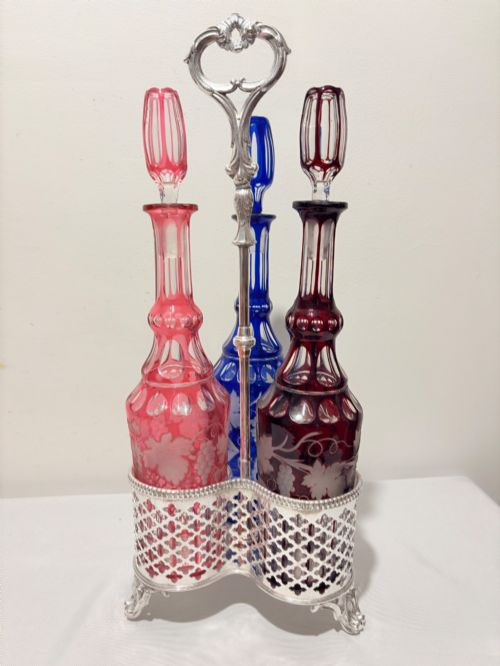
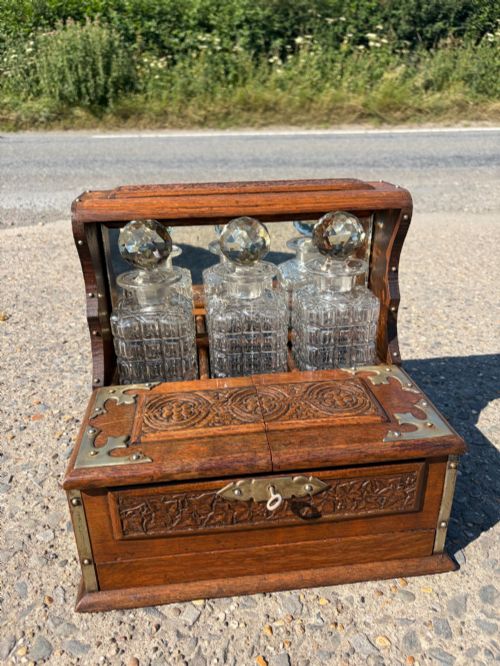
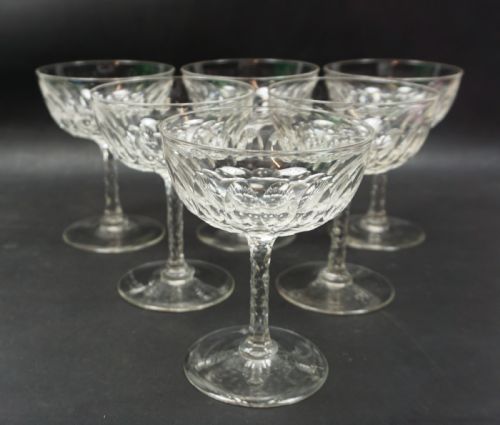
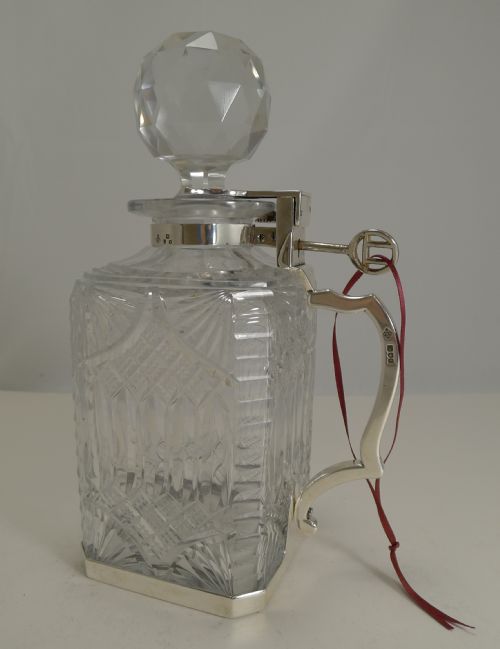
You are most likely to meet cut-glass decanters fitted with sterling silver or silver-plated mounts, alongside oak three-bottle and two-bottle after-dinner tantalus pieces bearing brass or silver-plated hardware. Glass bar dispensers and crystal champagne coupes also appear, showing the domestic appetite for formal drinks service around eighteen ninety.
The selection ranges from functional single decanters to complex mechanical novelty pieces like spirit barrels on carriages and champagne bottle decanters. These items reflect the Victorian parlor culture, where hospitality required secure storage and ornate display in equal measure.
Materials and construction
Makers built these pieces using dense hardwoods like oak and coromandel to house heavy glass vessels securely within locking frames. Silver plating and sterling silver formed the collars, handles, and lock mechanisms, while brass provided structural support and mechanical detailing for complex locking bars.
The glassware relied on heavy crystal and clear glass shaped through deep facet cutting, alongside enamelled decoration on specific spirit decanters. Metal mounts were cast and plated, then fitted directly to hand-cut bottles and jugs designed to withstand frequent domestic use.
Listings feature oak and coromandel woods paired with cut glass, sterling silver, and silver plate.
Quality differences
The distinction between standard commercial production and finer work lies in the execution of the locking mechanisms and the depth of the glass cutting. Better pieces feature integrated locks by known makers with smoothly operating spring bars, whereas simpler items rely on basic catches.
Material choice also dictates grade, with solid coromandel frames and heavy sterling silver mounts sitting above standard oak and silver-plated brass. The clarity of the crystal and the crispness of the facet cuts separate everyday utilitarian items from more ambitious dining room display pieces.
Betjemann Brothers·The Goldsmith Co.
The Late Victorian Barware Glossary
- Claret jug
- A pouring vessel designed specifically for serving red wine, typically combining a cut glass body with a hinged metal mount and handle. They date across the nineteenth century with varying degrees of silver-plated ornamentation.
- Champagne coupe
- A broad, shallow-bowled stemmed glass intended for sparkling wine. Late nineteenth-century versions frequently feature heavy crystal construction and facet-cut stems.
- Spirit dispenser
- A mechanical or gravity-fed vessel used to measure out liquor in a domestic or commercial setting. These items often carry enamelled lettering denoting specific whisky brands.
- Coromandel
- A dense, heavily figured exotic hardwood imported from Asia and utilised for luxury Victorian boxes and game boards. Its dark grain made it a favored material for high-end tantalus frames.
Late Victorian Barware: Frequently Asked Questions
What is a tantalus?
A tantalus is a wooden frame that locks decanters in place with a metal bar across their stoppers, preventing guests or staff from pouring drinks without authorization.
They became popular in late nineteenth-century dining rooms as a secure way to display expensive imported spirits on the sideboard.
How do I date these pieces?
Dating relies on mechanical patents, hallmarks on silver mounts, and the specific wood and glass styles characteristic of the final decades of the nineteenth century.
Makers often stamped their names near the lock mechanism, which helps narrow the production period between eighteen eighty and nineteen hundred.
Why do some decanters lock?
Locking decanters were used by Victorian households to restrict access to costly spirits, keeping the household whiskey and brandy safely contained.
The key remained with the head of the house to control consumption by staff or visiting guests.
What is silver plate?
Silver plate refers to a base metal, often copper or brass, coated with a thin layer of silver through electroplating or older fusing methods.
This technique allowed nineteenth-century manufacturers to produce ornamental mounts and claret jug lips that looked like solid silver at a lower cost.