



Late Georgian Writing Table
A late georgian writing table offers practical workspace combined with the rich grain of period timbers like mahogany and rosewood.
Late Georgian Writing Table
A late georgian writing table represents the refined domestic furniture produced around the turn of the nineteenth century, encompassing forms designed specifically for correspondence and study.
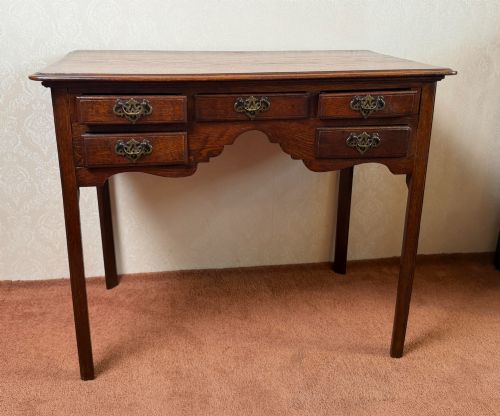
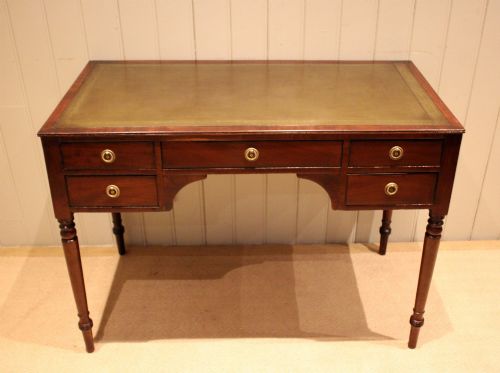
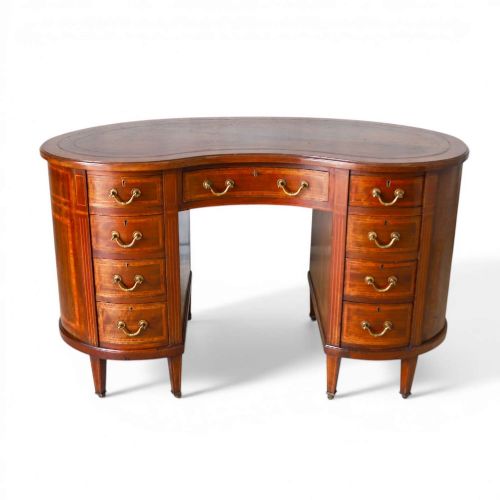
The pieces appearing on this page span writing tables, side tables, and partners desks from the Georgian, Regency, and Sheraton periods.
Mahogany forms the primary body of these desks, frequently accompanied by satinwood, rosewood, and original leather writing surfaces.
How they were made
Cabinetmakers utilised solid timbers and veneers such as mahogany, satinwood, and rosewood, often enhanced with delicate wood inlay and cross-banding.
Drawer construction typically involved oak linings paired with original brass hardware, while writing surfaces frequently incorporated inset leather panels.
Late Georgian Writing Table Retail Price Guide 2026
Typical asking prices for late georgian writing table among the pieces listed under this phrase on Sellingantiques today, from the lower quarter to the upper quarter. They describe what is for sale here now, not the wider market.
Several tables retain hand-painted geometric tops alongside traditional oak-lined drawers.
What varies in quality
The distinction between standard examples and exceptional pieces rests on the choice of figured timber, the crispness of any inlay, and the retention of original brasses and leather inserts.
Proportion and execution set individual workshops apart, with finer desks demonstrating meticulous attention to secondary woods and internal drawer construction.
Thomas Myers of Gillows
The Late Georgian Writing Table Glossary
- Partners desk
- A large desk designed to be used from both sides simultaneously, featuring banks of drawers or cupboards facing opposite directions.
- Satinwood
- A lustrous, hard timber native to India and Ceylon with a characteristic golden yellow sheen, frequently used for veneering and inlay during the Sheraton period.
- Cheveret
- A small writing table fitted with a removable book-stand or tier of small drawers on top, also known as a bonheur-du-jour.
- Cross-banding
- A decorative border of veneer laid so that the grain runs at right angles to the length of the board it edges.
- Marquetry
- Elaborate patterns formed by the insertion of different woods and materials into a veneer ground to create pictorial or geometric designs.
Late Georgian Writing Table: Frequently Asked Questions
What is a late georgian writing table used for?
These tables served primarily for correspondence, bookkeeping, and administrative tasks in the private study or library.
Today, they function effectively as compact home office desks or console surfaces in traditional interiors.
How do I identify a late georgian writing table?
Look for characteristic construction methods such as oak drawer linings, hand-cut dovetails, and period timber choices like Cuban mahogany or rosewood.
Stylistic cues often point to Sheraton or Regency design influences prevalent around eighteen hundred.
Are writing tables and side tables the same?
While writing tables generally feature drawers and dedicated writing surfaces, side tables are simpler forms adapted for display or general surface use.
Many period side tables were utilised interchangeably for writing depending on the room and the owner's needs.
What woods were used for writing tables?
Mahogany remains the dominant timber found across these listings, varying from plain stock to highly figured grains.
Satinwood and rosewood appear frequently as decorative veneers, often accented with lighter wood inlay.