


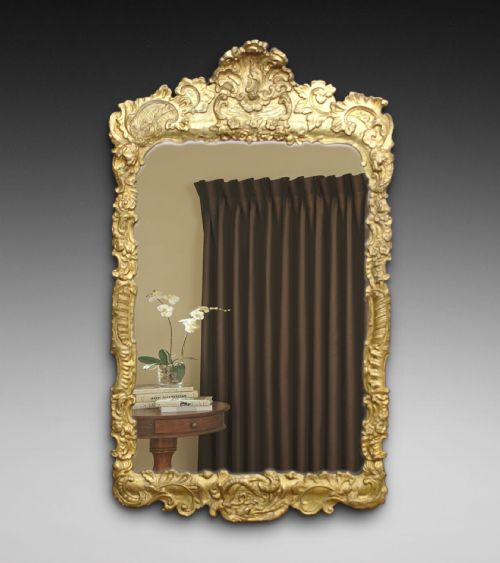


Late Georgian Gilt Mirror
A late georgian gilt mirror brings warmth and depth to a room through centuries of gold leaf and carved wood.
Late Georgian Gilt Mirror
A late georgian gilt mirror sits comfortably between the restraint of the eighteenth century and the bolder forms of the regency period. Buyers searching for a late georgian gilt mirror encounter wall mirrors, pier glasses and overmantel formats spanning the late eighteenth and early nineteenth centuries.
The selection here encompasses regional English pieces alongside continental examples, including Italian and French interpretations. Wall mirrors and overmantels dominate the forms, often retaining their original proportions designed to reflect light across a drawing room or hall.
Surviving examples reflect diverse stylistic influences, from neoclassical lines to rococo flourishes and later revival iterations. Each object brings a distinct silhouette shaped by the decorative tastes of its original commissioning period.
Materials and construction
Makers built these frames using timber carcase work, applying layers of gesso to create smooth surfaces for gilding. Gold leaf or metal leaf was then laid over the prepared ground, sometimes supplemented by ebonised wood details or brass fittings.
Glass production of the era resulted in distinctive mirror plates, occasionally featuring mercury backing or reverse painting. Wooden elements underneath the gesso typically include pine or hardwoods like mahogany and yew wood.
Late Georgian Gilt Mirror Retail Price Guide 2026
Typical asking prices for late georgian gilt mirror among the pieces listed under this phrase on Sellingantiques today, from the lower quarter to the upper quarter. They describe what is for sale here now, not the wider market.
Judging quality and preservation
Quality rests in the crispness of the hand-carving and the depth of the gilding applied over the gesso base. Finer examples retain their original mirror plates and untouched surface patination rather than later restorations.
The integrity of the structural joints and the subtlety of decorative details such as foliate carving or eglomise panels distinguish superior examples from simpler utilitarian pieces.
The Late Georgian Gilt Mirror Glossary
- Giltwood
- Wood that has been coated with gold leaf. This finish defines the reflective warmth of the frame.
- Gesso
- A plaster mixture applied to wood frames to provide a smooth ground for gilding. It allows intricate relief carving.
- Pier glass
- A tall mirror designed to hang on the wall between windows. These pieces often feature candle sconces or decorative consoles beneath.
- Overmantel mirror
- A wide mirror intended to be hung above a fireplace mantelpiece. Their horizontal proportions suit the architecture of period rooms.
- Eglomise
- Glass decorated with cold painting and gilding on the reverse side. This technique produces a rich, reflective panel often seen in pier glasses.
Late Georgian Gilt Mirror: Frequently Asked Questions
Where should I hang a gilt mirror?
These mirrors function best on chimney breasts or between windows where they can capture and multiply natural light.
Ensure the wall fixings are robust enough to support the weight of a heavy wood and gesso frame.
How do I clean an antique mirror?
Dust the gilt surface gently with a soft dry brush to protect the delicate gold leaf layers.
Avoid using commercial chemical sprays on the glass or the frame to preserve the historic finish.
Are the mirror plates original?
Many pieces retain their early mirror plates, which often show minor foxing, dark spots or slight distortion.
Original glass adds authenticity and character, reflecting light with a softer quality than modern float glass.
How do I identify the period?
Look to the combination of carving style, wood types beneath the gesso and construction methods.
Neoclassical symmetry points toward the late eighteenth century, while convex forms often align with the regency era.