

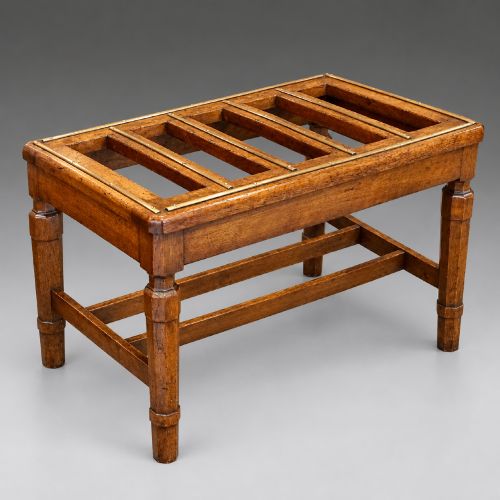



Late 19th Century Trunk
These late 19th century trunk examples bring sturdy construction and genuine period character to a room, offering practical storage with historic depth.
Late 19th Century Trunk
A late 19th century trunk encompasses utilitarian travel luggage and domestic storage containers produced during the Victorian era and the decades surrounding the turn of the century. Pieces appearing here span simple pine country boxes, canvas and leather covered travel cases, and more exotic camphor wood or teak military models.
Buyers seeking a late 19th century trunk will encounter sturdy wood constructions banded in iron or brass, alongside dome top Scandinavian designs and canvas bound examples. While the core function was travel or storage, these items now serve as coffee tables, blanket boxes, and focal points in contemporary interiors.
Materials and construction
Makers utilised a range of timbers including pine, oak, mahogany, teak, and camphor wood, often pairing domestic softwoods with durable hardwoods for travelling pieces. Metal reinforcement was essential, employing iron banding, brass corners, and copper plating to protect the edges during transit.
Surface finishes varied from natural wood patinas and polished hide to black canvas, lacquer, and original painted treatments. Interiors sometimes retained paper linings, while lids incorporated domed structures or flat tops designed for stacking on steamships and trains.
Late 19th Century Trunk Retail Price Guide 2026
Typical asking prices for late 19th century trunk among the pieces listed under this phrase on Sellingantiques today, from the lower quarter to the upper quarter. They describe what is for sale here now, not the wider market.
Materials documented across these pieces include brass, iron, wood, metal, leather, pine, oak, and hide.
Distinctions in quality
Quality in a late 19th century trunk rests on the integrity of the primary materials and the original hardware rather than superficial cleaning. Finer examples retain their original leather bindings, functioning brass locks, and maker plaques, whereas lesser items show heavy replacement of structural straps.
The choice of timber creates a clear hierarchy, with aromatic camphor wood, dense teak, and figured mahogany sitting above plain utility pine. Construction details such as dovetail joints and hand forged ironwork separate standard utilitarian containers from bespoke maker pieces.
James Purdey & Sons·Seabrook of St Pauls·James Bell Bath·H Pidduck & Son
The Late 19th Century Trunk Glossary
- Camphor wood
- A fragrant Asian timber prized for travelling trunks because its natural oils repelled insects and protected stored textiles. It develops a rich dark patina over time.
- Iron banded
- Featuring strapwork or corner brackets of iron fixed across the wooden body to withstand the rigours of Victorian transit. These bands provide structural rigidity.
- Steamer trunk
- A lower profile luggage chest designed to fit beneath a cabin berth on ocean liners during the late 19th century. They often feature flat or slightly curved wooden tops.
- Patina
- The surface sheen and colour acquired by wood, leather, and metal through decades of handling and age. Good patina indicates untouched historic surfaces.
Late 19th Century Trunk: Frequently Asked Questions
How do I use a trunk as a coffee table?
A flat top late 19th century trunk works naturally as a coffee table because the height suits standard seating and the interior provides hidden storage for blankets and books.
Ensure the lid is stable and support any items placed on the surface with trays to protect the historic wood or leather finish.
Were these trunks meant for travel?
Many examples were built specifically for global transport, utilising robust woods like teak and camphor alongside protective metal binding to survive railway and steamship journeys.
Other lighter pine and canvas versions served domestic storage needs within country houses and town residences rather than heavy transit.
How do I clean a leather bound trunk?
Maintain leather surfaces by gently dusting with a dry cloth and applying a specialist microcrystalline wax to nourish the hide without darkening the historic colour.
Avoid modern liquid cleaners or harsh detergents that strip the original finish and dry out the leather fibres.
How can I tell a Victorian trunk's origin?
Examine the timber species, construction joints, and any maker stamps or labels pasted inside the lid or stamped into the metal hardware.
Hardwoods like teak and camphor often point to military or colonial provenance, while pine and iron banding frequently indicate British or Scandinavian country workshop production.