

Late 19th Century Brass
When you search for late 19th century brass, you find functional domestic items and decorative bronze and metalwork spanning the Victorian and late nineteenth periods.
Late 19th Century Brass
The objects grouped under late 19th century brass comprise lighting, fireplace accessories, and decorative hardware manufactured during the Victorian era and the closing decades of the nineteenth century. Buyers encounter items ranging from utilitarian domestic fixtures to ornate decorative pieces designed for formal interiors.
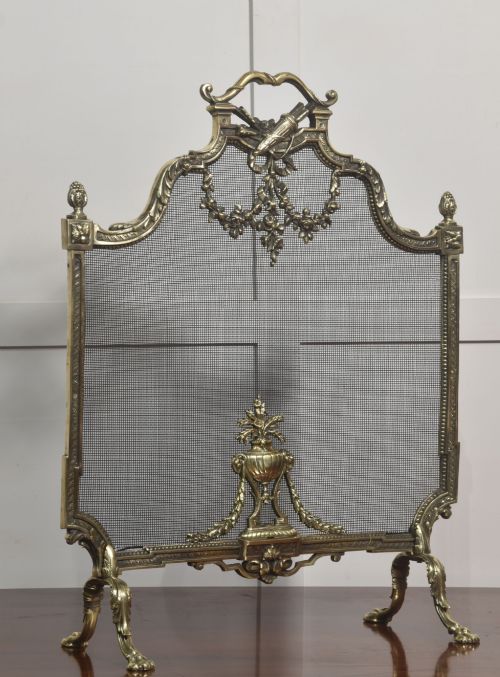
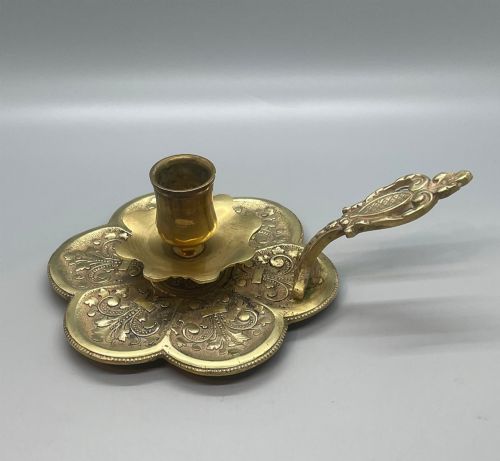
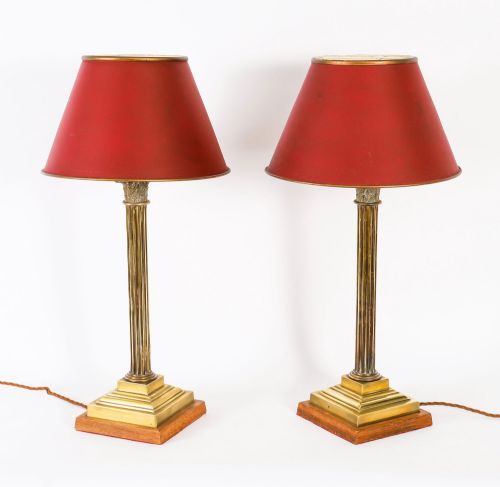
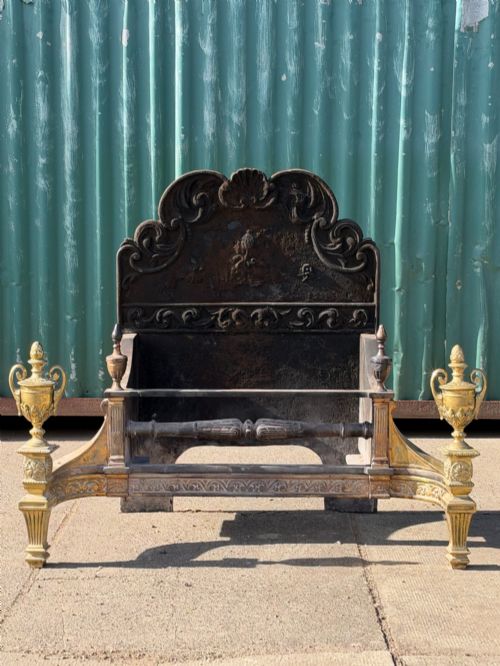
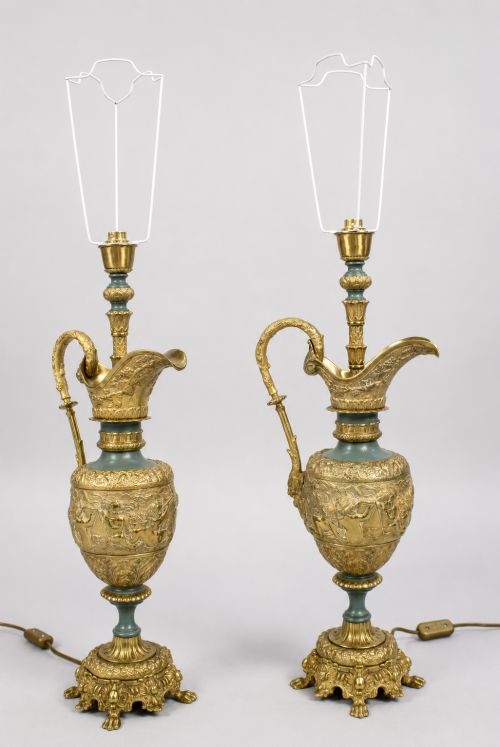
Lighting forms a substantial category, featuring table lamps, wall sconces, and multi-light chandeliers alongside practical items like candleholders and coaching lamps. Fireplace furniture, including fire screens, grates, and andirons, also appears frequently in this selection.
Stylistic influences vary widely across the inventory, encompassing French Rococo and Louis XVI revivals, classical column designs, and Anglo-Indian production. Pieces span domestic utility and decorative display, reflecting the diverse manufacturing output of the period.
Materials and construction methods
Makers utilised brass and related copper alloys, frequently combining cast and chased metal with materials such as glass, porcelain, enamel, and carved wood. Ormolu and gilt bronze finishes appear on decorative garnitures, clocks, and wall sconces, providing a polished or gilded surface layer over the base metal.
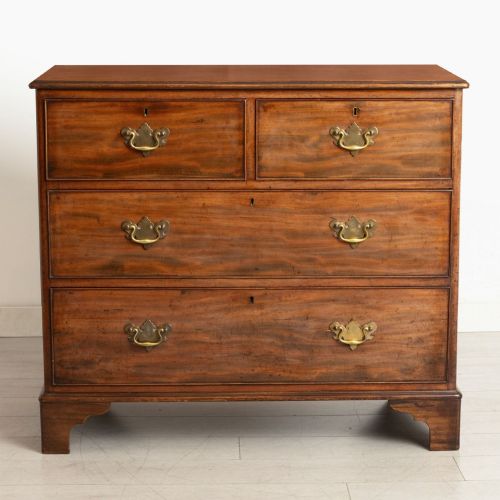
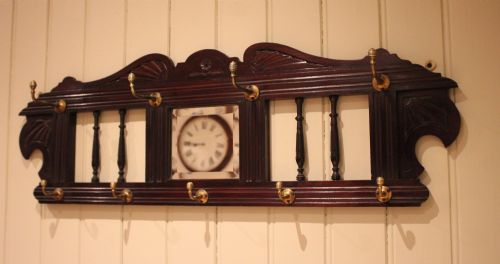
Casting techniques allowed workshops to produce intricate forms, from Corinthian column lamp shafts to figural candelabra and repousse wall plaques. Hand-finishing and chasing defined the surface details on many items, while structural elements in furniture and larger fixtures integrated brass fittings with mahogany, oak, and other timbers.
Late 19th Century Brass Retail Price Guide 2026
Typical asking prices for late 19th century brass among the pieces listed under this phrase on Sellingantiques today, from the lower quarter to the upper quarter. They describe what is for sale here now, not the wider market.
One pair of cast brass andirons depicts smiling sunflowers gazing steadfastly into the hearth.
Distinctions in quality
The standard of late 19th century brass depends on the crispness of the casting and the precision of the hand-chasing applied after the metal left the mould. Superior examples retain sharp decorative details and clean joints, whereas lower-grade production shows softer definition and simplified ornamentation.
The integration of secondary materials, such as champleve enamel, hand-painted porcelain inserts, or precision-cut glass, separates standard utilitarian wares from ambitious decorative pieces. Original surface patination and the survival of gilding or fire-gilding also influence the overall character of each object.
Charles Hindley & Sons·Howard and Sons·Morris & Co·Villeroy & Boch·Antoine Lampre·William Tonks
The Late 19th Century Brass Glossary
- Ormolu
- Gilded bronze applied to decorative hardware, clock cases, and furniture mounts. This technique involves using a mercury amalgam to bond gold to a bronze base.
- Champleve
- An enamelling technique where troughs or cells are hollowed out of the metal surface and filled with vitreous enamel before firing. It is frequently seen on French clock garnitures and decorative vessels.
- Repousse
- A metalworking technique where the artisan hammers the metal from the reverse side to form a raised design in relief. Dutch wall sconces frequently employ this method.
- Garniture
- A set of matching decorative objects, typically comprising a mantel clock flanked by matching candelabra or vases. These sets were designed to sit symmetrically on a fireplace mantel or side table.
Late 19th Century Brass: Frequently Asked Questions
What defines late 19th century brass items?
These pieces originate from the Victorian period and the closing decades of the nineteenth century, encompassing lighting, fireplace furniture, and decorative accessories.
They reflect diverse design influences, ranging from classical revivals to contemporary Arts and Crafts production.
How were brass wall sconces used?
Wall sconces provided domestic illumination by holding candles or oil before being adapted for electricity in later periods.
They were typically mounted in pairs beside mirrors, fireplaces, or architectural doorways to distribute light evenly across a room.
How do I identify French pieces?
French items from this era often feature distinct stylistic revivals such as Rococo or Empire motifs, alongside intricate gilt bronze or ormolu work.
Maker signatures or foundry marks on clock movements and bronze bases can also indicate continental manufacture.
How should I clean antique brass?
Antique brass benefits from gentle dusting and minimal intervention to preserve the natural patination built up over decades.
Avoid harsh chemical dips or abrasive metal polishes, which strip the aged surface and diminish the character of the piece.