




Late 18th Century Silver
Late 18th century silver comprises domestic table wares, personal containers, and mounted objects shaped by Georgian silversmiths and contemporary makers.
Late 18th Century Silver
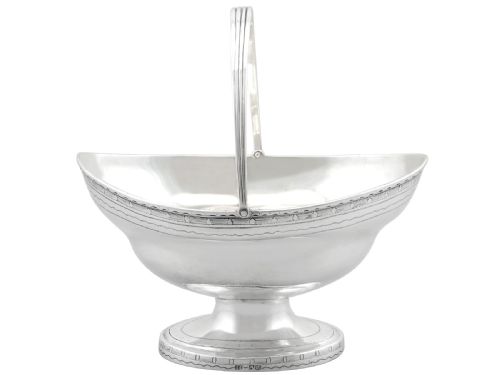
When you examine late 18th century silver, you encounter functional domestic items alongside personal accessories and mounted objects. These pieces encompass tableware like sugar baskets, cream jugs, salt boats, marrow scoops, sauce ladles, caddy spoons, and folding fruit forks, alongside drinking vessels such as pint tankards.
Beyond tableware, the category extends to small personal items including patch boxes, snuff boxes, needle cases, bodkin cases, and bottle labels designated for Madeira and Port. You also find larger table accessories and lighting, specifically candlesticks and inkstands, alongside mounted items like cutlery boxes and firearms featuring silver inlays.
The objects span Georgian domestic work, Scottish provincial output, and regional European or Ottoman pieces produced during the same decades. Sterling silver and Old Sheffield Plate represent the primary metallic mediums, occasionally paired with mahogany, brass, steel, copper, or cut glass.
Materials and construction methods
Makers utilised sterling silver and Old Sheffield Plate as the predominant metallic materials, often combining silver with mahogany, brass, steel, copper, and wood. Old Sheffield Plate involved fusing a thin sheet of silver to a thicker copper base, creating durable vessels and candlesticks with resilient metallic surfaces.
Silversmiths employed techniques such as casting, piercing, and surface engraving to shape sugar baskets, mustard pots, labels, and flatware. Artisans applied hand-beaten silver inlay to firearm stocks and mounted solid silver elements onto polished mahogany cutlery boxes.
Dutch makers shaped silver into miniature knitting needle guards and carved scabbards to keep textile tools secure.
Distinctions in construction and design
The standard of late 18th century silver rests upon the crispness of chased and engraved details, the weight of the metal gauge, and the original integrity of the components. Pieces featuring heavier silver stock and well-preserved hallmarks demonstrate superior primary manufacturing.
Subtleties in craftsmanship distinguish standard utility items from finer domestic silver, particularly in the precision of pierced piercing work on baskets and the retention of original gilding inside boxes and jugs.
John Cafe·William Cripps·Pinchetti & Co
The Late 18th Century Silver Glossary
- Sterling silver
- A silver alloy containing 92.5 percent pure silver and 7.5 percent other metals, usually copper, ensuring structural durability for tableware.
- Old Sheffield Plate
- A composite material formed by fusing a thin layer of silver onto a copper ingot, developed in the eighteenth century for tableware.
- Hallmark
- An official stamp applied to precious metals indicating the standard of purity, the assay office, and the date letter.
- Sugar basket
- A small footed receptacle used for holding loose sugar at the tea table, frequently fitted with a cobalt blue glass liner.
- Marrow scoop
- A long, narrow spoon-like utensil designed for extracting marrow from animal bones during dining.
- Pounce pot
- A small perforated container used for sprinkling fine powder over damp ink to speed up drying.
Late 18th Century Silver: Frequently Asked Questions
What items count as late 18th century silver?
Late 18th century silver includes a wide variety of dining table accessories, small personal containers, and fitted wooden boxes with silver mounts. Common examples range from sugar baskets, cream jugs, and marrow scoops to patch boxes, bottle labels, and candlesticks.
Makers also applied silver components to utilitarian items such as cutlery boxes, firearm stocks, and scientific instruments during the same decades.
How do I identify Old Sheffield Plate?
Old Sheffield Plate is a fused composite material where a thin sheet of silver covers a copper base, rather than solid silver. You can often detect the underlying copper showing through along high-wear edges and seams.
This technique preceded electroplating and was widely utilised for domestic vessels and lighting before the nineteenth century.
Were these pieces marked with hallmarks?
Many British pieces from this period carry standard hallmarks indicating the silver standard, the assay office, and the active year. Smaller items or foreign imports such as Dutch or Ottoman pieces may feature different regional stamps or lack standard British marks entirely.
Checking the interior surfaces or bases typically reveals stamped maker initials or assay impressions.
How should I care for antique silver?
Antique silver requires gentle cleaning with non-abrasive cloths and specialised silver polishes to preserve the surface and any original engraving. Avoid harsh chemical dips that strip away the natural patina accumulated over centuries of use.
Store pieces in stable environments away from excessive moisture to prevent tarnishing and protect any fitted wooden or glass elements.