
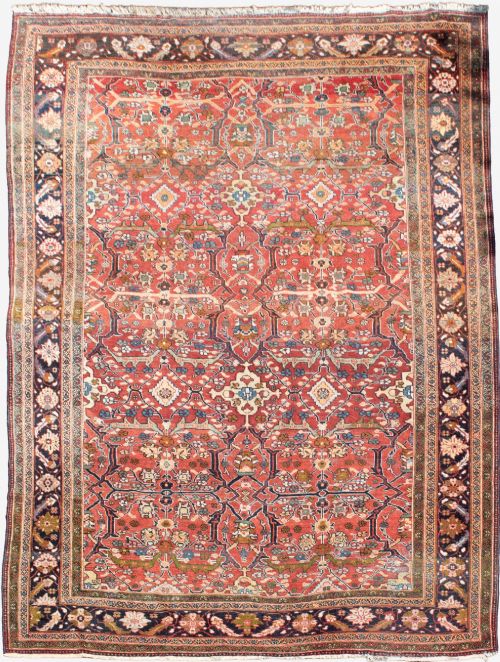


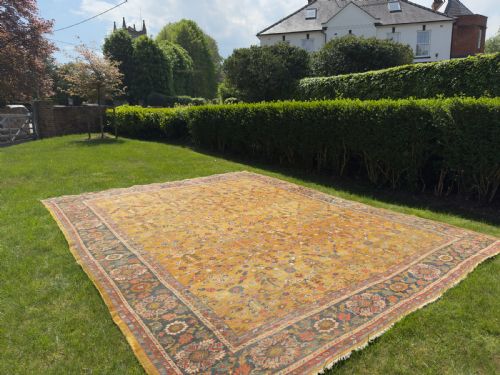

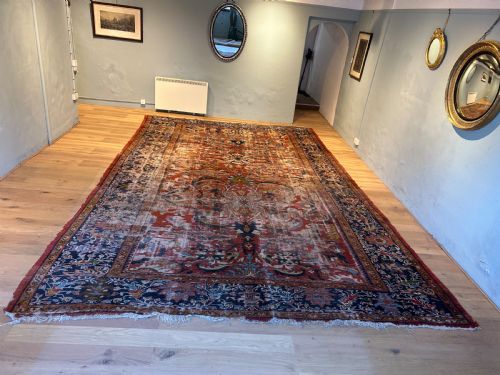


Large Ziegler Rug
A large ziegler rug brings nineteenth-century Persian artistry into a room, offering expansive floral motifs and muted palettes.
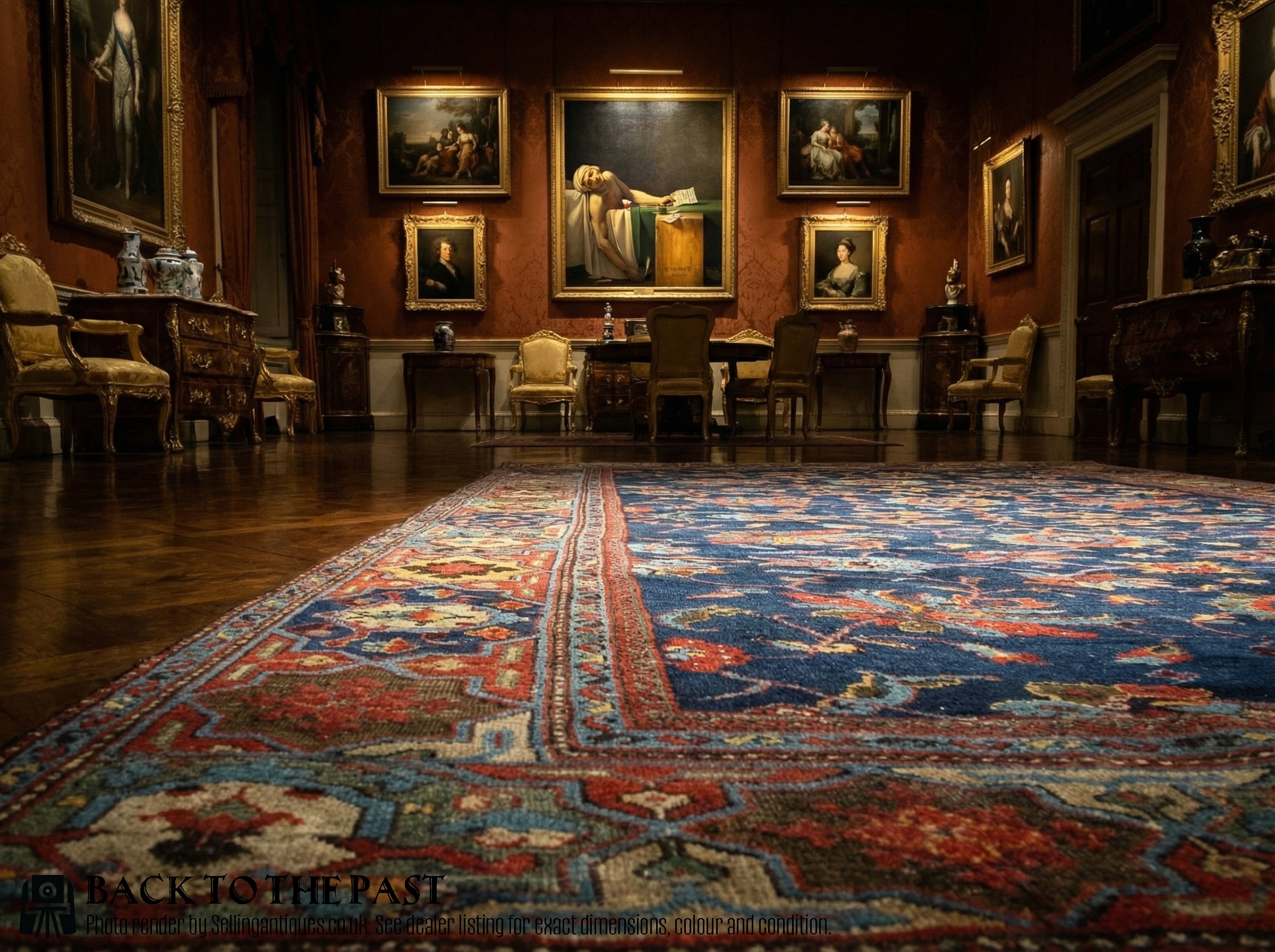
Large Ziegler Rug
A large ziegler rug is a grand nineteenth-century Persian floor covering created to suit Western drawing rooms with softer palettes and oversized floral patterns. When you search for a large ziegler rug, you encounter floor coverings that span from the late nineteenth century, including specific styles like Sultanabad and Mahal.
The pieces listed on this page represent substantial formats designed for expansive spaces, often categorized under carpets, area rugs, and rugs and carpets. Most examples originate from the 1880s and 1890s, showcasing the traditional weaving output of Persia during that era.
These carpets typically display balanced, open field designs rather than dense traditional medallion schemes, making them adaptable to contemporary interiors. The predominant styles reflect Persian, Persian Ziegler, and Sultanabad aesthetic traditions from the nineteenth century.
Materials and construction
The construction relies on natural fibres, combining wool pile knotted onto cotton foundations to ensure durability and flexibility. Artisans of the period utilised these resilient materials to handle heavy traffic in large rooms.
Weavers employed traditional hand-knotting techniques characteristic of nineteenth-century Persian workshops, including specific production attributed to Ziegler and Co. The dye methods produced subdued tones that distinguish these carpets from brighter contemporary counterparts.
Listings span the late nineteenth century, predominantly featuring pieces dated to the 1880s and 1890s alongside general nineteenth-century examples.
Assessing quality
Quality rests in the precision of the weave and the preservation of the pile across a large surface area. Finer knot densities allow for sharper definition within the expansive floral and trellis patterns.
The integrity of the cotton foundation and the evenness of the wool wear determine the structural soundness of the piece. Subtle variations in natural dye retention also separate standard room-size examples from exceptional palace-scale carpets.
Ziegler and Co
The Large Ziegler Rug Glossary
- Ziegler
- A nineteenth-century firm and style known for adapting traditional Persian carpet designs to suit European tastes with calmer colours and large-scale motifs.
- Sultanabad
- A nineteenth-century Persian carpet style originating from the Arak region, recognised for robust floral patterns and soft vegetable-dyed palettes.
- Mahal
- A category of nineteenth-century Persian carpets from the same region as Sultanabad, typically featuring looser weaves and village-produced charm.
- Fereghan
- A Persian weaving style associated with finely knotted nineteenth-century carpets that often influenced later Ziegler and Co. productions.
- Foundation
- The underlying structure of a rug, consisting of warp and weft threads, which in these pieces is traditionally made of cotton.
Large Ziegler Rug: Frequently Asked Questions
What is a ziegler rug?
A ziegler rug is a nineteenth-century Persian carpet created by or in the style of the Ziegler and Co. firm, tailored for European decor with muted tones and large motifs.
These pieces use traditional Persian techniques paired with softer palettes to suit spacious rooms.
How do I date a carpet?
Dating relies on stylistic markers, material analysis, and historical records pointing to late nineteenth-century Persian production.
Most surviving examples date from the 1880s and 1890s, reflecting the active period of Sultanabad and Mahal workshops.
Where were they made?
These carpets were produced in Persia, specifically within regions associated with Sultanabad and Mahal weaving.
Western trading companies commissioned these works to bring traditional craftsmanship into European homes.
How do I maintain the rug?
Maintenance involves regular gentle vacuuming without a beating bar and professional cleaning suited for antique wool and cotton.
Keeping the piece out of direct sunlight preserves the natural dyes used in the nineteenth century.