


Large Wool Flatweave Rug
A large wool flatweave rug brings genuine regional character and historic floor textile artistry into large rooms through bold tribal and folk designs.
Large Wool Flatweave Rug
A large wool flatweave rug serves as a substantial room-sized floor covering spanning the nineteenth and early twentieth centuries. These textiles originate from diverse weaving traditions across Anatolia, the Caucasus, the Balkans, and Central Asia.
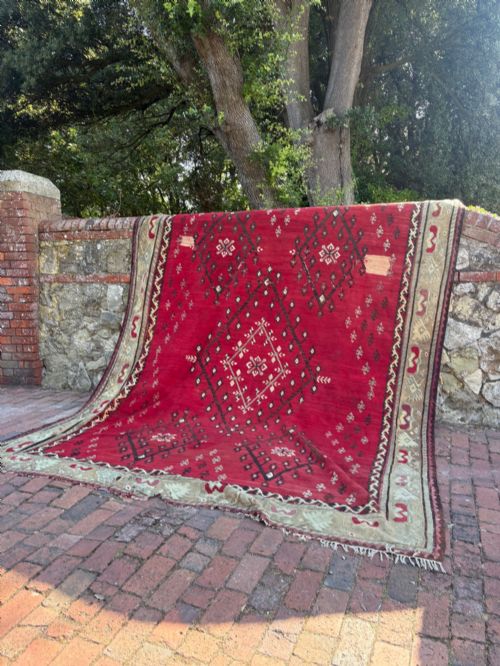
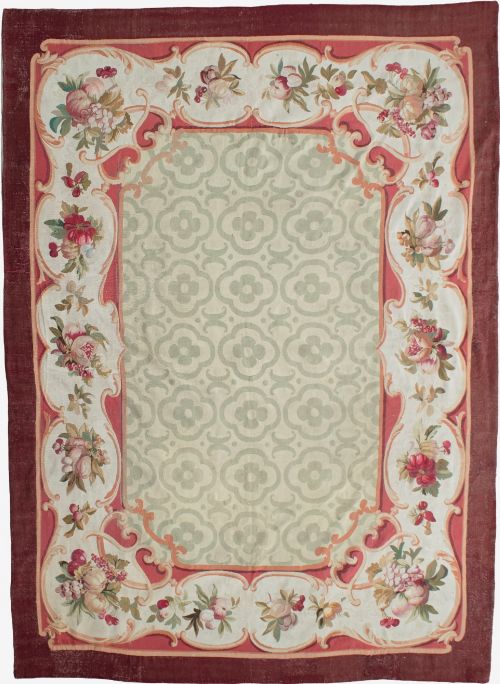
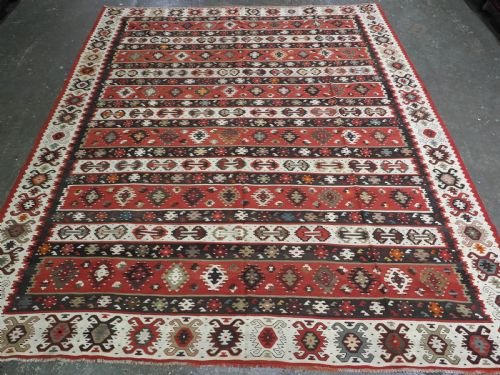
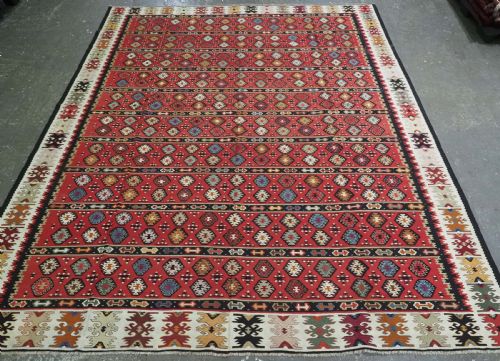
These textiles function primarily as grand floor coverings, though certain pieces such as crewelwork wall hangings serve alternative decorative purposes. Each specimen displays the distinct geometric, banded, or floral motifs characteristic of its specific geographic origin.
Materials and construction methods
Construction relies primarily on wool for the visible pile-free flatweave surface, frequently supported by cotton foundations or structural stitching. Weavers interlock the weft threads tightly across the warp to build crisp geometric boundaries and flat structural integrity.
Needlepoint and embroidered variations utilise wool threads stitched directly onto canvas or foundation fabrics to build pictorial floral compositions. Dye preparation involves traditional colour sources that yield the pastel and saturated tones visible across these nineteenth and twentieth-century textiles.
Several rugs secretly moonlight as historical floor maps, preserving the exact design eccentricities of nineteenth-century village sheep.
Distinctions in quality and execution
Quality separates pieces through the precision of the flatweave tension and the clarity of the regional design execution. Tighter interlocking of the wool weft creates a more resilient structure that maintains pattern fidelity across room-sized formats.
The sophistication of the colour palette and the preservation of original dimensions dictate the standing of an individual textile. Expertly handled historical repairs and well-maintained structural integrity elevate examples originating from workshops and nomadic communities alike.
The Large Wool Flatweave Rug Glossary
- Kilim
- A flatweave carpet or rug produced by tightly interweaving warp and weft strands without creating a pile. This technique yields a lightweight, reversible textile with distinct flat surfaces.
- Warp
- The stationary vertical threads stretched tightly on a loom that form the structural foundation of the rug. Weft threads pass over and under these foundational strands during weaving.
- Weft
- The horizontal threads passed through the warp to build the visible pattern and colour of the textile. In flatweaves, these threads are packed tightly to conceal the warp entirely.
- Medallion
- A prominent central ornamental motif placed in the middle field of a rug. These decorative focal points often feature geometric or shield-like configurations.
- Flatweave
- A textile produced without knotting pile yarn onto the foundation, resulting in a smooth, tapestry-like finish. Such pieces are traditionally utilised as floor coverings or wall hangings.
Large Wool Flatweave Rug: Frequently Asked Questions
What is a large wool flatweave rug?
A large wool flatweave rug is a historical floor textile produced without a raised pile through interlocking weft techniques. These room-sized pieces originate from traditional weaving centres across Europe, the Caucasus, and Asia.
They provide expansive decorative coverage while remaining thin and portable compared to knotted pile carpets. The category encompasses kilims, needlepoint carpets, and embroidered wall hangings.
How do I care for my rug?
Care for a flatweave textile involves gentle vacuuming without a rotating brush head to protect the flat surface. Keeping the piece away from direct sunlight preserves the natural wool dyes.
Professional specialist cleaning is recommended for historical wool textiles to prevent shrinkage or dye bleeding. Using an appropriate underlay prevents slipping and reduces friction against hard flooring.
Where were these rugs made?
These textiles were produced in diverse regions including Anatolia, the Balkans, Ukraine, the Caucasus, and Central Asia. Local tribal groups and village workshops developed distinct regional patterns and colour palettes.
Specific areas such as Pirot, Bessarabia, and Karabagh established renowned local traditions that persist in surviving examples. Each geographic origin imparts unique stylistic markers to the flatweave structure.
How are periods identified?
Dating relies on stylistic analysis, material assessment, and structural characteristics typical of nineteenth and early twentieth-century production. Natural dye variations and traditional regional motifs help narrow the era of creation.
Documentation and comparative examples from specific decades like the nineteen-twenties or eighteen-nineties assist in establishing approximate ages. Construction techniques also shift subtly across these distinct manufacturing periods.