

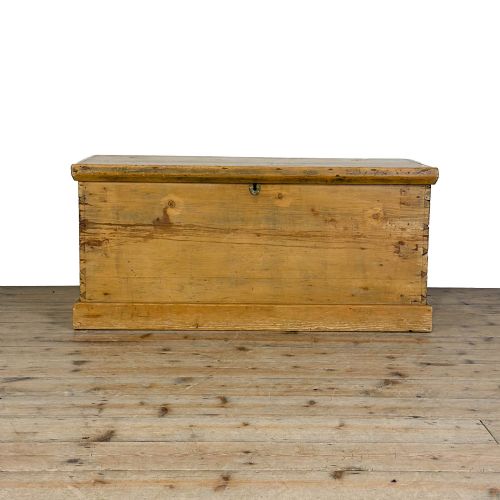
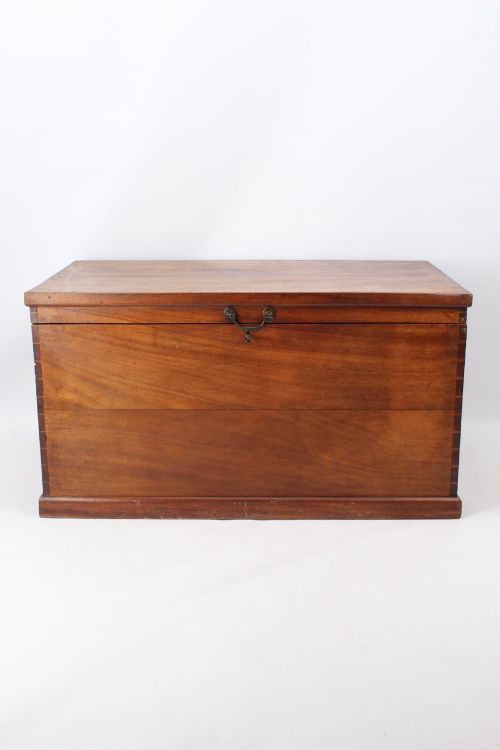
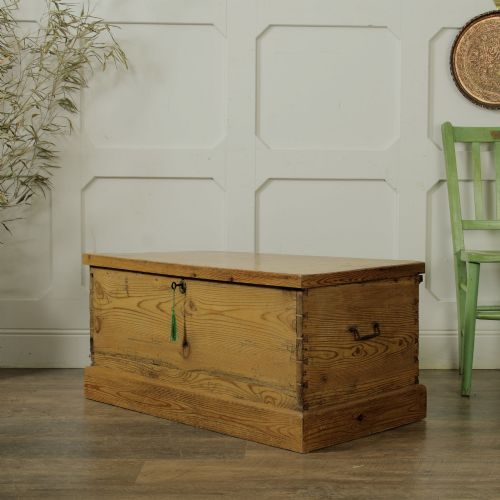
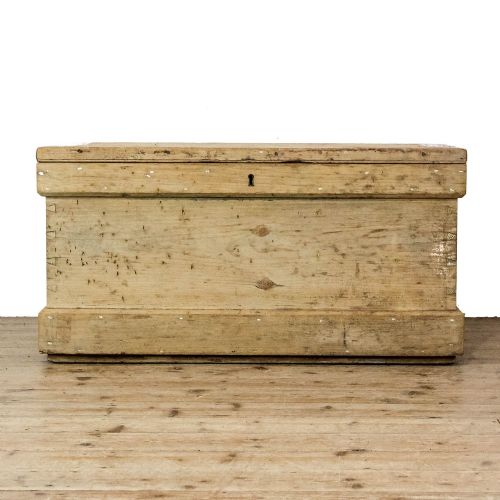
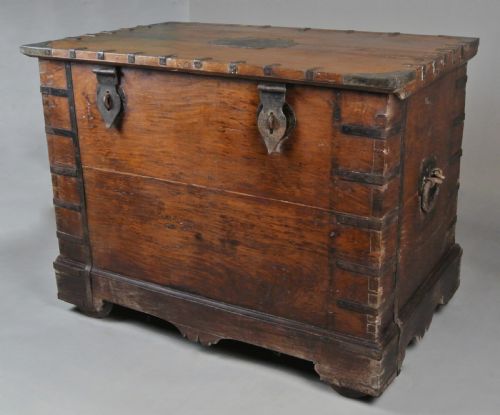
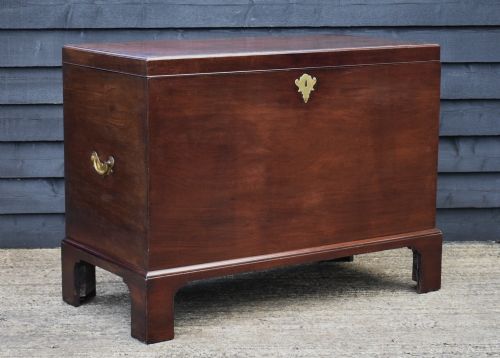
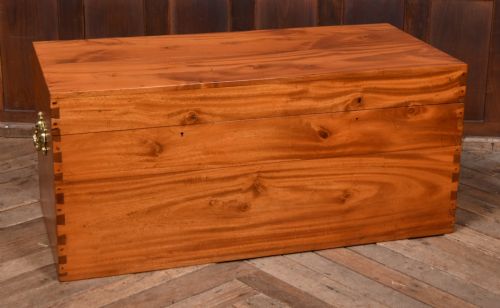
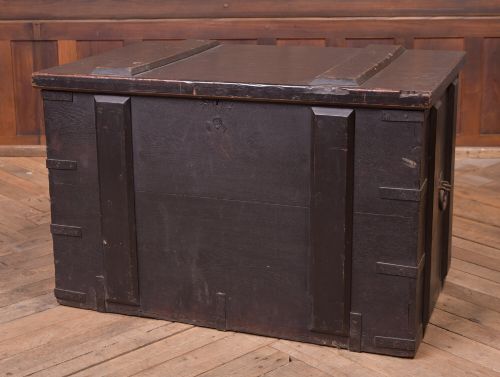
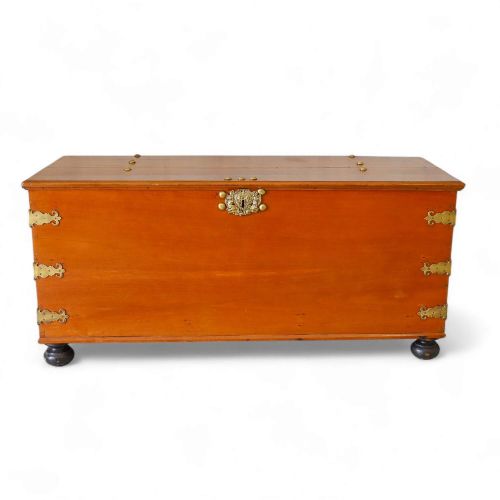
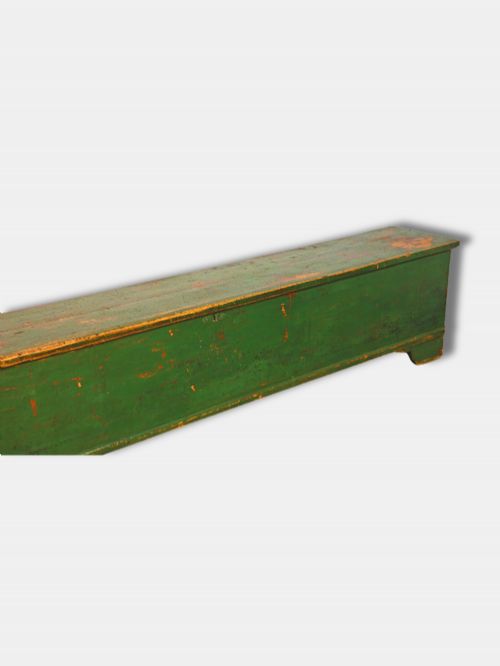
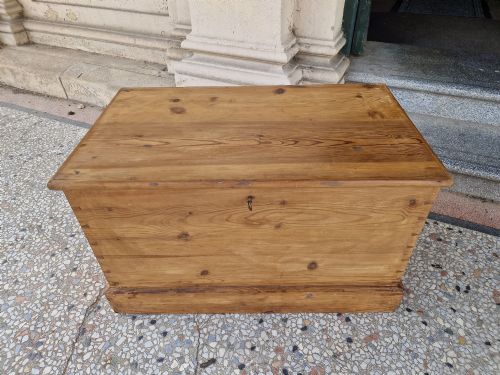
Large Wooden Storage Trunk
A large wooden storage trunk anchors a room while hiding clutter, built to carry belongings across centuries.

Large Wooden Storage Trunk
A large wooden storage trunk encompasses robust coffers, blanket boxes, and campaign chests built for heavy utility. These pieces originate from domestic homesteads, colonial outposts, and military deployments across the seventeenth, eighteenth, and nineteenth centuries.
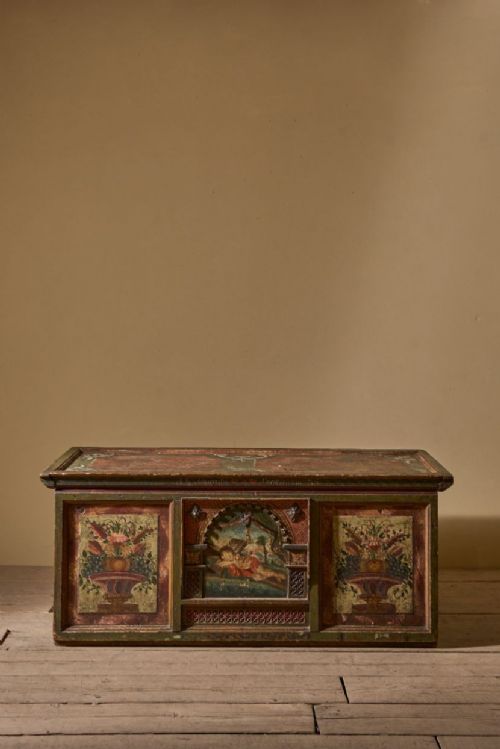
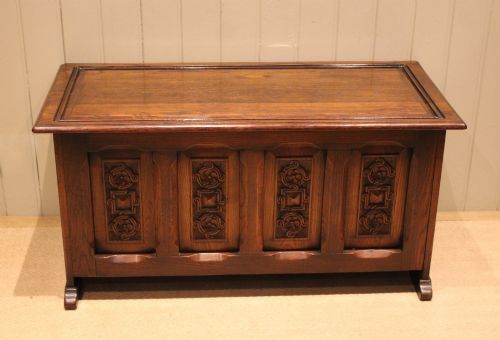
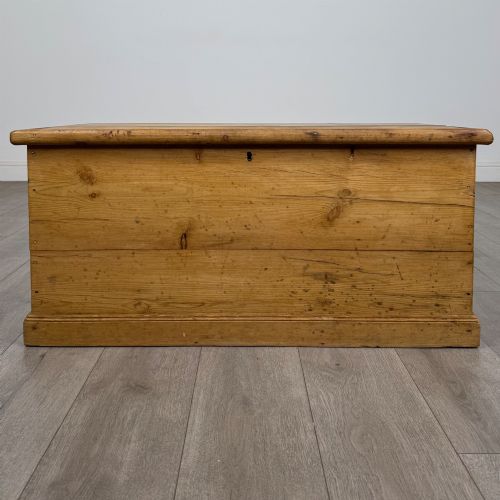
Pine and oak versions dominate the domestic selections, often finished with painted surfaces or left with stripped patination. Buyers frequently encounter utilitarian pine blanket boxes alongside carved oak coffers and bound campaign examples.
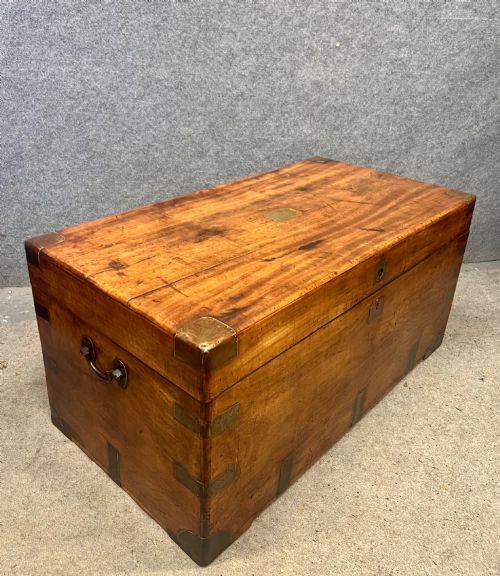
Regional variations include Hungarian painted boxes, Welsh oak coffers, and Ceylonese camphor wood chests. Each form reflects the specific storage demands of its era, from household linens to military equipment.
Construction and materials
Carpenters constructed these trunks using solid native and exotic timbers including pine, oak, teak, and camphor wood. Joinery relied on heavy planks, dovetail corners, and pegged panels designed to withstand constant movement and weight.
Metal reinforcement was essential for endurance, utilising iron straps, brass banding, and corner brackets. Surface treatments ranged from simple wax finishes and dark polish to elaborate painted folk art and carved decoration.
Camphor wood chests retain their sharp, distinct scent across centuries, still acting as natural moth repellents today.
Quality variations
The standard of a large wooden storage trunk depends upon the integrity of its timbers and the original state of its hardware. Heavy iron or brass bindings, intact internal tills, and original hinges elevate a piece significantly.
Execution of carving and joinery separates standard utilitarian boxes from finer regional works. Original painted surfaces and patination achieved through decades of use distinguish superior examples from later restorations.
The Large Wooden Storage Trunk Glossary
- Coffer
- A heavy wooden chest traditionally used for storing valuables and documents. These pieces often feature hinged lids and sturdy plank construction.
- Campaign chest
- Portable furniture designed for military officers on the move. They typically separate into modular sections with recessed brass handles.
- Mule chest
- A storage chest featuring one or more drawers beneath the main compartment. This form bridges the evolution from simple coffers to modern drawer chests.
- Camphor wood
- An aromatic timber prized for shipboard and colonial storage. Its natural scent repels insects and protects textiles stored inside.
- Dowry chest
- A large box prepared for a bride to collect household goods and linens for marriage. These pieces frequently display decorative painting or carving.
Large Wooden Storage Trunk: Frequently Asked Questions
How were these trunks used historically?
These large trunks served as secure receptacles for clothing, blankets, and personal valuables during travel or within domestic quarters. Military officers and merchants utilised reinforced variants for long journeys across land and sea.
In domestic settings, families used them as blanket boxes, marriage chests, or general storage furniture at the foot of beds. Their sturdy flat lids also allowed them to double as benches or tables inside modest homes.
Where should I place a large trunk at home?
A large wooden chest functions effectively at the foot of a bed for spare bedding and seasonal garments. They also serve as coffee tables in living spaces while offering concealed storage.
Entryways benefit from these pieces by providing a sturdy seat and a place to drop bulky items. Ensure the placement allows adequate clearance for the heavy lid to open fully.
How do I identify the wood type?
Examine the grain, weight, and colour of the timber exposed on the interior or base. Pine presents a softer, lighter appearance with visible growth rings, while oak displays a denser grain with prominent medullary rays.
Exotic woods like camphor and teak reveal distinct aromatic qualities or oily textures. Camphor wood emits a sharp, characteristic scent when the interior is opened.
What indicates an original painted finish?
Original paint shows natural wear, craquelure, and fading consistent with age rather than artificial distressing. Pigments often soak slightly into the wood pores over generations of exposure.
Inspect corners and recessed areas where cleaning cloths rarely reach for untouched pigment layers. Modern repainting tends to sit flatly on the surface without historical patination underneath.