



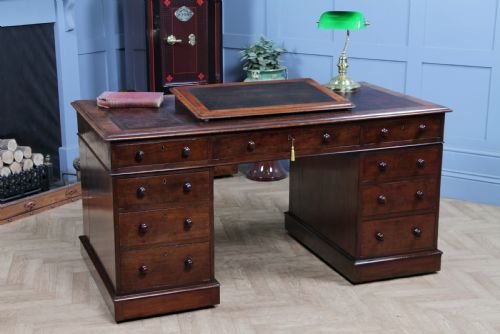


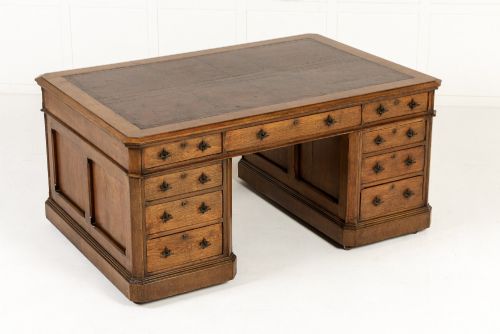


Large Wooden Partners Desk
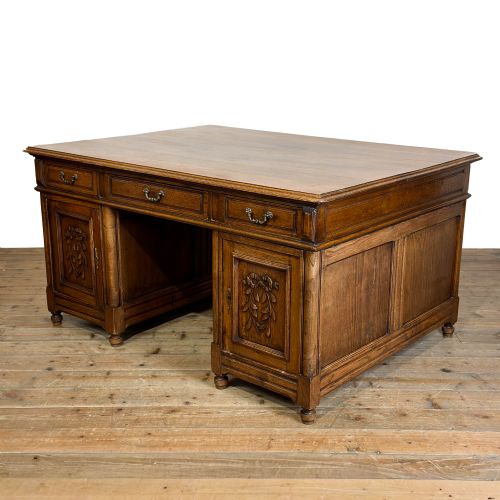
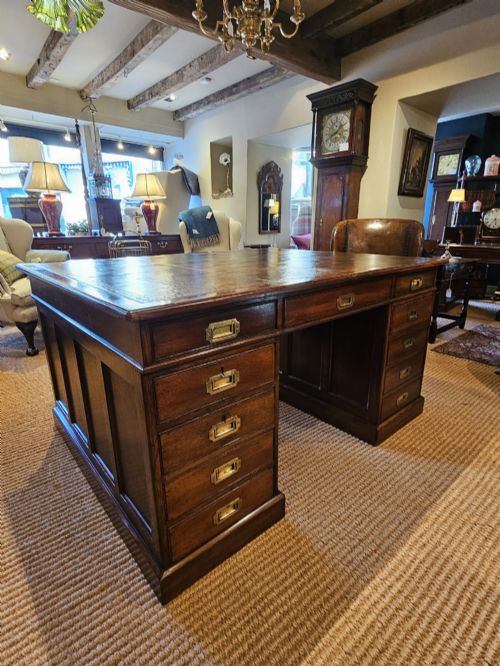
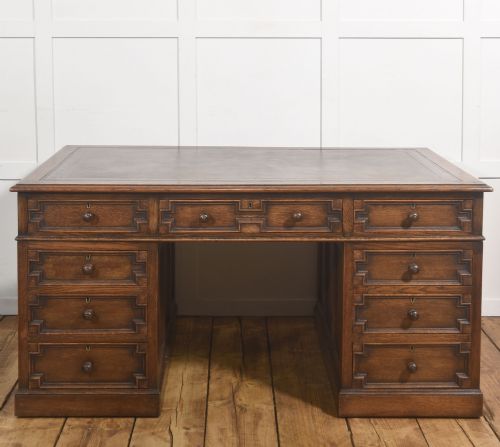
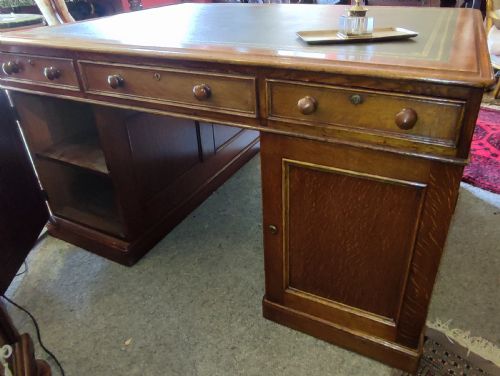
A large wooden partners desk is a commanding piece built for two to work face to face, offering generous drawers and substantial proportions.
Large Wooden Partners Desk
When you search for a large wooden partners desk, you encounter substantial double-sided writing tables designed for shared use. These pieces accommodate users on both sides simultaneously, traditionally featuring banks of drawers or cupboards beneath matching writing surfaces.
The versions most commonly met on this page span the nineteenth century, including robust Victorian and Edwardian examples. They appear in timbers such as mahogany, oak, and burr walnut, often retaining inset leather writing surfaces and brass hardware.
How They Were Made
Cabinet makers constructed these large frames using solid hardwoods like mahogany and oak, frequently selecting flame mahogany or burr walnut veneers for primary surfaces. These timbers were joined with traditional techniques to withstand heavy daily use in offices, libraries, and studies.
Working surfaces typically incorporate inset panels of tooled leather, whilst drawers utilise hand-cut dovetails and brass pulls or handles. Structural complexity increases in pieces featuring numerous drawers or multiple pedestals designed for access from opposing sides.
Large Wooden Partners Desk Retail Price Guide 2026
Typical asking prices for large wooden partners desk among the pieces listed under this phrase on Sellingantiques today, from the lower quarter to the upper quarter. They describe what is for sale here now, not the wider market.
Some nineteenth-century examples provided double the storage with eighteen independent drawers.
What Varies in Quality
Quality in a large wooden partners desk rests on the selection of timber and the depth of the cabinet work. Superior examples display carefully matched grain across large expanses, particularly in flame mahogany or burr walnut veneers.
The treatment of secondary sides distinguishes standard production from finer pieces. Better workshops applied the same attention to detail, paneling, and drawer configuration on both working faces, ensuring the desk looks correct from any angle in an open room.
Gillows of Lancaster
The Large Wooden Partners Desk Glossary
- Partners desk
- A large double-sided writing table fitted with drawers and cupboards on opposing faces. This design allowed two people to work opposite one another.
- Pedestal desk
- A writing table supported by two vertical banks of drawers reaching down to the floor. These form the structural bases underneath the main writing top.
- Flame mahogany
- A decorative timber veneer showing a distinctive flickering, flame-like grain pattern. Cabinet makers used this on prominent surfaces to catch the light.
- Kneehole
- The central recessed space beneath a desk top where a person sits. In partners desks, this space often repeats on both sides.
- Writing slope
- An angled or flat surface inset into the desk top, frequently covered in leather for writing. This leather panel is often tooled with gold leaf.
Large Wooden Partners Desk: Frequently Asked Questions
How do I place one in a room?
Because these desks are finished on all sides, they sit best freestanding in the middle of a room rather than pushed against a wall. This allows access to the drawers and writing surfaces from opposing positions.
Ensure you measure your floor space carefully, as the double-sided pedestals require significant clearance to allow chairs to pull out comfortably on both sides.
How do I identify a Victorian example?
Victorian desks often display heavier proportions, rich mahogany or oak timbers, and eighteen or more drawer configurations. They frequently incorporate inset leather writing surfaces with gilt tooling.
Construction details such as hand-dovetailed drawer boxes and traditional brass hardware help confirm the nineteenth-century period.
What woods were commonly used?
Makers relied heavily on dense hardwoods like mahogany and oak for structural durability and rich colour. Finer examples incorporated decorative veneers such as flame mahogany or burr walnut on the primary surfaces.
Secondary woods like pine or oak were typically utilised for internal drawer construction and unseen structural framing.