
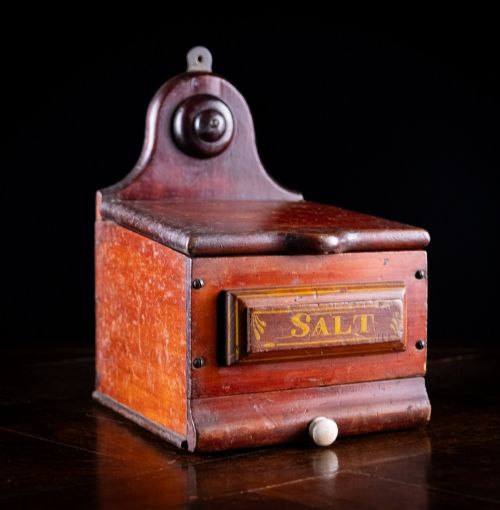
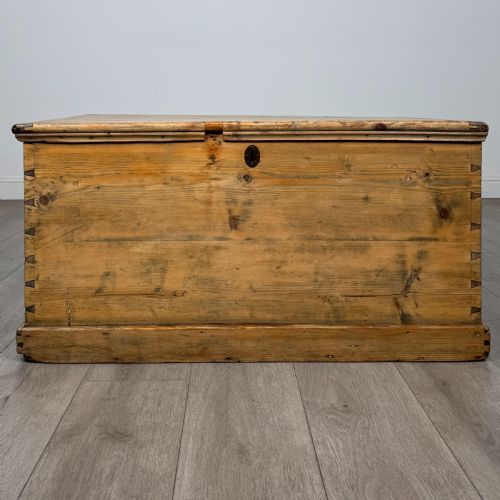
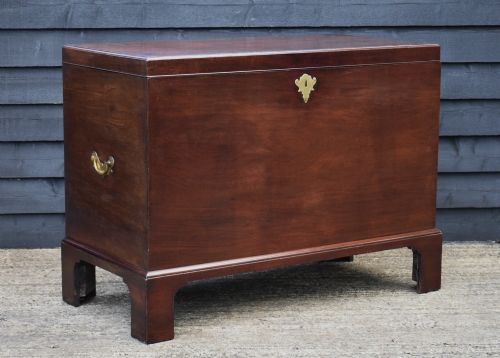
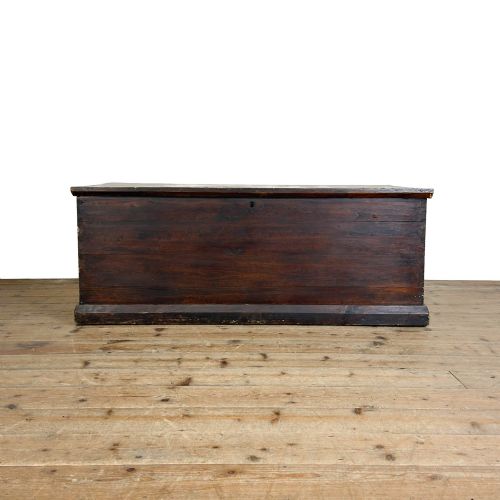

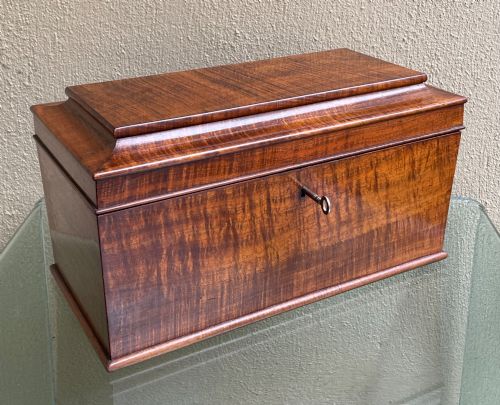
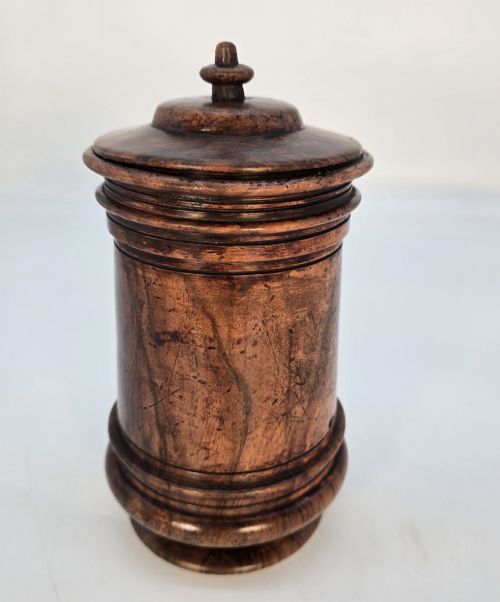
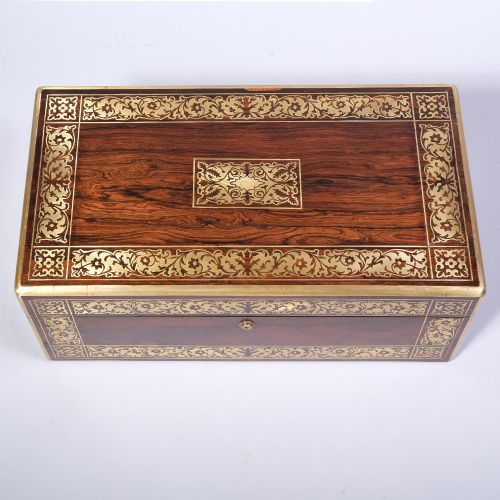
Large Wooden Box
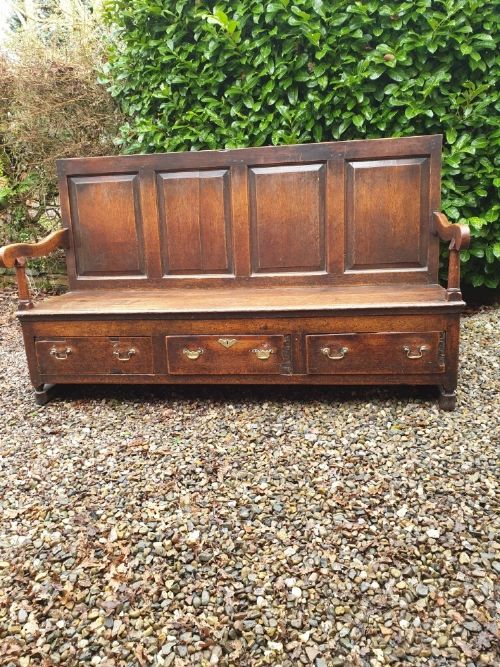
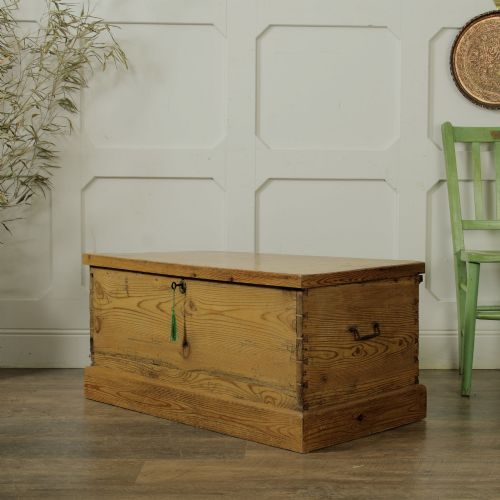
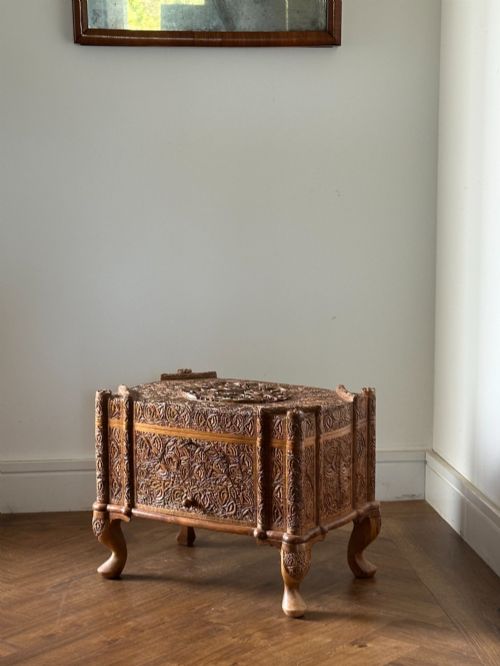
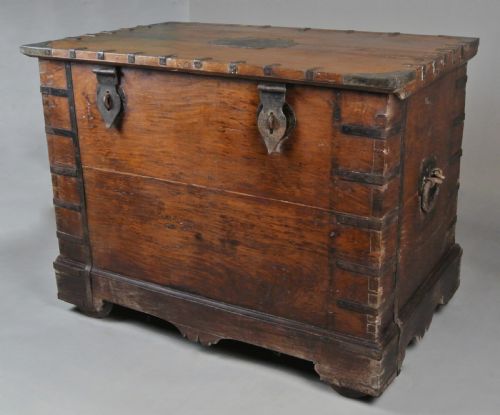
A large wooden box provides generous storage with the solid presence of periods from the seventeenth century to the early twentieth.
Large Wooden Box
A large wooden box encompasses utilitarian storage forms including blanket boxes, trunks, coffers, and campaign chests built for domestic utility or travel. These pieces emerge predominantly from nineteenth-century Victorian workshops and earlier Georgian or seventeenth-century domestic settings.
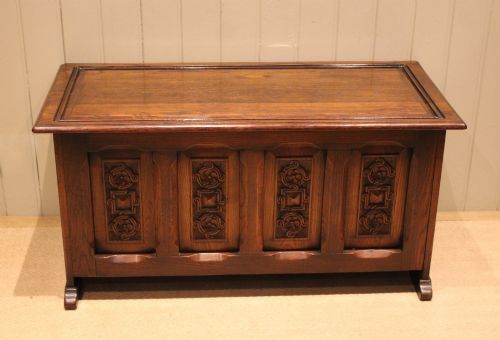
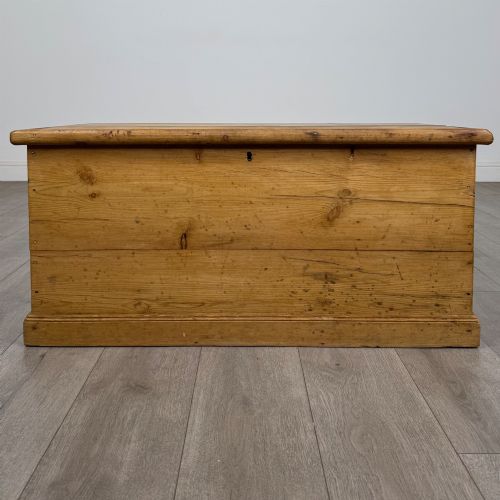
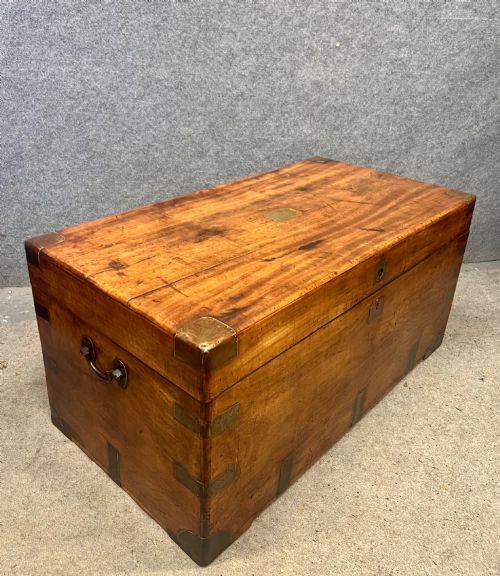
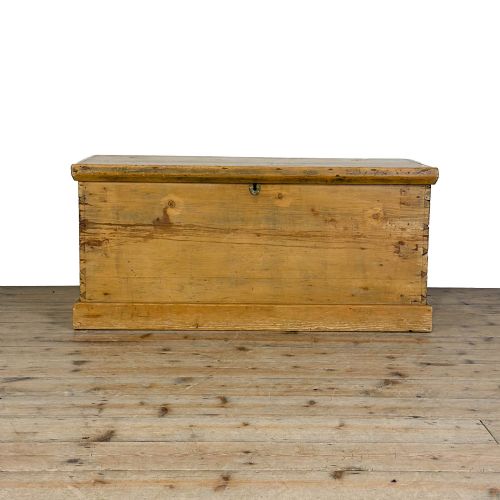
Buyers will most frequently encounter pine and oak iterations on this page, alongside mahogany, walnut, and teak examples equipped with iron or brass hardware. Forms range from rustic country pine blanket boxes to brass-bound campaign chests and carved storage coffers.
The utility of these pieces spans centuries, serving originally for linen storage, military transit, or dowry collections. Today they function practically as coffee tables, blanket storage, or statement furniture in modern rooms.
How they were made
Construction relies on durable hardwoods such as oak, mahogany, and walnut, alongside softer utility timbers like pine, fir, and camphor wood. Joinery techniques include hand-cut dovetails for boxes and mortise and tenon joints for heavier seventeenth and eighteenth-century coffers.
Metal reinforcement defines many examples, utilising brass banding, iron straps, corner braces, and side carrying handles designed for heavy travel or domestic relocation. Surfaces receive various finishes, from painted marriage decoration and waxed patination to stained or polished timber grains.
Listings feature woods spanning native oak, pine, and walnut alongside exotic camphor and teak from international trade routes.
What varies in quality
Quality rests upon the integrity of the timber selection and the retention of original hardware such as brass strapwork, locks, and inset handles. Pieces displaying patination accumulated through decades of handling show superior visual depth compared to overly stripped or heavily restored surfaces.
Internal architecture distinguishes standard blanket storage from finer campaign boxes, writing slopes, and dowry chests fitted with secret compartments, internal drawers, and tailored dividers. The precision of the dovetailing and the restraint or skill of hand-carved ornamentation further separate basic utility items from elite regional examples.
The Large Wooden Box Glossary
- Cofer
- A heavy wooden chest, often constructed from oak with panelled sides, utilised historically for storing valuables and household goods. These sturdy containers frequently feature hand-carved fronts and robust iron locking mechanisms.
- Campaign chest
- A portable box or set of drawers made in two or more sections for easy transport by military officers on the move. They typically feature recessed brass handles and brass corner bindings to protect the edges during travel.
- Dovetail
- A joinery technique formed by interlocking wedge-shaped fingers, prized for its tensile strength and resistance to being pulled apart. It is commonly found at the corners of high-quality wooden boxes and drawers.
- Camphor wood
- An aromatic hardwood frequently used for nineteenth-century chests and maritime trunks due to its natural insect-repellent properties. The distinctive scent protects stored textiles from moths and dampness.
- Mule chest
- A storage chest featuring one or more drawers built into the base beneath the main compartment. This hybrid form bridges the traditional blanket box and the modern chest of drawers.
Large Wooden Box: Frequently Asked Questions
What were large wooden boxes used for?
These boxes served as portable wardrobes, storage for household linens, and secure transport for military officers and travellers. Families also utilised large painted or carved examples as dowry chests to hold accumulated household goods for marriage.
In domestic settings, they kept valuables out of reach and functioned as stationary furniture pieces within the home or country house.
How do I distinguish eighteenth-century oak coffers from later pine boxes?
Eighteenth-century oak coffers display deep hand-carved detailing, frame-and-panel construction, and heavy pegged joinery typical of earlier vernacular cabinetmaking. The timber develops a dense, dark patina over centuries of handling and polishing.
Later pine boxes, particularly Victorian blanket chests, often utilise simpler flush-board construction with plain sides, visible dovetailing, and applied iron or brass side handles for functional lifting.
How do I clean and care for an antique wooden box?
Maintain the surface by applying microcrystalline wax sparingly to nourish dry timber and preserve the historic finish without causing damage. Avoid harsh chemical cleaners and keep the box away from direct heat sources and sunlight to prevent wood splitting.
Ensure interior spaces remain well-ventilated, particularly with dense woods like camphor or teak, to preserve both the timber and any stored textiles.
What is the difference between a coffer and a blanket box?
A coffer is traditionally a heavy, panelled chest built with structural framework, often associated with seventeenth and eighteenth-century oak joinery and secure storage. These pieces were principal furnishings in wealthy homes and public buildings.
A blanket box generally describes simpler, lighter domestic storage containers made from pine or fruitwood, designed specifically for holding bedding at the foot of a bed.