


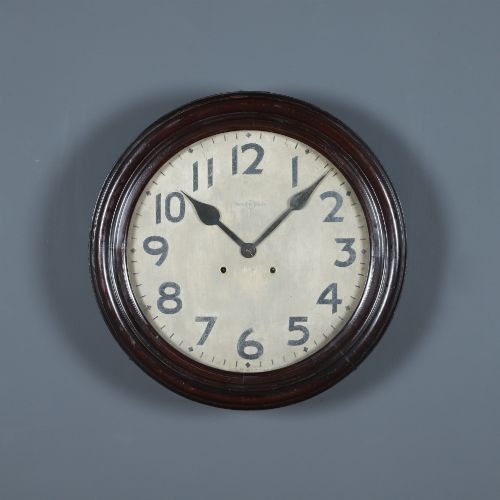


Large Wall Clock
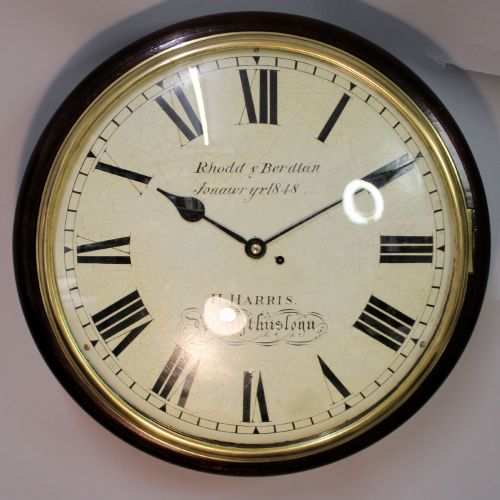
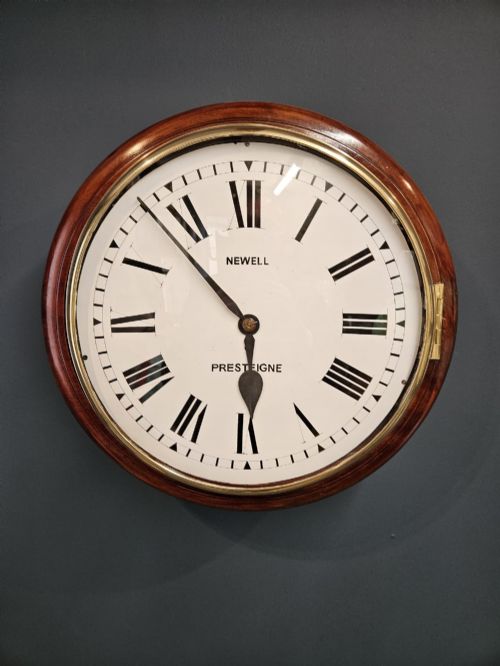
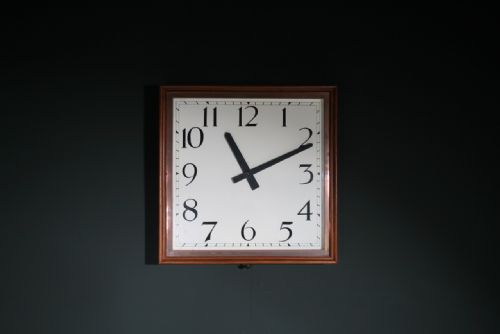
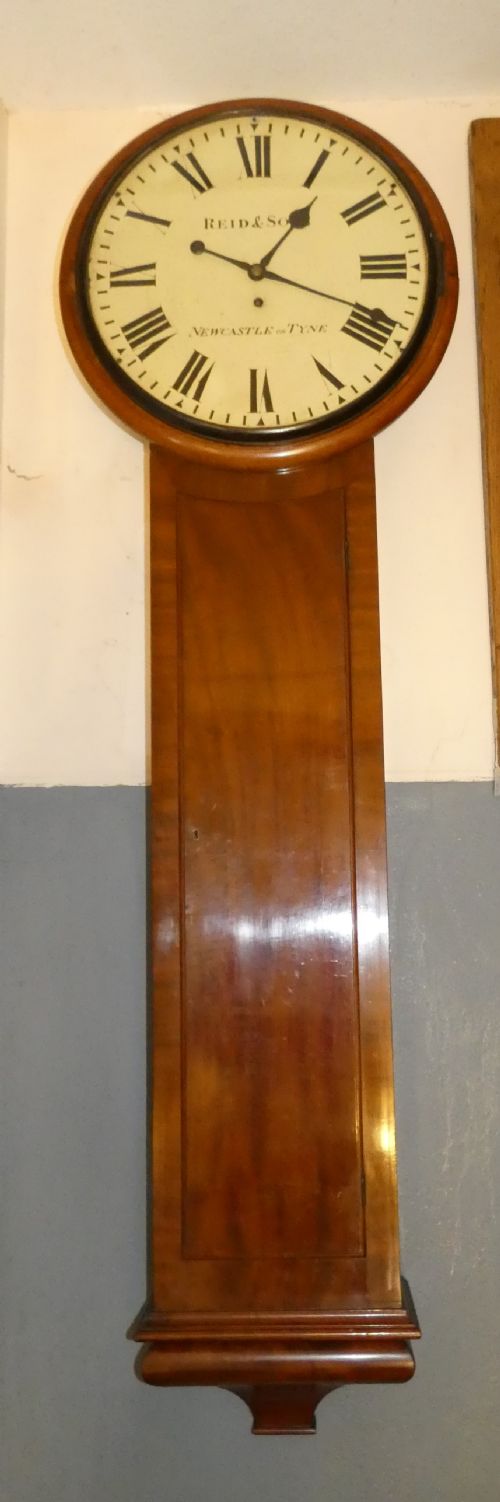
These large wall clock pieces anchor a room with commanding scale, offering reliable movement encased in period timber or metal frames.
Large Wall Clock
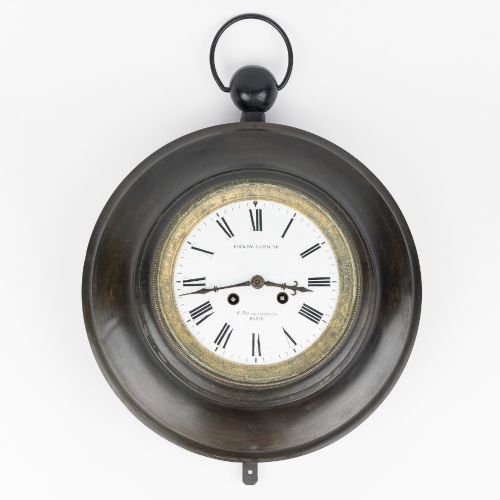
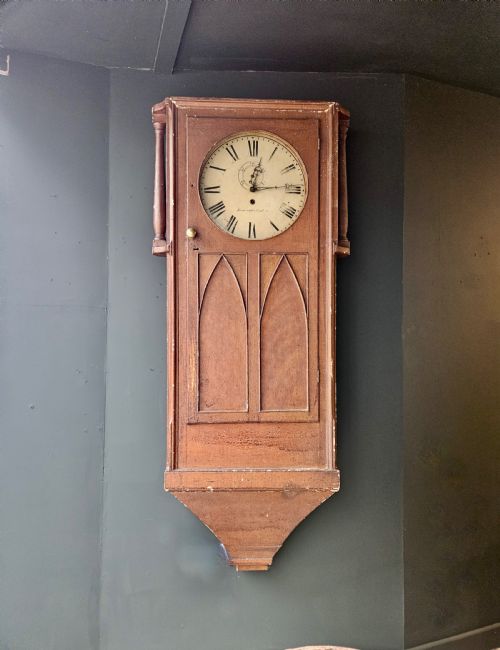
A large wall clock serves as a focal point in domestic and commercial interiors, originating from contexts such as railway stations, factories, and grand drawing rooms. When searching for a large wall clock, buyers encounter robust dial clocks, architectural tower faces, and ornate cartel designs.
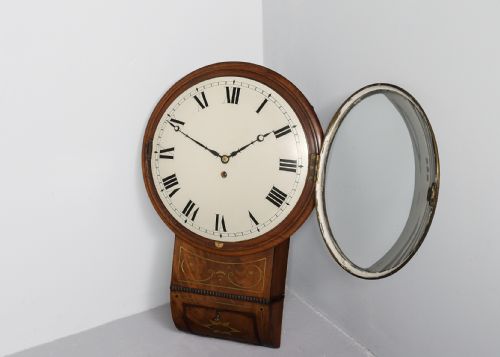
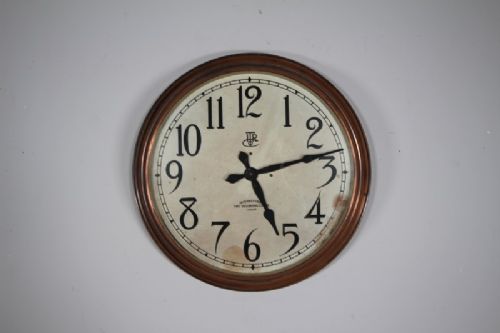
The selection ranges from nineteenth-century mahogany fusee models and Victorian drop-dial pieces to twentieth-century industrial station clocks by makers like Smiths. Mid-century railway and hospital clocks also appear alongside elaborate French gilt bronze and rococo wall clock variants.
Buyers choose these items for their strong visual presence and mechanical heritage. The assortment spans simple wooden dial faces to complex double-dial formats and striking mechanisms designed for public or domestic timekeeping.
How they were made
Timbers such as mahogany, walnut, and pine form the carcasses and bezels of traditional British dial clocks, frequently accented with brass inlay or tortoiseshell. Metal construction appears in industrial factory clocks utilising iron, copper, and painted steel.
Movements rely on precision engineering, particularly fusee movements designed to maintain even tension as the mainspring unwinds. Enamel and glass feature heavily on dials, protected by cast brass or wooden bezels.
Listings feature eighteenth-century wooden dial clocks alongside nineteenth-century fusee models and twentieth-century industrial station clocks.
What varies in quality
The refinement of the movement distinguishes standard timepieces from exceptional examples, with fusee movements representing superior clockmaking compared to basic spring drives. Originality of the dial, paint, and case components heavily influences the integrity of the piece.
Materials and decorative execution dictate overall distinction, seen in the contrast between utilitarian railway iron frames and ornate hand-chased gilt bronze rococo cartel cases. Crispness in dial lettering and the preservation of original timber patination further separate fine workshop output from mass production.
Henry Harris of Monythuslwyn·Joyce Whitchurch·Josef Herzog·John Walker·Smiths of London·Camerer Cuss·Palmer and Co
The Large Wall Clock Glossary
- Fusee
- A conical pulley used in spring-driven clocks to equalise the torque of the mainspring as it unwinds. This mechanism ensures consistent timekeeping across the power reserve.
- Dial clock
- A wall clock featuring a prominent circular face, typically mounted in a wooden case with a short drop or trunk below. These were standard in British offices, stations, and public buildings.
- Cartel clock
- A wall clock enclosed in an ornamental frame, often made of gilt bronze or ormolu, in French rococo or Louis styles. They are designed to flush-mount directly against a wall.
- Drop dial
- A clock case where the circular dial sits above an extended wooden box, often housing a pendulum and weight drop. This form allows room for a longer pendulum swing in a wall-mounted format.
- Regulator
- A precision pendulum clock designed for high accuracy and used as a standard for timekeeping. They feature clear dials with separate sub-dials for hours, minutes, and seconds.
Large Wall Clock: Frequently Asked Questions
How do fusee wall clocks work?
A fusee clock uses a conical pulley connected to the mainspring via a chain or cord. This clever arrangement compensates for the diminishing force of the spring as it runs down.
Because the leverage changes across the cone, the force delivered to the escapement remains uniform. This mechanical refinement ensures the clock keeps accurate time throughout its entire run.
Where were dial clocks originally used?
Dial clocks served as practical timekeepers in nineteenth-century railway stations, public offices, and schools. Their clear numerals and sturdy wooden frames made them easy to read from a distance.
Later, similar utilitarian designs found homes in factories and hospitals. Their robust construction ensured reliability in busy working environments.
How do I identify a French cartel clock?
French cartel clocks are defined by their decorative wall-mounted frames, often cast in gilt bronze or ormolu. They draw heavily on rococo and Louis styles, featuring asymmetrical scrollwork and floral motifs.
Unlike British wooden dial clocks, the entire outer case forms an ornamental sculpture. They were designed for formal domestic interiors rather than public spaces.