

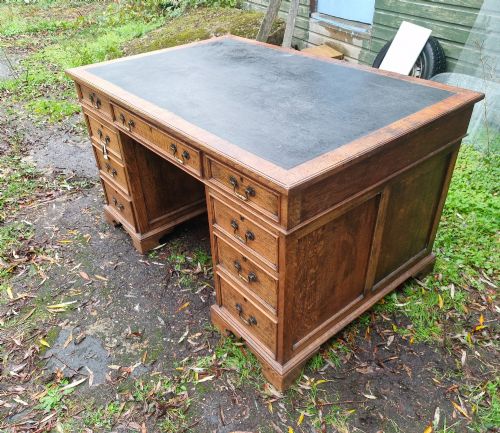
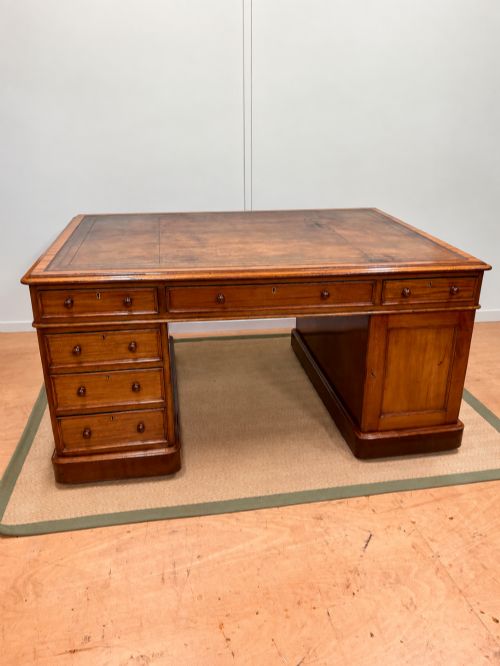
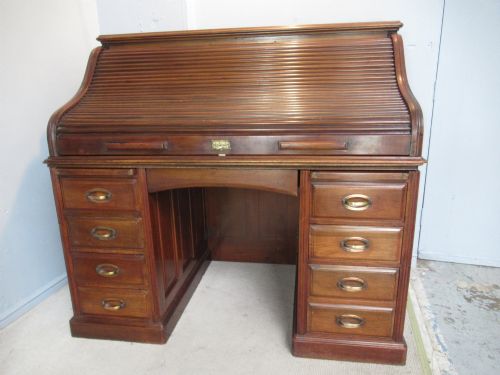
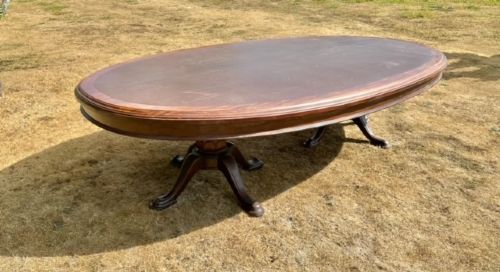




Large Twin Pedestal Desk
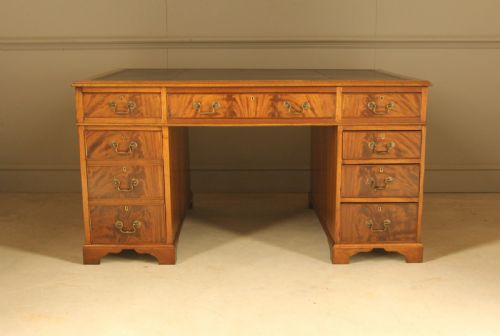
A large twin pedestal desk provides an imposing workspace with substantial drawer capacity, making it a commanding centrepiece for any study or library.
Large Twin Pedestal Desk
A large twin pedestal desk is a substantial writing or library table supported by two separate stacks of drawers, often configured as partners desks that allow work from both sides. When searching this phrase, a buyer encounters significant pieces designed for grand rooms rather than compact corners.
The versions most likely to appear on this page span the Victorian and Edwardian eras, alongside pieces from the 19th century and early 20th century. These formats frequently incorporate partner configurations, roll tops, and tambour cylinders.
Woods such as mahogany, oak, and walnut dominate the construction, occasionally complemented by flame mahogany or boxwood inlay. The scale ranges from standard pedestals to massive boardroom tables and library writing desks.
How they were made
Cabinet makers utilised dense hardwoods like mahogany, oak, and walnut, frequently selecting figured grains such as flame mahogany or golden walnut for primary visible surfaces. Solid timbers provided the structural integrity required for large pedestals and heavy writing surfaces.
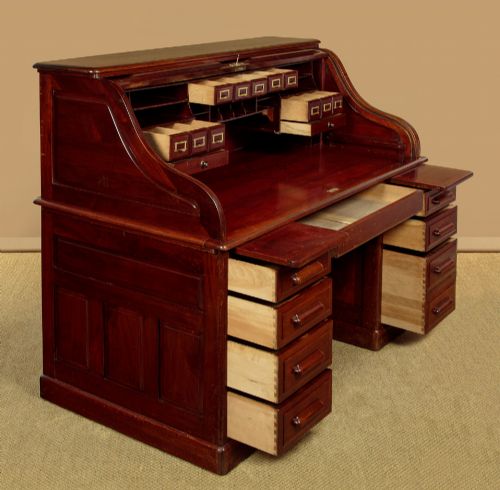
Surface treatments incorporated inset leather writing panels, brass hardware, and intricate boxwood inlay or marquetry details. Roll top and cylinder mechanisms relied on precise tambour construction using individual wooden slats running in curved grooves.
Large Twin Pedestal Desk Retail Price Guide 2026
Typical asking prices for large twin pedestal desk among the pieces listed under this phrase on Sellingantiques today, from the lower quarter to the upper quarter. They describe what is for sale here now, not the wider market.
Some grand partners desks feature eighteen separate drawers, ensuring maximum storage for the exceptionally organised writer.
What varies in quality
The standard of timber selection heavily dictates the overall quality, distinguishing plain boards from richly figured flame mahogany and matched walnut veneers. Finer examples display meticulous attention to grain alignment across multiple drawers and panels.
Internal construction methods, such as solid secondary woods and dovetailed drawer boxes, separate mass-produced items from superior bespoke cabinet-making. The complexity of mechanisms, including smooth-running tambour cylinders and substantial brass handles, further marks the upper tier of production.
Maple and Co·JAS Shoolbred
The Large Twin Pedestal Desk Glossary
- Partners desk
- A large double-sided desk designed for two people to work opposite one another, featuring drawers and cupboards on both faces.
- Pedestal
- One of the two vertical supporting columns of drawers or cupboards that hold up the top surface of the desk.
- Tambour
- A flexible sliding shutter formed of narrow strips of wood glued to canvas, used to enclose the upper section of roll-top desks.
- Flame mahogany
- A highly figured timber veneer showing distinctive tongue-like flame patterns, prized for its decorative appearance.
- Kneehole
- The central recessed space between the two pedestals where the user sits.
- Marquetry
- Decorative woodwork where pieces of different coloured woods and materials are fitted into a veneer to form geometric or pictorial designs.
Large Twin Pedestal Desk: Frequently Asked Questions
What is a partners desk?
A partners desk is a large twin pedestal desk built with drawers and cupboards on both sides. This double-sided design allows two people to sit opposite each other and work simultaneously.
Historically used in banks, law firms, and country house libraries, these desks offer expansive workspace and substantial storage within large rooms.
How do I tell Victorian from Edwardian desks?
Victorian desks generally feature heavier proportions, darker mahogany timbers, and elaborate carved details. They often embrace classical revival styles and substantial brass pulls.
Edwardian desks tend to show lighter oak or walnut tones, simpler lines, and occasional inlaid decoration. Roll-top and cylinder mechanisms also appear frequently in Edwardian formats.
What woods were used?
Mahogany is the most common timber seen, ranging from plain boards to highly figured flame mahogany and curl veneers. Oak and walnut also appear frequently across the periods.
Secondary materials include inset leather writing surfaces, brass hardware, and decorative boxwood inlay.
How do roll top desks work?
Roll top desks use a tambour shutter made of narrow wooden slats attached to a flexible canvas backing. This curtain slides smoothly along curved tracks cut into the sides of the desk.
When pushed upward, the tambour disappears into the upper housing, revealing pigeonholes and small drawers.