






Large Tripod Table
A large tripod table balances weight and proportion, offering a stable central pedestal beneath a generous top designed for gathering or display.
Large Tripod Table
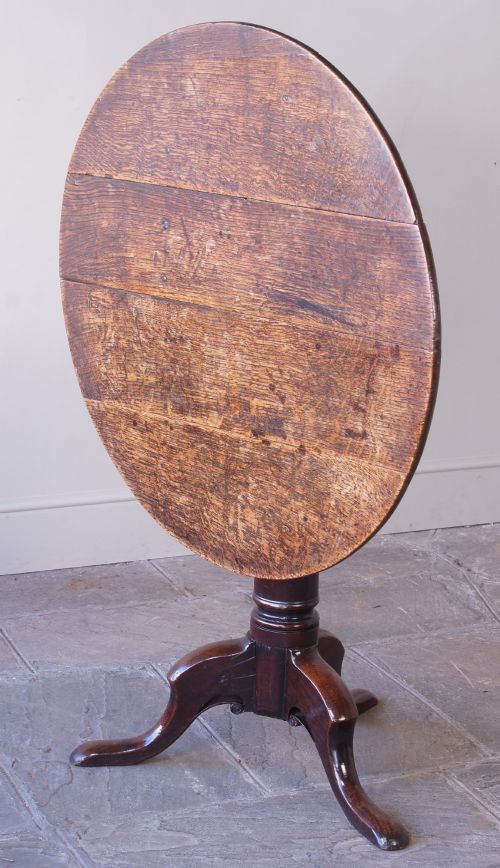
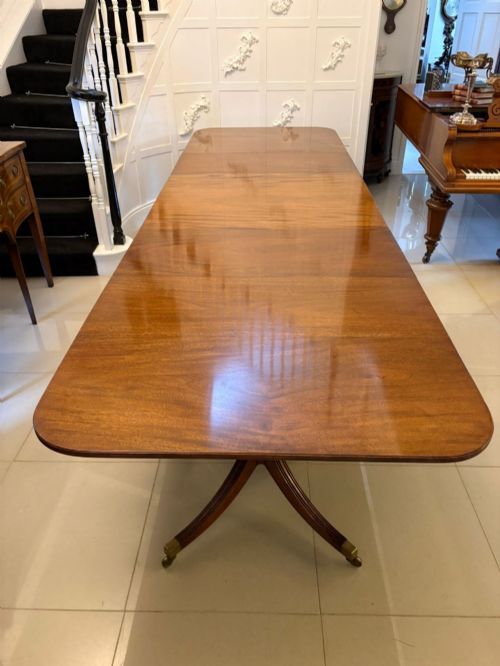
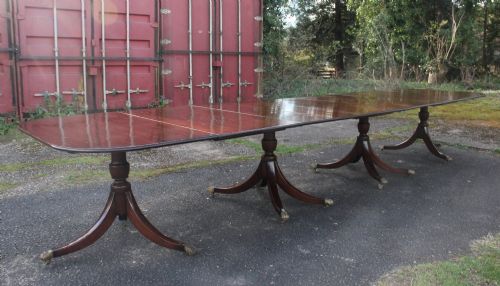
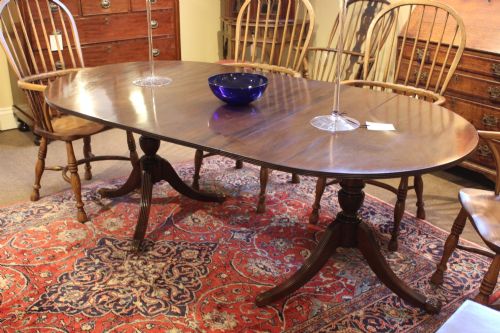
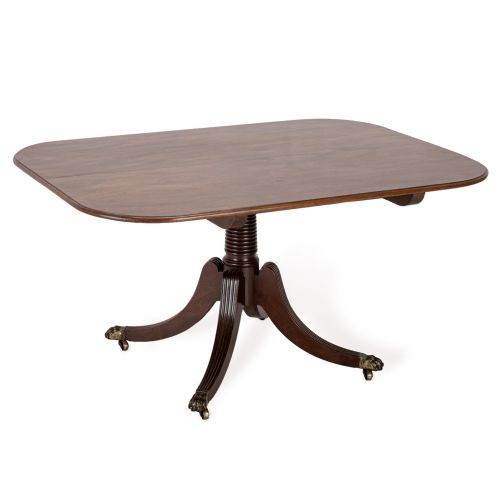
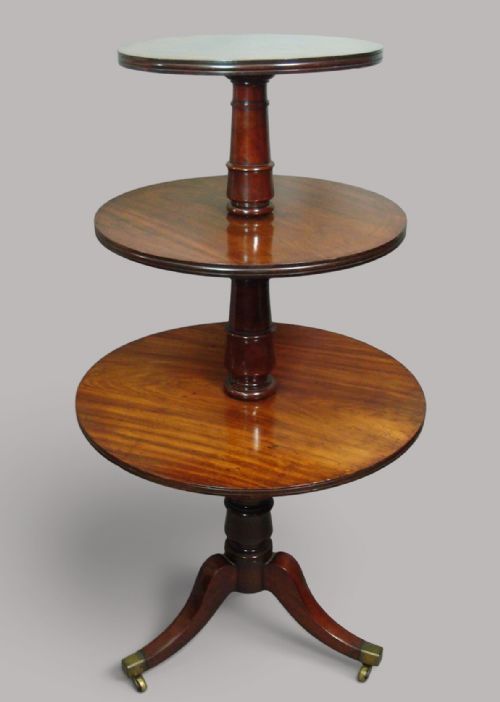
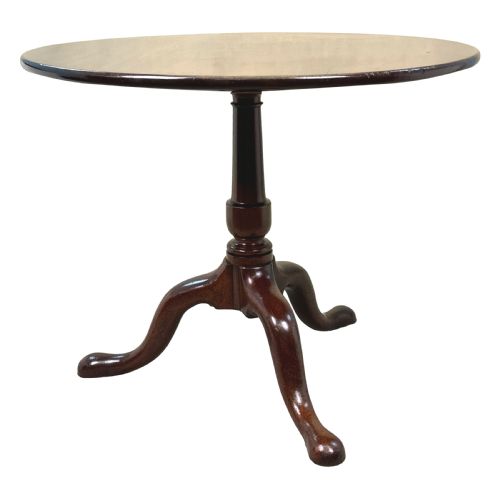
A large tripod table is typically encountered as a tilt-top breakfast table, a wine table, or an occasional piece supported by a three-legged base. The selections recorded here span periods from the seventeenth century through to the early twentieth century, taking forms such as dining tables, centre tables, and dumb waiters alongside the standard pillar supports.
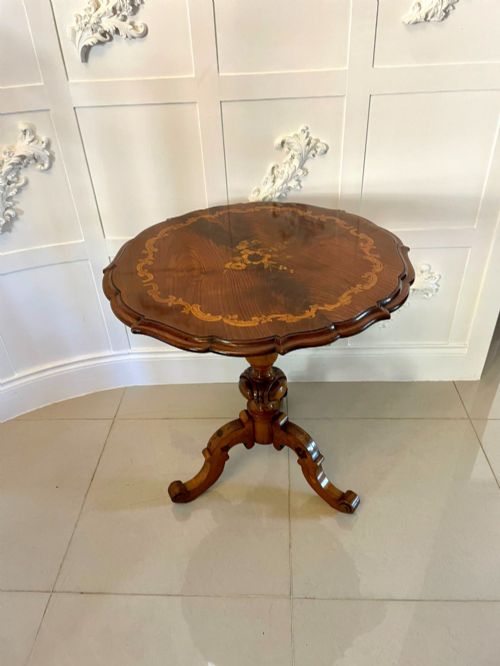
Makers fashioned these pieces in styles ranging from Georgian and Regency to Victorian, French Empire, and rustic farmhouse. Buyers often encounter mahogany and oak examples originating from the eighteenth and nineteenth centuries, alongside walnut pieces featuring marquetry inlay.
How they were made
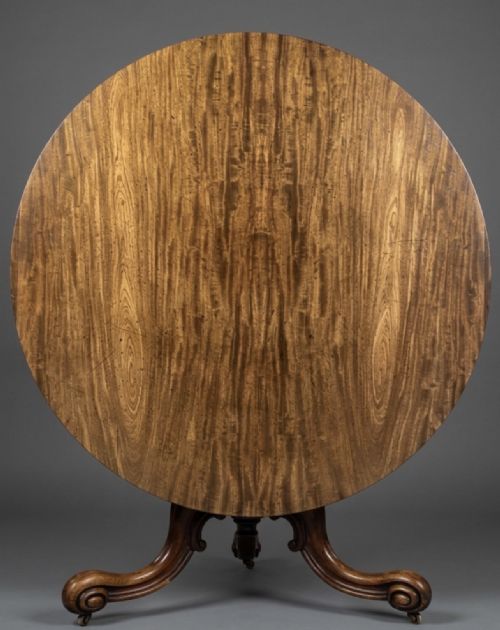
Carpenters constructed the tops of these tables from timbers like mahogany, walnut, oak, and pine, frequently utilising marquetry veneer for decorative surfaces. Supporting pedestals were turned from solid wood to form robust central columns that branch into three distinct feet.
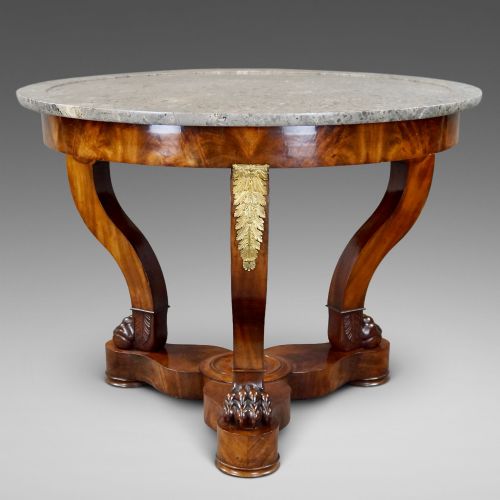
Makers incorporated brass fittings, marble inserts, and gilt bronze elements to accent the timber structures, particularly on pieces influenced by French Empire and Victorian designs.
Large Tripod Table Retail Price Guide 2026
Typical asking prices for large tripod table among the pieces listed under this phrase on Sellingantiques today, from the lower quarter to the upper quarter. They describe what is for sale here now, not the wider market.
Early tilt-top tables doubled as decorative panels when folded upright against the wall, serving as impromptu room art.
What varies in quality
The distinction between ordinary and superior pieces rests on the choice of timber figure, such as figured mahogany and figured walnut, and the precision of the joinery connecting the pillar to the legs. Superior examples display balanced proportions between the top and the base, maintaining stability without excessive bulk.
Execution of decorative details, including marquetry inlay and cast brass mounts, separates standard production from exceptional work. The retention of original tilt mechanisms and brass fittings also influences the standing of an individual table.
The Large Tripod Table Glossary
- Tripod table
- A small or medium table supported by a pillar on three legs. These designs became common during the eighteenth century for serving tea or holding lamps.
- Tilt-top table
- A table with a mechanism allowing the surface to fold vertically when not in use. This feature permitted the furniture to stand flat against a wall to save space.
- Marquetry veneer
- Thin sheets of wood arranged in decorative patterns applied to a base timber. Artisans used contrasting coloured woods to create intricate geometric or floral designs.
- Centre table
- A freestanding table designed to be viewed from all sides rather than pushed against a wall. They frequently stood in the middle of principal rooms during the Victorian period.
- Dumb waiter
- A tiered stand with revolving or fixed circular shelves supported on a central column. These pieces aided dining rooms by holding dishes and wine bottles without requiring servants.
Large Tripod Table: Frequently Asked Questions
How do I identify a Georgian table?
Georgian tables rely on substantial timbers like mahogany and oak, displaying restrained carving and robust proportions. The joinery is typically hand-cut and finished with traditional methods.
Details such as tripod bases with pad feet or claw-and-ball feet help distinguish pieces from this era.
Where should I place a centre table?
Centre tables are designed to stand clear of walls, allowing access from all sides in an open room. They function effectively as focal points in large hallways or principal reception rooms.
Ensure there is adequate clearance around the base to accommodate the three-legged pedestal.
What woods were used for these tables?
Makers predominantly selected mahogany and oak for structural stability and rich grain patterns. Walnut also appears frequently, particularly on pieces featuring marquetry veneer.
Pine served as a secondary timber for internal framing or simpler farmhouse constructions.