









Large Textile Hanging
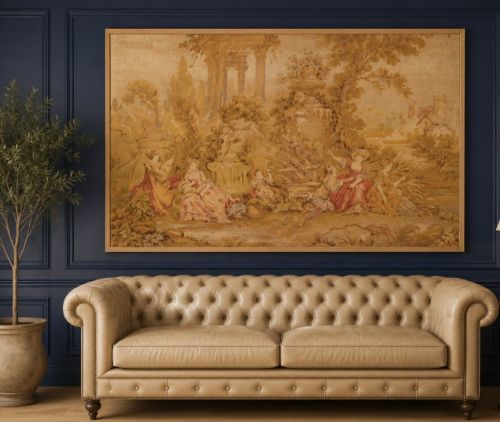
A large textile hanging brings architectural scale and rich texture to an interior, transforming a blank wall into a deep historical landscape.
Large Textile Hanging
A large textile hanging encompasses woven wall tapestries, embroidered panels, and tribal storage bagfaces created across centuries. When searching for a large textile hanging, buyers encounter works ranging from Flemish verdure scenes to Central Asian ikats and crewelwork panels.
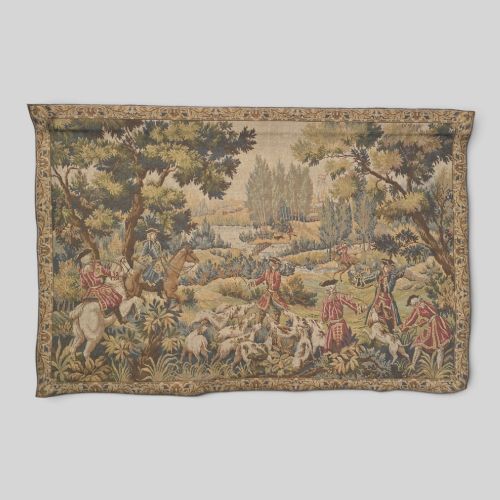
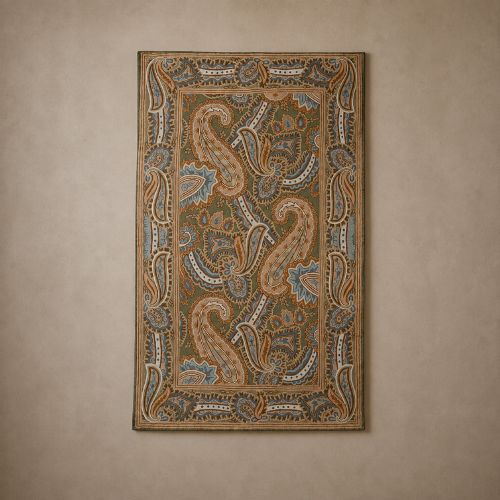
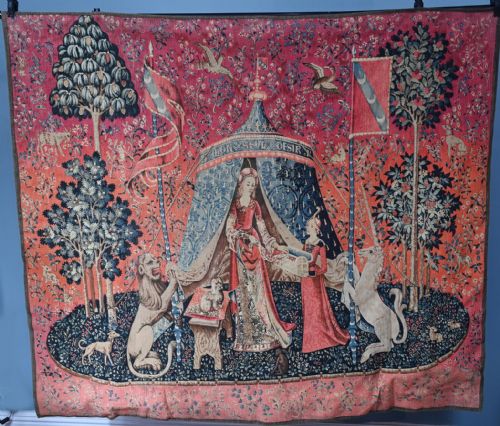
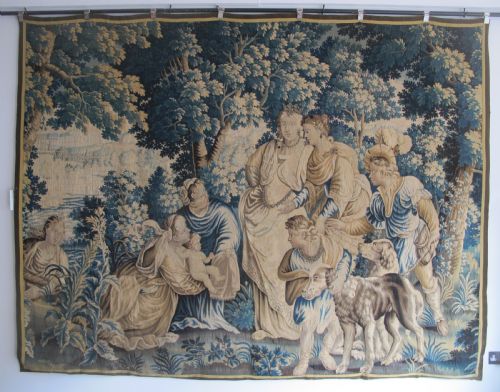
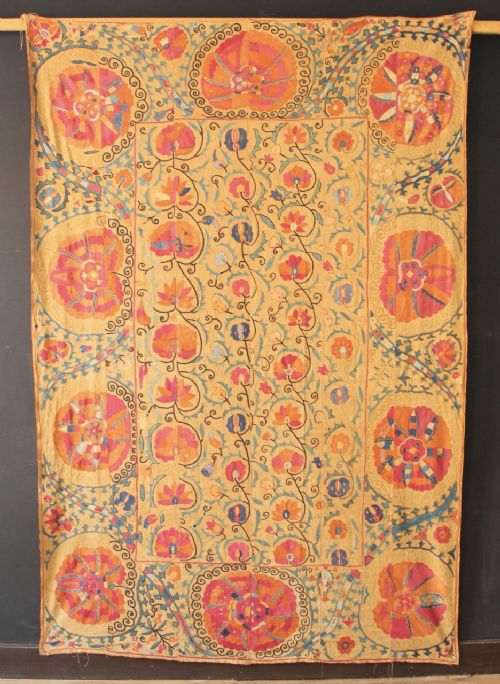
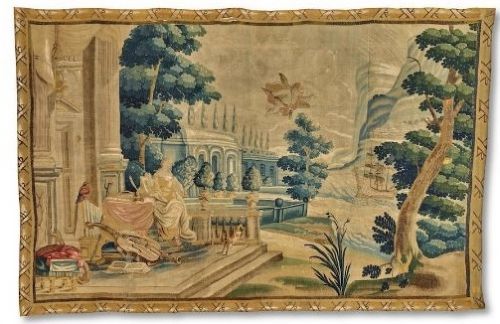
The pieces originating from European workshops often depict mythological, pastoral, or biblical narratives in woven wool and silk. Other variations include Central Asian Suzanis and Turkmen torbas worked in vibrant geometric and floral patterns.
Dating spans from the sixteenth century through the early twentieth century, taking the form of grand verdure wall coverings, framed panels, and substantial embroidered textiles. These works served originally to insulate stone chambers or display tribal identity and status.
Materials and construction methods
The construction relies primarily on wool, silk, cotton, and linen fibres, frequently enriched with metallic thread for luminous detail. Natural dyes provide the enduring palette found in foundational yarns across European and Asian examples.
Techniques diverge between European loom weaving, such as the Aubusson and Flemish methods, and the needlework, crewelwork, and ikat dyeing traditions of Central Asia and India. Woven panels employ complex warp and weft interlockings, while embroideries utilise dense needlework stitches on linen or cotton grounds.
Large Textile Hanging Retail Price Guide 2026
Typical asking prices for large textile hanging among the pieces listed under this phrase on Sellingantiques today, from the lower quarter to the upper quarter. They describe what is for sale here now, not the wider market.
Listings feature wool, silk, cotton, and linen textiles spanning the seventeenth to the twentieth century.
Factors of distinction and quality
Quality rests upon the density of the weave or embroidery, the complexity of the narrative or geometric design, and the survival of original natural colour. Finer wools and silks combined with metallic thread indicate superior workshop execution.
The depth of perspective in a verdure landscape or the precision of execution in tribal motifs separates standard decorative pieces from exceptional historical examples. Preservation of the original dimensions and structural integrity also determines the standing of a textile.
The Large Textile Hanging Glossary
- Verdure tapestry
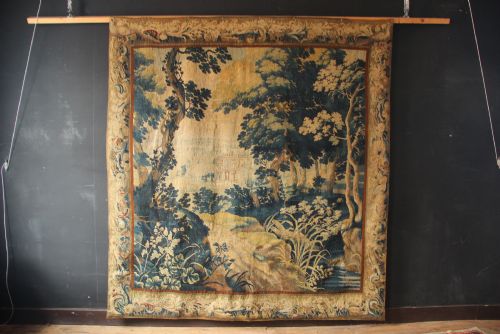
- A woven wall hanging dominated by stylised foliage, trees, and gardens, frequently inhabited by birds or animals. These scenes originated in Flemish and French workshops during the seventeenth and eighteenth centuries.
- Torba
- A small Turkmen storage bagface worked in wool, often displaying intricate tribal guls and geometric borders. They formed part of nomadic household furnishings.
- Aubusson
- A style of tapestry woven in the French town of Aubusson, known for pastoral, floral, and architectural compositions. These pieces often emulate grand oil paintings.
- Ikat
- A dyeing technique where yarns are resist-dyed prior to weaving, producing characteristic feathered pattern edges. This method appears across Central Asian and Indonesian textile panels.
Large Textile Hanging: Frequently Asked Questions
How do I hang a heavy textile?
Large woven or embroidered panels require weight distribution across a sturdy wooden batten or hidden sleeve system. This prevents distortion and relieves stress from the historical fibres.
Professional mounting ensures the textile hangs flat against the wall without pulling individual threads or causing structural strain over time.
Where were these textiles made?
The pieces originate from diverse regions, including Flemish and French weaving centres, Central Asian nomadic communities, and Indian workshops. European examples typically emerged from urban looms, while tribal works came from regions like Turkmenistan.
Each geographic origin imparts distinct techniques, from the pastoral verdure landscapes of Europe to the bold medallions of Central Asian Suzanis and Turkmen bagfaces.
How do I care for antique textiles?
Protect the fibres by placing them away from direct sunlight and strong artificial heat sources, which fade natural dyes and weaken fragile silk or wool. Gentle, low-suction surface dusting through a protective mesh screen helps maintain cleanliness.
Avoid moisture and damp environments, as historical natural fibres are sensitive to humidity changes and biological degradation.
How are periods identified?
Dating relies on stylistic markers, such as the baroque framing of seventeenth-century Flemish work or the specific tribal motifs found in nineteenth-century Turkmen weaving. Material analysis of the wool, silk, and natural dyes also provides chronological clues.
Comparative study of workshop techniques, border designs, and narrative subjects helps narrow the date of manufacture across different textile traditions.