


Large Tabriz Carpet
A large tabriz carpet brings grand scale and traditional Persian artistry into a room, offering room-sized presence woven in wool and cotton.
Large Tabriz Carpet
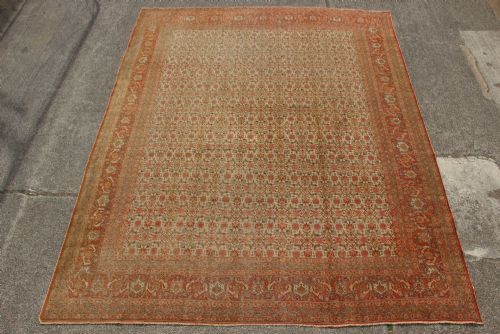
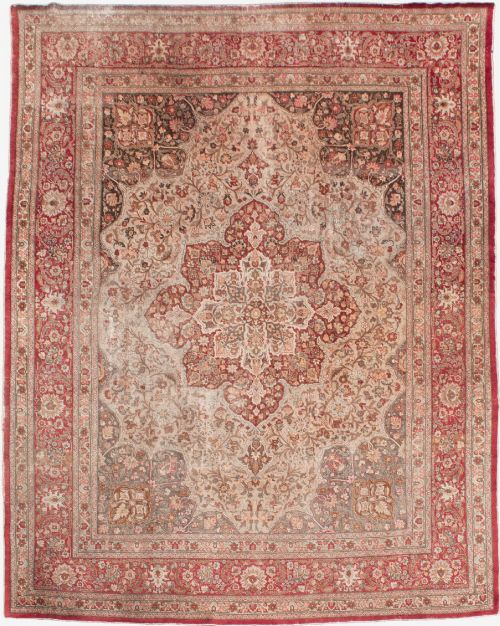
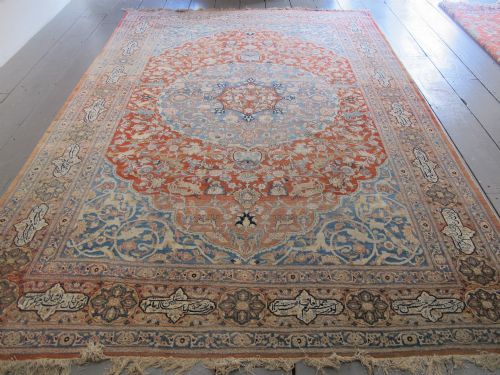
A large tabriz carpet is a substantial Persian textile originating from Tabriz, designed to anchor a principal room. These large formats include country house carpets and grand room-size pieces that measure several metres across.
Most examples found here date from the nineteenth century up to the 1930s. They display traditional Persian styles, including all-over floral patterns and hunting designs.
Buyers encounter country house carpets alongside named workshop productions. The selection spans pieces from the 1880s through to the interwar period.
How they were made
These carpets are constructed using wool pile set upon a cotton foundation. The combination of wool and cotton provides the necessary structural stability for large room-size formats.
Weaving traditions in Tabriz utilise handmade techniques that allow for detailed pictorial and floral compositions. Artisans knot the wool yarn tightly to withstand heavy placement in reception rooms and country houses.
Several grand carpets carry hunting motifs, letting you domesticate a whole menagerie indoors without feeding them.
What varies in quality
Quality rests upon the fineness of the knotting and the clarity of the design. Dense foundations allow intricate floral or hunting motifs to hold their definition across grand expanses.
The choice of palette dictates distinction. Softer pastel tones and balanced dyes separate standard workshop output from exceptional pieces attributed to master makers.
Haji Jalili·Benlian
The Large Tabriz Carpet Glossary
- Tabriz carpet
- A woven floor covering produced in the city of Tabriz in north-west Persia. These carpets are known for varied classical Persian designs and durable wool construction.
- Country house carpet
- A term applied to oversized carpets woven to furnish large domestic interiors. Such pieces scale up traditional patterns to suit extensive floor plans.
- Hunting carpet
- A pictorial rug design featuring figures of hunters and animals amidst foliage. This style has roots in classical Persian court weaving traditions.
- Room size
- A descriptive category for carpets exceeding standard scatter dimensions, intended to occupy the centre of a principal living space.
Large Tabriz Carpet: Frequently Asked Questions
How do I place a large tabriz carpet?
Position the carpet centrally in a principal room to allow the grand scale of the design to anchor the furniture. Ensure that major seating pieces sit comfortably upon the wool surface rather than crowding the border.
Protect the cotton foundation and wool pile from direct heavy moisture and heavy foot traffic in narrow corridors. Allow adequate breathing space around the edges of the room to display the full dimensions.
What defines a Haji Jalili carpet?
Haji Jalili carpets originate from a celebrated Tabriz workshop known for distinctive palettes and fine knotting. These pieces often employ soft pastel colours and delicate floral arrangements.
Collectors prize this specific attribution for its refined aesthetic and subtle interpretation of traditional Persian design. The handling of the wool and the specific tonal qualities distinguish them from standard production.
How do I date an antique tabriz carpet?
Examine the palette, the handling of the wool, and structural characteristics visible on the cotton foundation. Pieces from the nineteenth century often display vegetable-derived dyes and softer patination through the pile.
Twentieth-century examples from the 1920s and 1930s sometimes incorporate named workshop signatures or specific Benlian attributions. Comparing the scale of the floral design against known archival pieces helps narrow the decade of origin.
Are these carpets suitable for daily use?
Wool and cotton construction provides natural durability for domestic environments when properly maintained. These heavy formats were built to withstand generations of placement in substantial reception rooms.
Regular rotation prevents uneven wear from sunlight and foot placement. Gentle care preserves the structural integrity of the foundation yarns.