

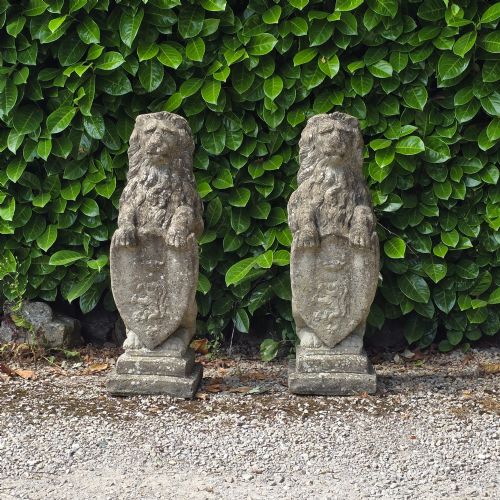


Large Stone Lions
Large stone lions anchor a garden terrace with classical weight and enduring presence.
Large Stone Lions
Large stone lions encompass garden statuary, architectural ornaments and sculptural pairs designed to command outdoor spaces and grand interiors. When searching for large stone lions, buyers encounter matched pairs and single figures spanning the nineteenth century through the early twentieth century. These sculptures draw upon Neoclassical, Victorian, Grand Regency and Chinese Qing styles to project authority and formal symmetry.
The selections on this page lean heavily toward nineteenth-century garden statuary in terracotta, reconstituted stone and marble. Alongside traditional standing or recumbent garden guardians, the listings extend to console tables and desk accessories incorporating lion motifs. Such pieces suit formal gardens, driveways and entrance halls where substantial scale defines the setting.
How they were made
Makers utilised durable outdoor compounds and traditional kiln techniques to ensure these large figures withstood the elements. Reconstituted stone pieces combine aggregate materials within moulds to replicate the appearance of carved masonry at scale. Soapstone and carved wood appear in smaller decorative works such as desk seals and console tables.
Large Stone Lions Retail Price Guide 2026
Typical asking prices for large stone lions among the pieces listed under this phrase on Sellingantiques today, from the lower quarter to the upper quarter. They describe what is for sale here now, not the wider market.
Listings feature items dated across the nineteenth and twentieth centuries, including the years 1850, 1920 and 1930.
What varies in quality
The choice of medium directly influences the longevity and tactile character of the sculpture. Natural marble and high-fired terracotta achieve a finer surface texture and more convincing ageing than standard reconstituted stone. Original painted finishes and patination accumulated over centuries also elevate the visual presence of a piece.
Hurlford Kilmarnock
The Large Stone Lions Glossary
- Terracotta
- Fired clay used for sculptural figures and garden ornaments, prized for its warm earthy tones and malleability before firing. It develops a distinct weathered surface over decades outdoors.
- Reconstituted stone
- A durable composite material made from crushed stone and binding agents, cast in moulds to replicate natural carved masonry. It offers a uniform composition suited to architectural garden ornaments.
- Shi Shi
- Traditional guardian lions originating in Chinese art and architecture, often depicted with stylised curly manes and seated postures. They frequently appear in jade, soapstone or porcelain.
- Neoclassical
- An artistic and architectural style drawing inspiration from the classical art and culture of ancient Greece and Rome. It emphasises symmetry, grandeur and heroic proportions.
Large Stone Lions: Frequently Asked Questions
Where should large stone lions be placed?
These sculptures traditionally flank gateways, entrance porches, driveway piers or garden steps to create a sense of arrival and formal enclosure. Their substantial scale requires solid foundations, whether on stone bases, gravel terraces or formal lawns.
Indoors, smaller adaptations or console tables with lion supports anchor hallways and reception rooms. Placement should account for weight and exposure to weathering if positioned outside year-round.
How do I care for outdoor stone and terracotta?
Maintenance involves gentle cleaning with water and soft brushes to remove moss and organic debris without damaging the surface patination. Harsh pressure washers can erode historic terracotta and reconstituted stone.
Protecting unglazed ceramics from severe frost prevents moisture from expanding within the clay body and causing cracks. Natural stone benefits from periodic checks to ensure proper drainage around the base.
How can I tell the period of a stone lion?
Dating relies on surface patination, tool marks left by carvers, and the specific material composition associated with nineteenth-century manufacturing techniques. Victorian and nineteenth-century pieces often display heavy weathering and distinct moulding styles.
Comparing the stylistic markers, such as Neoclassical drapery or Regency proportions, helps align a piece with documented eras. Archival records and maker stamps on bases provide definitive chronological evidence.
Are these pieces always sold as pairs?
While many garden ornaments and architectural guardians were cast or carved as symmetrical pairs to flank entrances, single sculptures also appear. Matching pairs command particular interest for formal architectural layouts.
Single figures function effectively as focal points within garden planting schemes or corner placements. The listings on this page include both matched pairs and individual sculptural works.