

Large Silver Plate
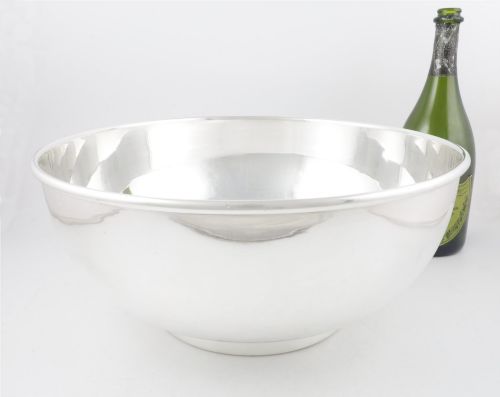
Large silver plate brings substantial utility and presence to a table, offering the visual weight of precious metal without the heavier cost.
Large Silver Plate
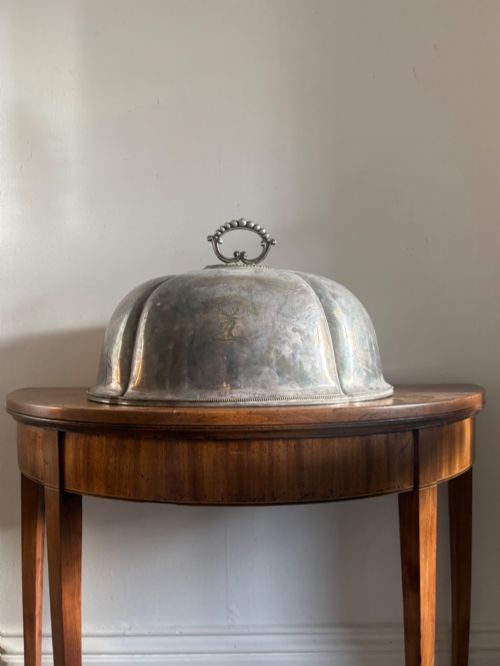
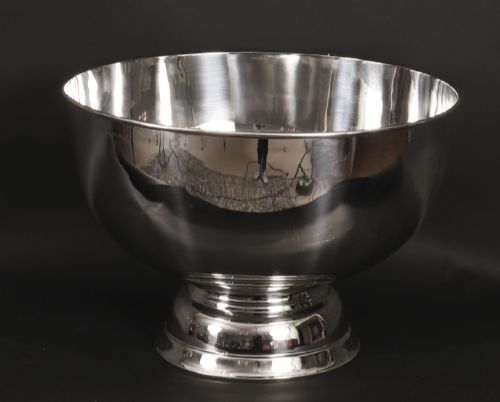
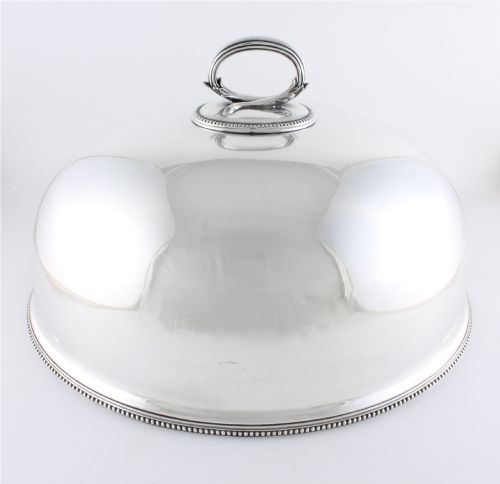
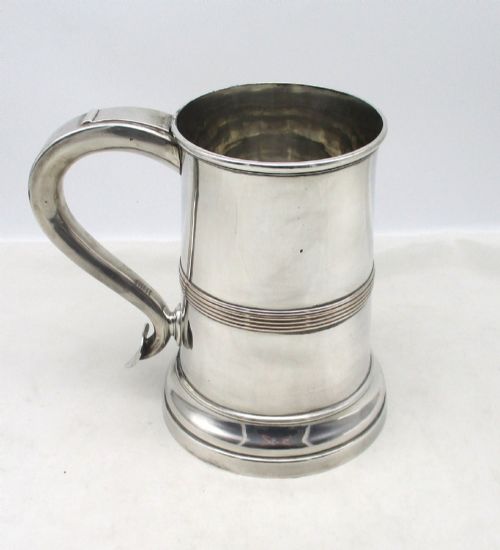
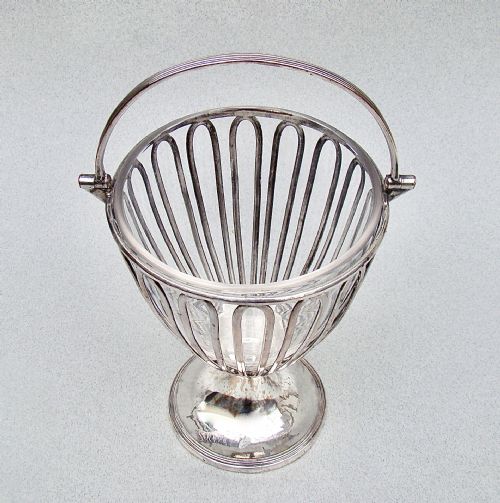
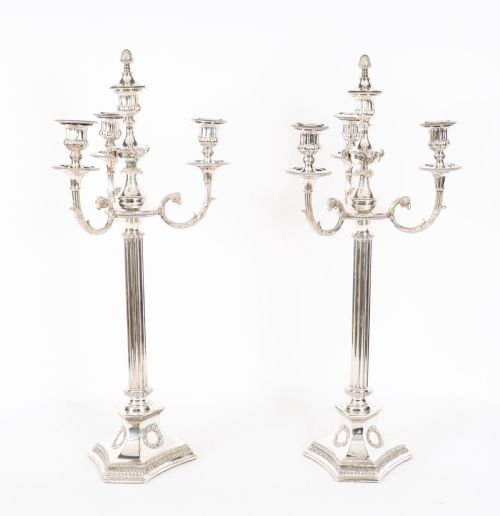
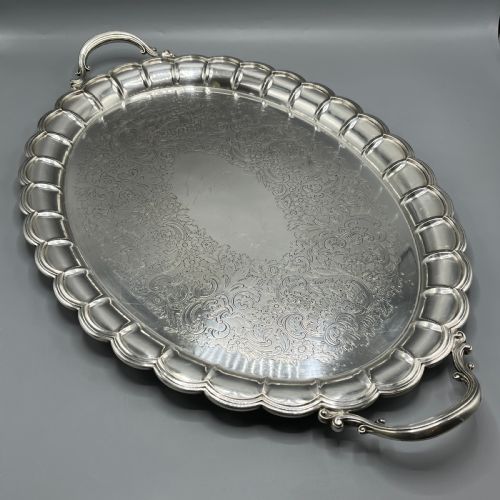
Large silver plate items span serving trays, candelabra, meat domes, and tableware originating across the eighteenth, nineteenth, and early twentieth centuries. These objects served functional roles in wealthy households, from dining room lighting to formal beverage service and presentation.
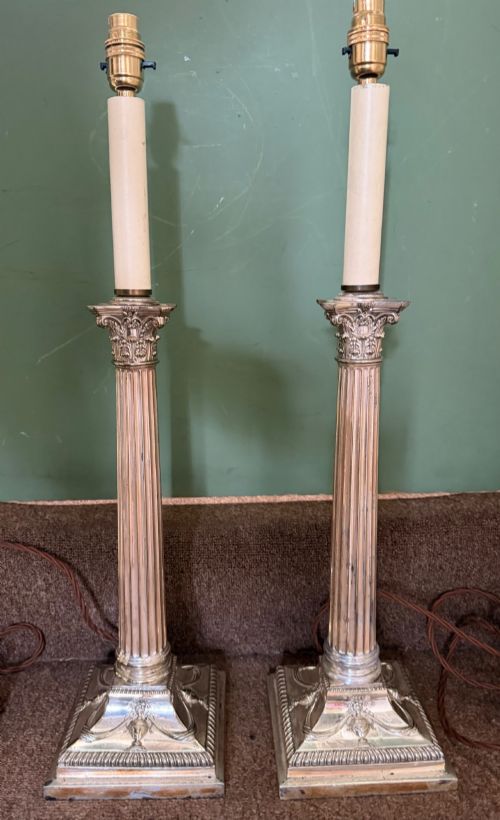
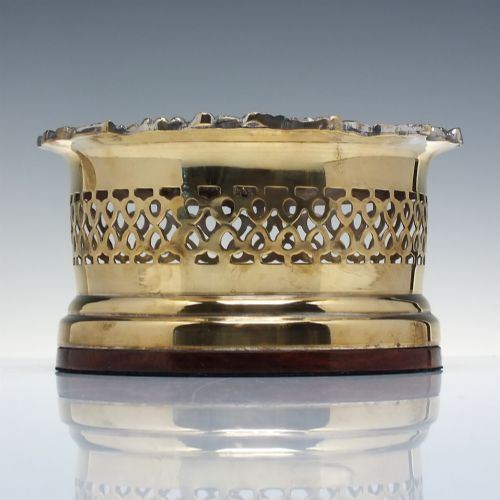
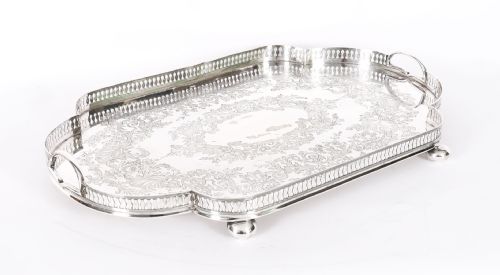
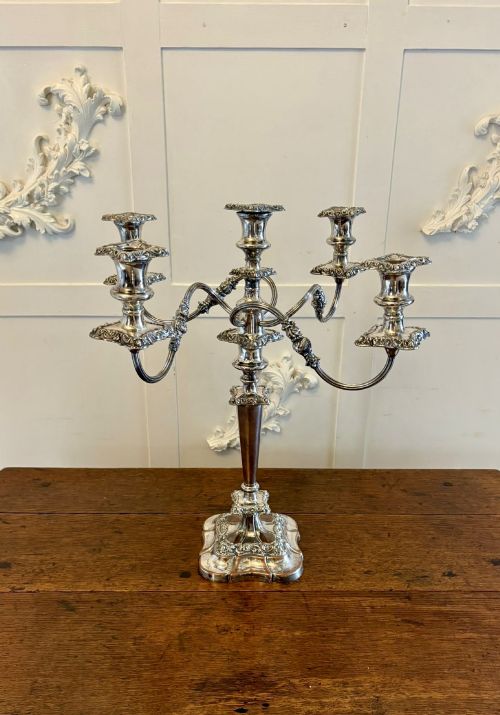
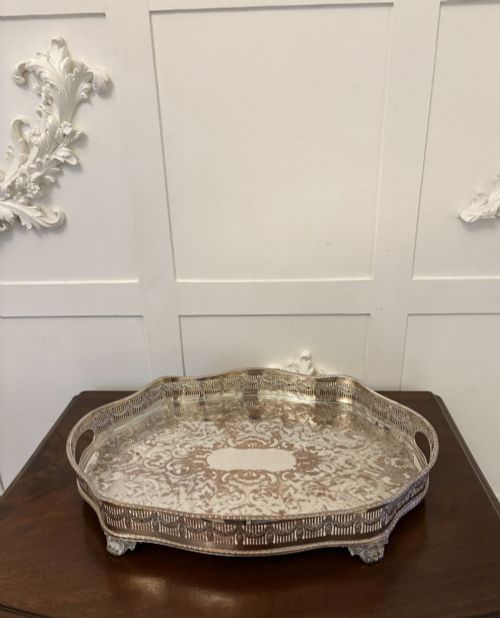
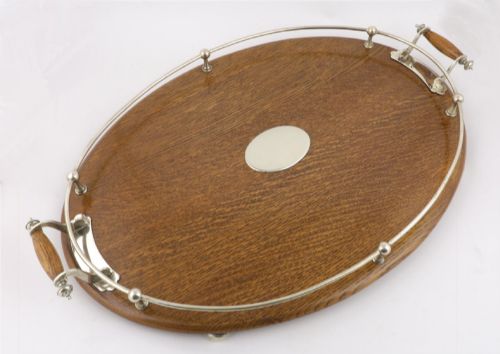
The pieces appearing here include substantial George III Old Sheffield plate, ornate Victorian candelabra, and Edwardian gallery trays fitted with wooden bases. Buyers encounter serving trays, wine coolers, and water jugs bearing the marks of significant British workshops.
Domestic dining forms dominate the selection, alongside ecclesiastical items such as chalices and church plate. Each piece reflects the social rituals of its period, prioritising scale and decorative presence.
Materials and Techniques
Early items utilise Old Sheffield plate, fusing a thin sheet of silver to a thick copper base through heat and pressure, which often reveals subtle copper bleed along edges and high points. Later production shifts to electroplated nickel silver, known as EPNS, providing a uniform metallic coating over a base metal core.
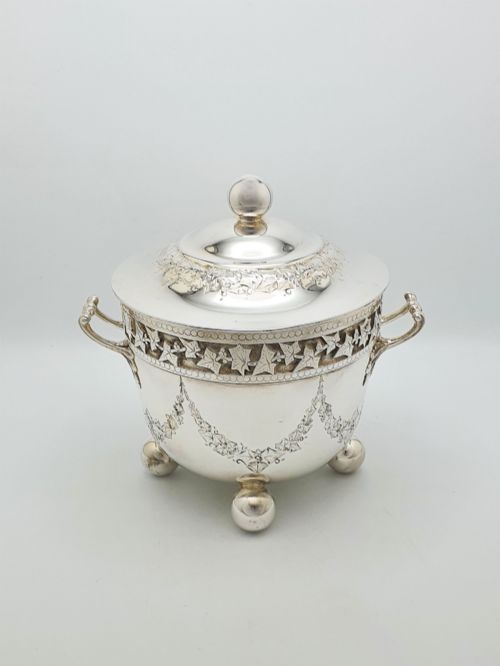
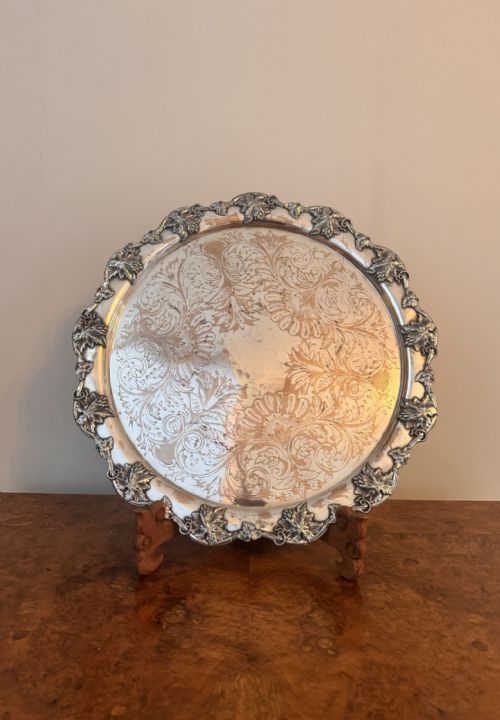
Decoration relies on hand-applied techniques such as repoussé work, chased floral borders, wirework, and applied cast mounts of grapevine or scroll motifs. Oak and mahogany components frequently support gallery trays, combining timber frames with plated metal rails.
Large Silver Plate Retail Price Guide 2026
Typical asking prices for large silver plate among the pieces listed under this phrase on Sellingantiques today, from the lower quarter to the upper quarter. They describe what is for sale here now, not the wider market.
Cow horn dinner gongs with silver plate mounts remind us that Victorian dining rooms occasionally required an audible warning before the soup course.
Craftsmanship and Preservation
Superior examples exhibit crispness in cast decorative borders and handles, where finer chasing brings out botanical or geometric detail without softening. The depth of the underlying metal and the evenness of the plating layer dictate long-term durability under polishing.
Construction integrity matters particularly in composite items like gallery trays and candelabra, where joints, feet, and detachable sconces must remain secure. Intact maker marks and crisp crests or presentation engraving indicate pieces that retained high status through their history.
James Deakin·Roberts Cadman·Christofle·Matthew Boulton·J Dixon·Mappin & Webb·Barker Ellis·Goldsmiths and Silversmiths Company
The Large Silver Plate Glossary
- Old Sheffield Plate
- A composite material made by fusing silver to a copper ingot before rolling it into sheets. This method predates electroplating and often shows hints of copper beneath worn highlights.
- EPNS
- Electroplated nickel silver, a method introduced in the nineteenth century where a layer of silver is deposited onto a base metal alloy using an electrical current. This technique replaced earlier fusion methods.
- Gallery Tray
- A serving tray fitted with an upright pierced or solid metal railing around its perimeter. These trays often include wooden bases made from oak or mahogany.
- Candelabra
- A branched candlestick holding multiple lights, often designed with detachable sconces for easier cleaning and maintenance. Large dining table versions form central decorative focal points.
- Repoussé
- A metalworking technique where the artisan hammers the design from the reverse side to create raised relief patterns on the surface. This method creates tactile depth on chargers and vessels.
Large Silver Plate: Frequently Asked Questions
What is Old Sheffield Plate?
Old Sheffield Plate is an early method of fusing silver to a copper core by heating and rolling the metals together before fabrication. This technique produces distinct physical characteristics compared to later electroplated items.
You can often spot tiny lines of copper along the cut edges, seams, or worn high points where the upper silver layer has thinned over generations of use.
Can I use these trays for serving food?
Most large silver plate trays and platters are suitable for serving dry foods, bottled beverages, or pre-plated items during gatherings. Ensure you wash them by hand immediately after use.
Avoid leaving acidic foods or liquids sitting on the plated surface for long periods, as this can pit the metal or accelerate tarnishing on older pieces.
How do I tell Victorian from Edwardian items?
Victorian pieces frequently lean towards heavier, highly ornate decoration with dense floral chasing, heavy cast mounts, and robust proportions. They reflect the industrial confidence and decorative richness of the nineteenth century.
Edwardian items often display lighter, more restrained neoclassical or revival motifs, incorporating refined gallery rails, cleaner lines, and brighter finishes suited to modern entertaining.