



Large Serving Bowl
A large serving bowl anchors a table or sideboard, bringing utility and presence through centuries of craftsmanship in porcelain, silver, glass, and earthenware.
Large Serving Bowl
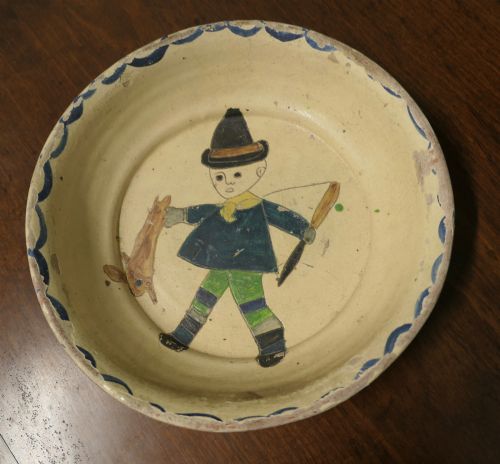
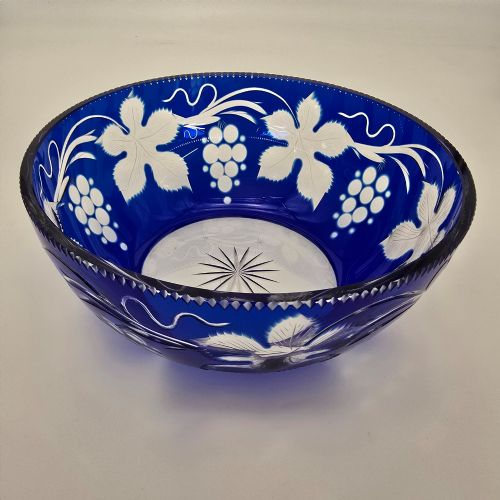
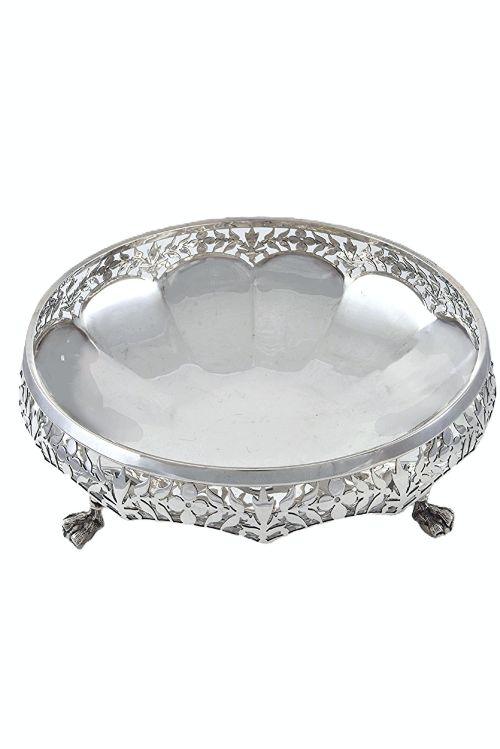
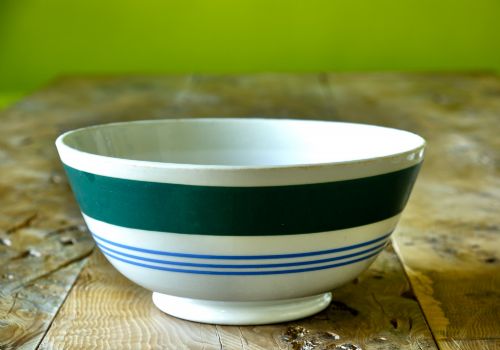
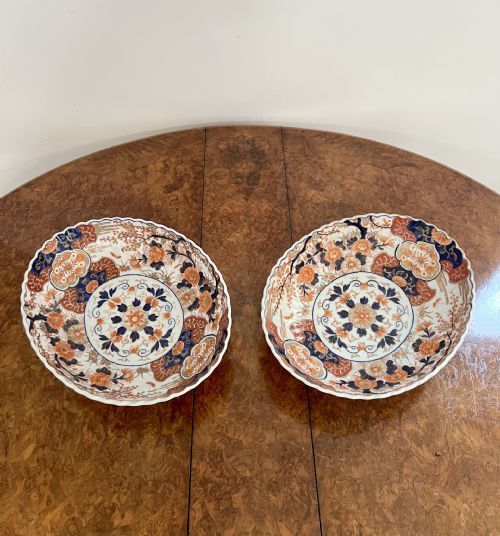
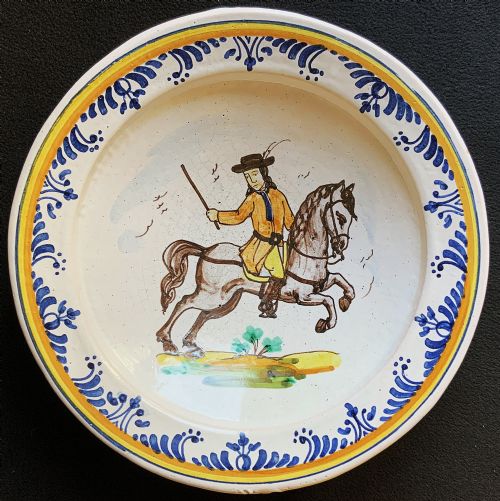
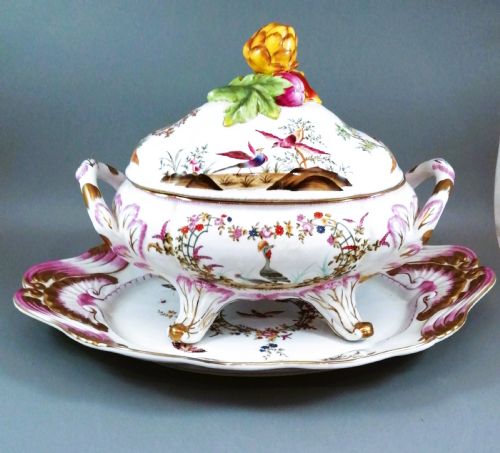
A large serving bowl appears across multiple periods including the eighteenth, nineteenth, and early twentieth centuries, taking forms such as punch bowls, soup tureens, centrepiece bowls, and Chargers. These vessels originate from diverse traditions like Chinese export, Spanish delft, Bohemian glass, and English pottery.
The version most commonly met on this page is the nineteenth-century porcelain or ceramic bowl, often featuring hand-painted motifs or transferware decoration, alongside silver and glass centrepiece examples suited for grand dining tables.
How they were made
Potters and ceramicists shaped earthenware, porcelain, and faience by hand or wheel, applying glazes, enamels, and cobalt blue pigments before firing at high temperatures. Metal bowls and tureens utilised sterling silver, silver plate, and solid silver, formed through hammering, casting, and repoussé decoration.
Glassmakers blew and cut lead crystal and coloured glass into deep bowls, while woodturners shaped native timbers like English ash for platters and wooden vessels.
Large Serving Bowl Retail Price Guide 2026
Typical asking prices for large serving bowl among the pieces listed under this phrase on Sellingantiques today, from the lower quarter to the upper quarter. They describe what is for sale here now, not the wider market.
Listings feature materials spanning porcelain, sterling silver, enamel, earthenware, and glass across the 18th, 19th, and 20th centuries.
What varies in quality
Quality rests upon the crispness of the hand-painted detail, the weight and purity of the silver or porcelain, and the depth of the glass cutting. Pieces from established makers or specific regional kilns demonstrate superior control over glaze application and structural balance.
The distinction between standard domestic wares and top-tier examples lies in the finesse of the decorative motifs, such as intricate Famille Rose enamelling or finely executed silver hallmarks.
Mann & Co·T G Green·Edm'e Samson·Doulton Burslem·Whiting Co·S. Kirk & Son Company
The Large Serving Bowl Glossary
- Faience
- Tin-glazed earthenware produced in Europe, notably Spain and France, featuring opaque white glazes painted with polychrome motifs. It provides a smooth surface for detailed artistic work.
- Spongeware
- Pottery decorated by dabbing pigment onto the biscuit body with a sponge, creating mottled patterns. This technique was widely utilised in nineteenth-century utilitarian wares.
- Tureen
- A deep covered vessel used for serving soups, stews, or punches at the dining table. These pieces often include matching stands and decorative handles.
- Felspar porcelain
- A specific body composition developed by potteries like Spode, incorporating feldspar to increase translucency and durability. It represents an important technical advancement in English ceramics.
- Imari
- Japanese export porcelain decorated in underglaze blue and contrasting iron red and gold enamels. These items gained popularity in European interiors during the nineteenth century.
Large Serving Bowl: Frequently Asked Questions
How do I date a ceramic bowl?
Dating relies on identifying the potting fabric, glaze characteristics, and decorative style typical of periods like the eighteenth or nineteenth century. Maker marks and backstamps provide more precise chronological markers.
Comparing the potting technique and colour palette to known regional examples helps narrow down the era of production.
Are silver bowls suitable for daily use?
Solid silver and silver plate bowls require gentle hand washing and periodic polishing to maintain their finish. Using them for serving dry foods or fruit minimises tarnish and wear.
Silver pieces from the Victorian and Edwardian eras remain robust enough for occasional dining use when handled with care.
How should I display a large bowl?
A large bowl sits comfortably on a dining table, sideboard, or open shelving as a focal point. Glass and porcelain varieties catch natural light effectively near windows.
Ensure the supporting surface is stable and capable of bearing the combined weight of the vessel and any decorative contents.