


Large Rustic Coffee Table
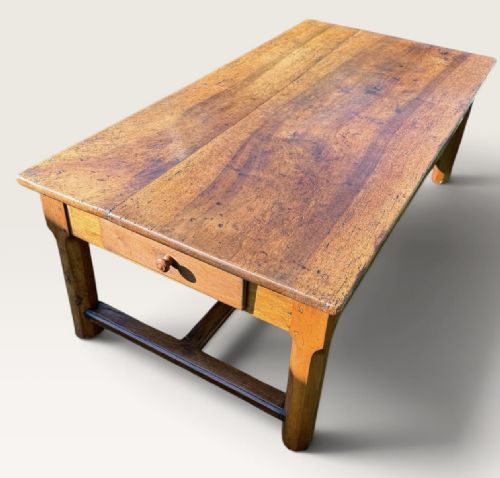
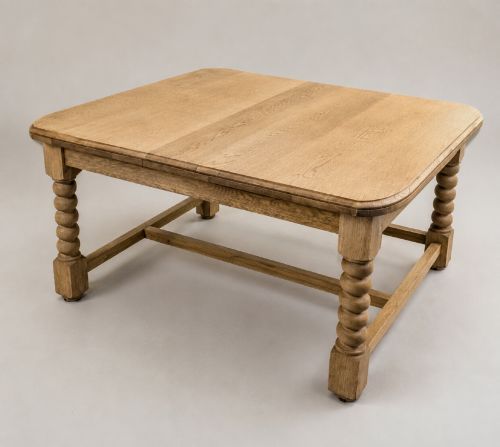
A large rustic coffee table anchors a room with timber surfaces carrying the marks of past use.
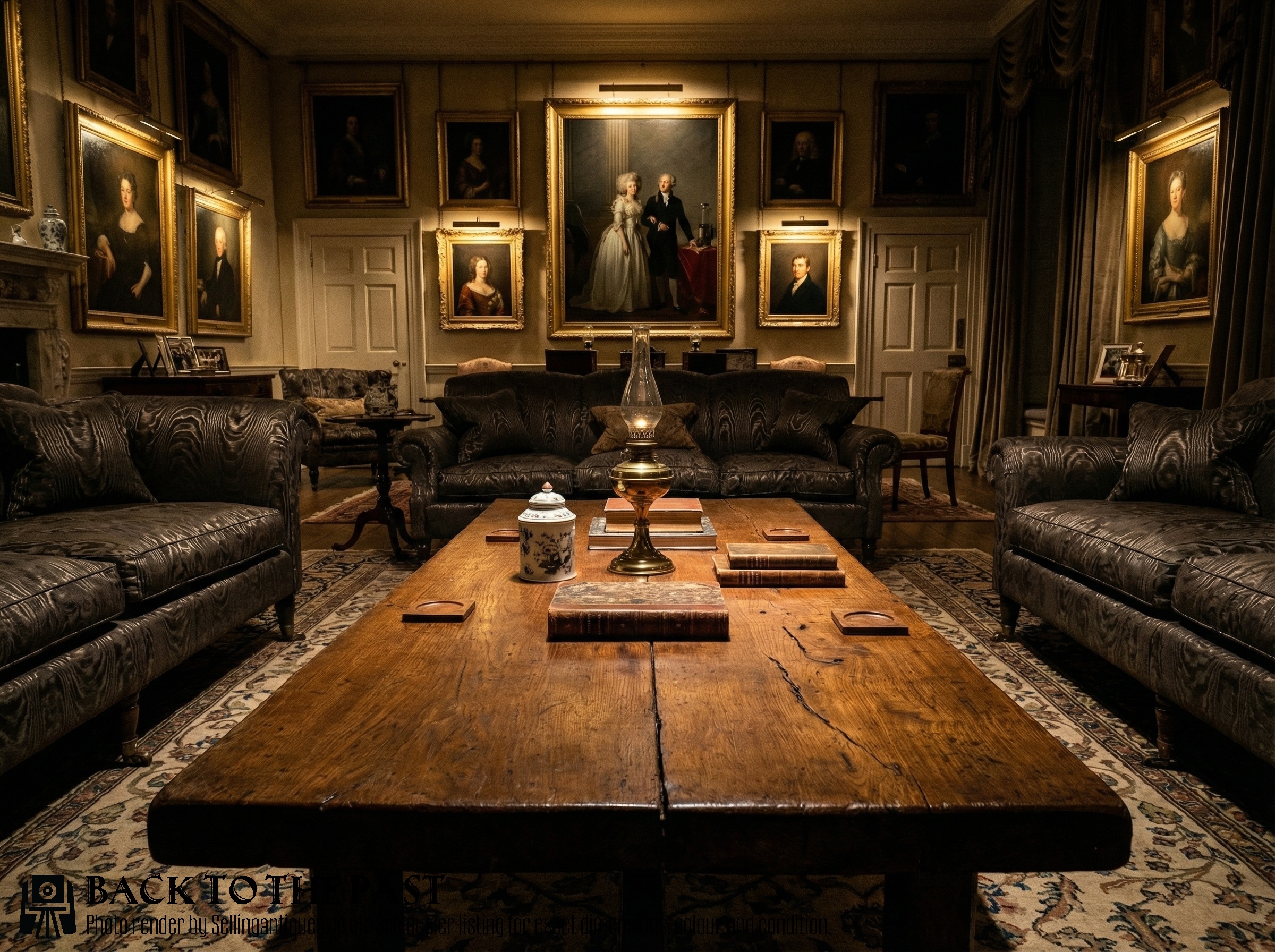
Large Rustic Coffee Table
A large rustic coffee table brings substantial timber and working character into a sitting room, drawing on utilitarian forms from the eighteenth century to the early twentieth century. When searching for a large rustic coffee table, buyers encounter repurposed country furniture, factory pieces, and heavy boards adapted for domestic use.
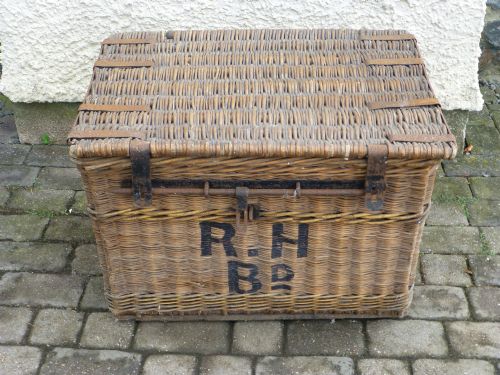
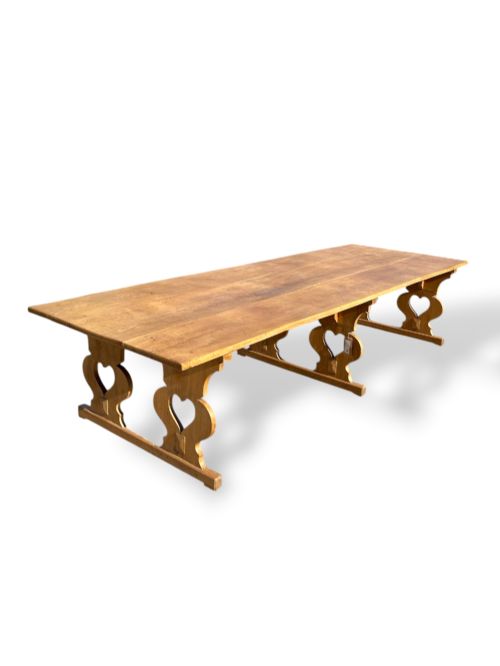
The domestic versions on this page originate from English farmhouses, French provincial settings, and industrial workshops, spanning periods from the eighteenth century through to the 1920s. Common forms include low oak trestles, bleached pine boards, converted pig benches, cheese press tables, and heavy trunks fitted with metal bound edges.
Many examples begin life as storage chests, blanket boxes, or agricultural work surfaces before finding a second life as coffee tables. This adaptive history gives each piece a distinct profile, whether in walnut, elm, teak, or hardwood.
How they were made
Makers constructed these tables and trunks from solid native timbers such as oak, elm, pine, and walnut, selecting boards for durability and strength. Joinery relied on heavy planks, robust framing, and simple pegged joints designed to withstand heavy daily labour.
Metal components such as brass or iron handles, hinges, and iron bands reinforced chests and trunks intended for travel or storage. Surfaces received minimal finishing, relying instead on natural wax, dry scrubbed grain, or the simple weathering of decades.
Several heavy tables on this page began their working lives as cheese presses or pig benches before retiring to the sitting room.
What varies in quality
Quality rests in the integrity of the timber and the honesty of the conversion from utility object to domestic table. Pieces retaining their original surface patination, genuine period construction, and unaltered proportions stand apart from heavily altered equivalents.
The character of the grain, the weight of the timber, and the balance of the proportions dictate the visual impact of the piece. Tables retaining authentic working marks, original metal fittings, and sound structural joinery offer the strongest presence in a room.
The Large Rustic Coffee Table Glossary
- Trestle table
- A table consisting of two or more trestles supporting a long horizontal board. This form provides stable support for heavy timber tops.
- Pig bench
- A low wooden bench traditionally used in agricultural work, often adapted today as a long coffee table. These benches feature thick hardwood tops and sturdy legs.
- Blanket box
- A large rectangular chest used historically for storing textiles and linens. In modern settings, these often double as low storage tables.
- Patina
- The surface sheen and colour developed over years of handling, polishing, and natural ageing. A rich patina shows the true age of the timber.
Large Rustic Coffee Table: Frequently Asked Questions
How do I clean a rustic wooden table?
Dust the surface regularly with a dry cloth and apply a clear beeswax occasionally to nourish the dry timber. Avoid harsh chemical cleaners that strip the historic surface.
Keep the wood away from direct heat sources to prevent the heavy planks from splitting or warping over time.
Can I use a trunk as a coffee table?
Trunks and blanket boxes make excellent coffee tables because they provide hidden storage for blankets and books while offering a flat surface. Their sturdy construction handles daily domestic use with ease.
Check that the height of the trunk suits your seating before placing it in the room.
How can I tell the age of the timber?
Look for hand sawn marks, pegged joinery, and the natural wear patterns around edges and handles. Older boards show shrinkage cracks and tonal variations that modern milling does not replicate.
The absence of modern fixings and screws usually indicates nineteenth century or earlier craftsmanship.
Are these tables suitable for heavy daily use?
These pieces were built from solid oak, elm, pine, and walnut for heavy agricultural or domestic labour. Their robust construction makes them well suited to modern family life.
The tough timber surfaces shrug off minor knocks and gain character from continued use.