

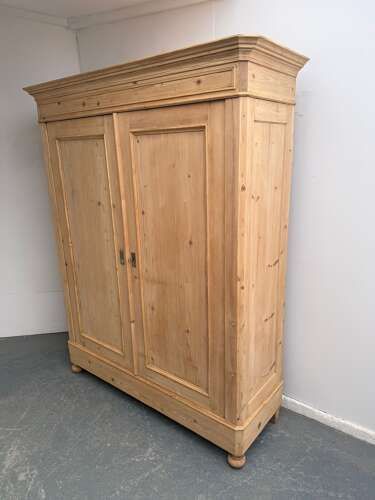
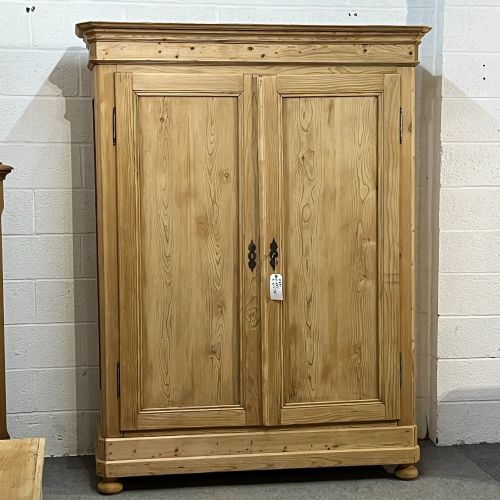
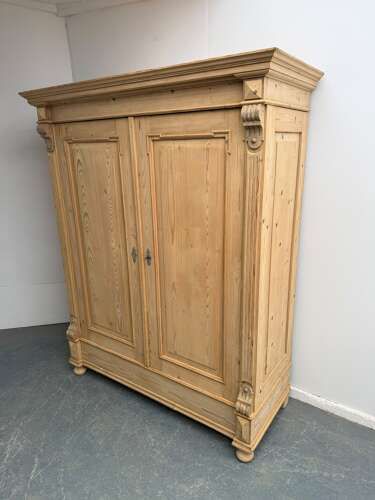
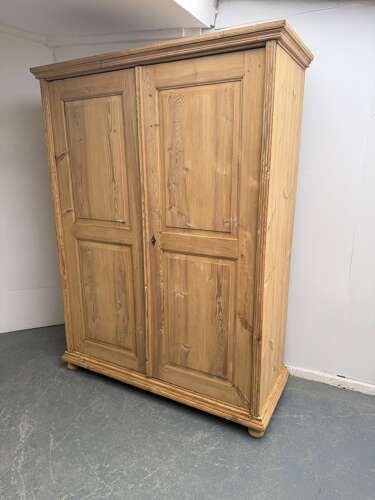
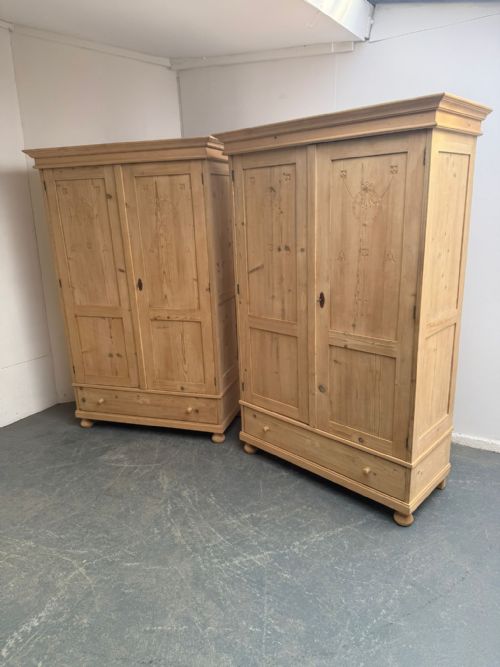
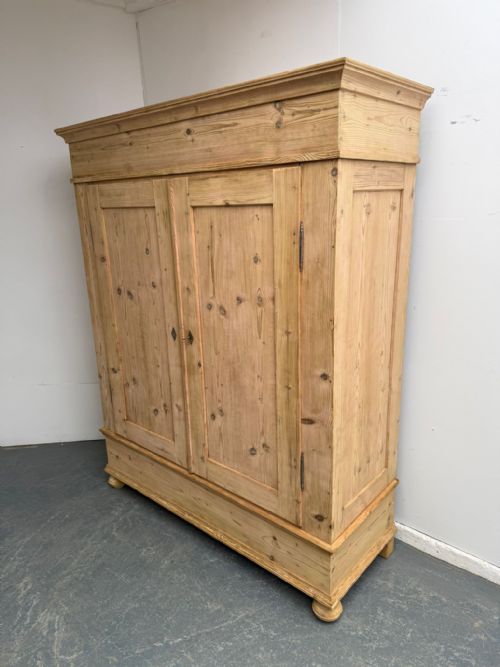


Large Pine Double Wardrobe
When you need a large pine double wardrobe, you find substantial storage built from softwoods across the nineteenth and early twentieth centuries.
Large Pine Double Wardrobe
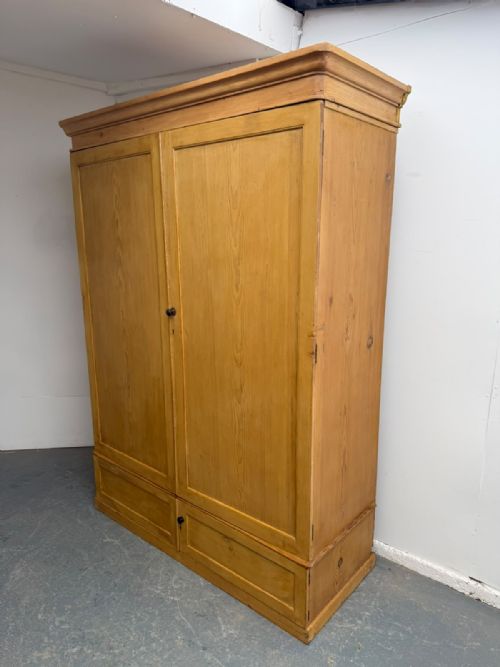
A large pine double wardrobe provides deep hanging space and shelving, often incorporating bottom drawers or linen compartments for domestic storage. These substantial pieces originate from various regions including France, England, and Denmark, dating from the Georgian period through to the early twentieth century.
The most common formats on this page are knockdown or flat-pack designs built to dismantle easily for transport into domestic bedrooms. Buyers encounter Victorian country pieces, French provincial examples, and Arts and Crafts designs alongside traditional Dutch and English country variants.
How They Were Made
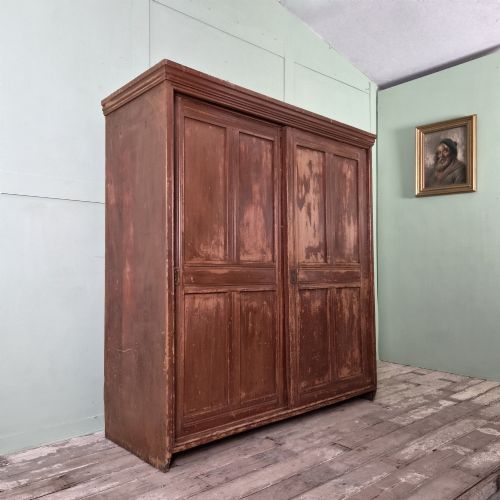
Makers constructed these wardrobes primarily from solid pine, utilising iron and metal for internal hooks, hinges, and structural brackets. Surfaces appear in various finishes including waxed pine, stained pine, and original painted wood.
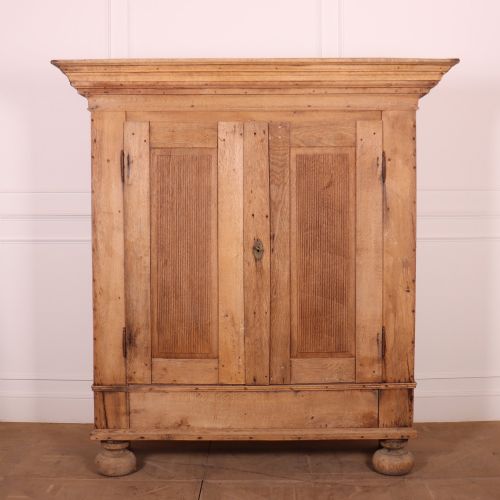
Joinery methods allowed many large examples to be fully dismantled into panels, cornices, and base sections using wooden pins or internal metal bolts. This knockdown construction was essential for moving heavy furniture through narrow stairwells and doorways.
Large Pine Double Wardrobe Retail Price Guide 2026
Typical asking prices for large pine double wardrobe among the pieces listed under this phrase on Sellingantiques today, from the lower quarter to the upper quarter. They describe what is for sale here now, not the wider market.
What Varies in Quality
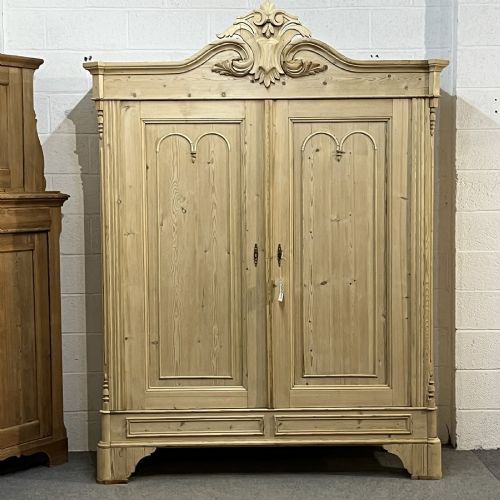
The quality of a large pine double wardrobe depends on the crispness of its architectural details, such as moulded cornices, columned supports, and ornate crown tops. Plain utilitarian carcases differ significantly from decorative provincial pieces that display thoughtful proportions and raised panel doors.
Another factor is the survival of original surface treatments, whether a well-patinated wax finish or untouched historic paintwork. The precision of the knockdown mechanism and the integrity of the original backboards also distinguish finer examples from simpler workshop output.
The Large Pine Double Wardrobe Glossary
- Knockdown
- Furniture built to be taken apart into separate panels and components for transport. This construction method uses wedges, pegs, or bolts rather than permanent glue.
- Linen press
- A tall cupboard traditionally used for storing folded textiles and garments, often featuring sliding trays or interior shelves alongside hanging space.
- Cornice
- The decorative moulding fixed to the top of a wardrobe. It frames the upper edge and provides a finished architectural transition to the ceiling.
- Waxed pine
- Timber treated with natural wax to nourish the grain and produce a soft sheen. This finish develops character through handling and age.
Large Pine Double Wardrobe: Frequently Asked Questions
What periods do these wardrobes come from?
The pieces span the Georgian era, the nineteenth century, and early twentieth-century dates up to around nineteen-ten. Victorian examples are particularly common alongside continental pieces from France and Denmark.
Stylistic indicators such as moulded cornices or columned supports help distinguish between earlier vernacular pieces and later provincial workshop production.
How are the surfaces finished?
Surfaces appear in various states including waxed pine, stained pine, and original painted wood. Some pieces are sold ready to wax or paint according to personal preference.
Original painted finishes provide a distinct historic character, while waxed softwoods display the natural grain and knots of the timber.
What is the difference between a wardrobe and a linen press?
A wardrobe is primarily designed for hanging garments, while a linen press incorporates internal shelving or sliding trays for folded textiles. Many large pine examples combine both functions by offering hanging space alongside bottom drawers or shoe compartments.
Interior configurations vary significantly depending on whether the piece was built for a country house bedroom or a domestic utility space.