
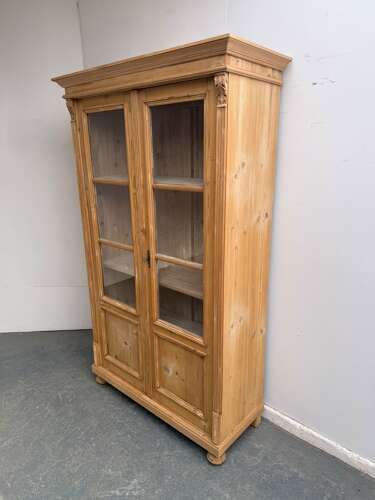
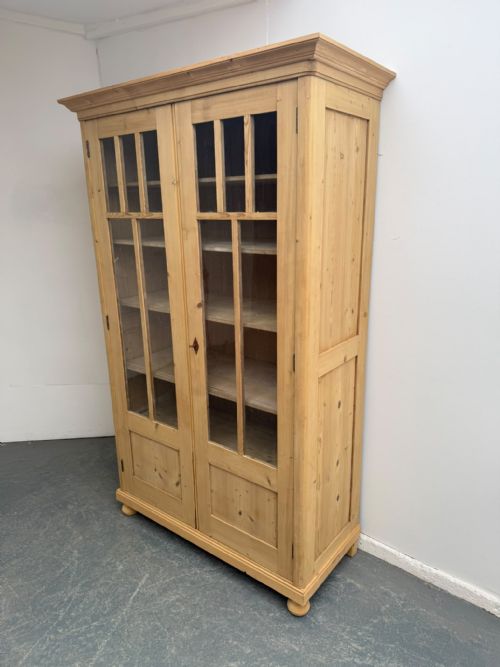


Large Pine Display Cupboard
A large pine display cupboard brings warmth and presence to a room, offering generous shelving for books and collections behind glazed or open fronts.
Large Pine Display Cupboard
A large pine display cupboard combines storage and display, functioning as a focal point for books, crockery, and collections in a domestic interior. These pieces range from tall library bookcases to kitchen dressers and shop fittings, each designed to hold substantial volumes of items securely.
The versions most likely to be met on this page span the nineteenth century and the Victorian period, drawing on English, Irish, Scottish, and continental traditions. Formats include glazed double-door cabinets, breakfront configurations, and multi-drawer shop pieces fashioned from solid timbers.
Makers and workshops across different regions utilised local woods, often finishing them with traditional wax or paint to suit country houses and domestic settings. Their proportions are generous, requiring adequate wall space and ceiling height to sit comfortably within a room.
Materials and Construction
Construction relies primarily on solid pine and pitch pine, supplemented by brass and iron hardware such as hinges and locks. Glazing provides the transparent frontage for display, while wire mesh occasionally appears in place of glass on specific cupboard doors.
Surfaces are treated with traditional finishes including wax or layered paint, reflecting the vernacular practices of nineteenth-century workshops. Joints and carcases are built for heavy everyday use, accommodating the structural weight of large bookshelves and heavy timber doors.
Listings feature nineteenth-century and Victorian pieces constructed from pine, pitch pine, and painted timber, incorporating glass, iron, and brass.
Distinctions in Quality
The standard of a large pine display cupboard depends on the crispness of its joinery and the integrity of its original timber frame. Pieces with well-balanced proportions and intact period glass command greater appreciation among collectors.
The character of the surface finish plays a central role, distinguishing between sympathetically retained historic paint and later decorative applications. Superior examples demonstrate thoughtful architectural detailing, such as breakfront facades or harmonious panel proportions.
The Large Pine Display Cupboard Glossary
- Breakfront
- A cabinet design where the central section projects forward from the flanking outer sections. This architectural arrangement creates depth and shadow across the front elevation of large bookcases.
- Glazed
- Fitted with glass panels to protect contents from dust while allowing visibility. This technique is standard for display cabinets and library bookcases.
- Knockdown
- Describing furniture designed to be dismantled into manageable sections for transport and reassembly. This practical feature allowed large cupboards to move between rooms and properties with greater ease.
- Shop Fitting
- Furniture specifically built for commercial premises rather than domestic use, such as multi-drawer counters or tall display shelving. These pieces often feature robust construction and utilitarian detailing.
- Pitch Pine
- A dense, resinous softwood sourced from pine species known for distinct grain patterns and durability. It frequently appears in nineteenth-century cabinetry requiring structural strength.
Large Pine Display Cupboard: Frequently Asked Questions
How do I style a large pine display cupboard?
Balance the visual weight of the timber by varying the objects displayed on the shelves, mixing books with ceramics and glassware. Allow some empty space to prevent the cabinet from feeling overcrowded.
Position the piece against a suitably sized wall where its height and width can anchor the room without overwhelming the surrounding furniture.
What rooms suit a large pine display cupboard?
These cupboards sit well in dining rooms, kitchens, libraries, or spacious hallways where storage and display are both required. Their substantial presence demands high ceilings and adequate floor space.
Ensure the dimensions of the room match the scale of the cabinet before placement to maintain a balanced interior layout.
How do I care for nineteenth-century pine furniture?
Maintain the timber by dusting regularly with a dry cloth and applying appropriate wax polish sparingly to nourish the surface. Avoid placing the cupboard in direct sunlight or near heat sources to prevent the wood from warping.
Check hinges and glazed doors periodically to ensure proper alignment and smooth operation of moving parts.
How can I tell the period of a pine cupboard?
Examine the construction methods, tool marks on the timber, and the type of glass used in the doors. Hand-cut joints and early hardware often indicate nineteenth-century or earlier origins.
Compare the style and proportions against regional traditions, such as English country or Swedish Gustavian design, to narrow down the era of manufacture.