

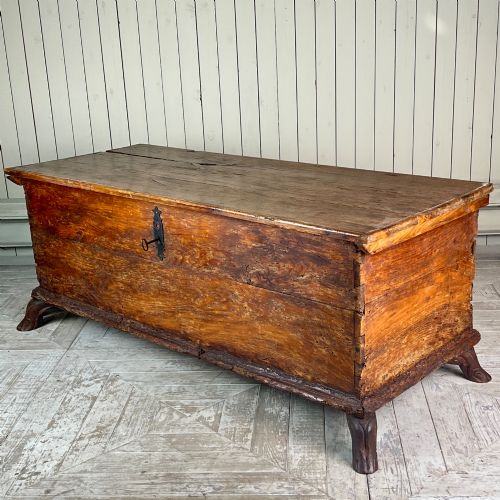
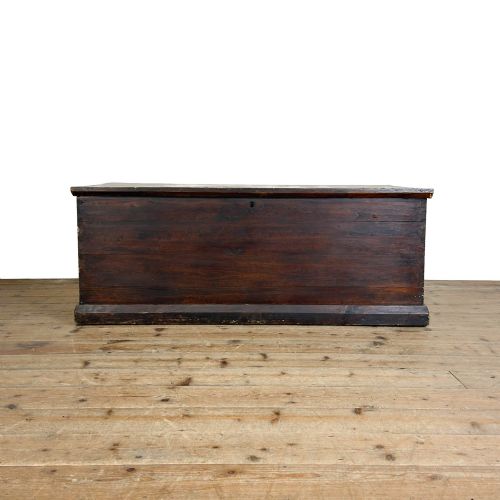
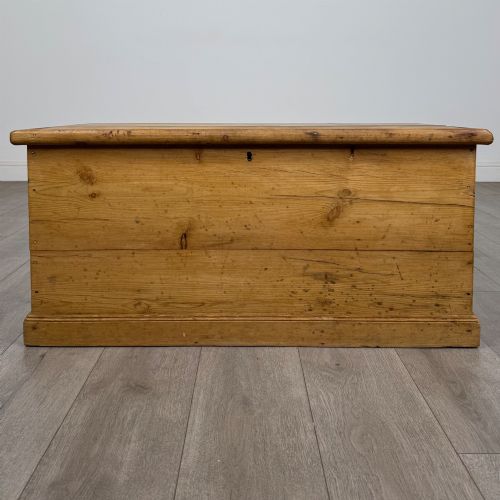
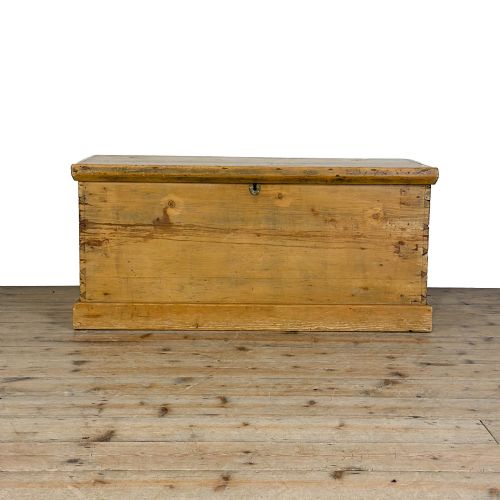
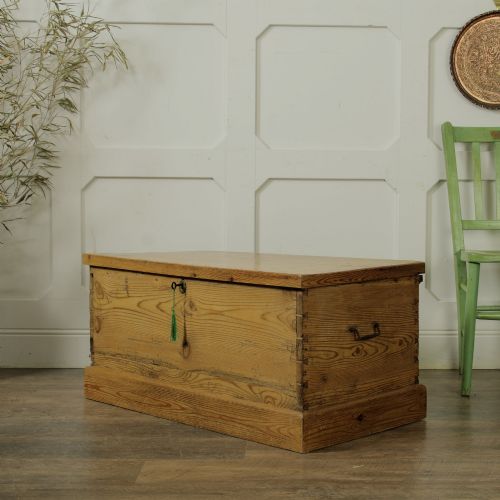
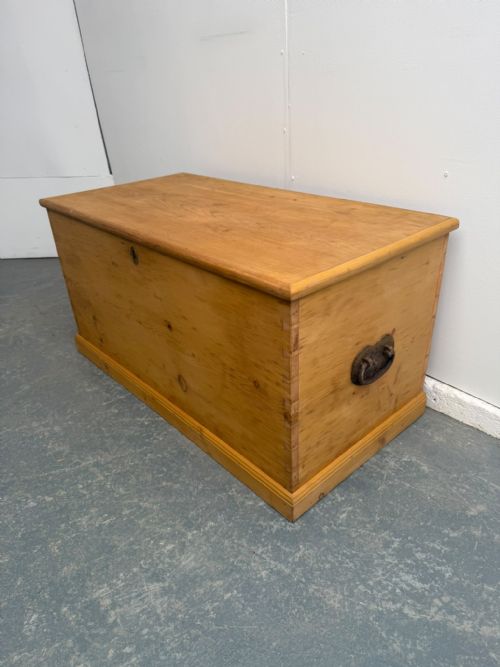
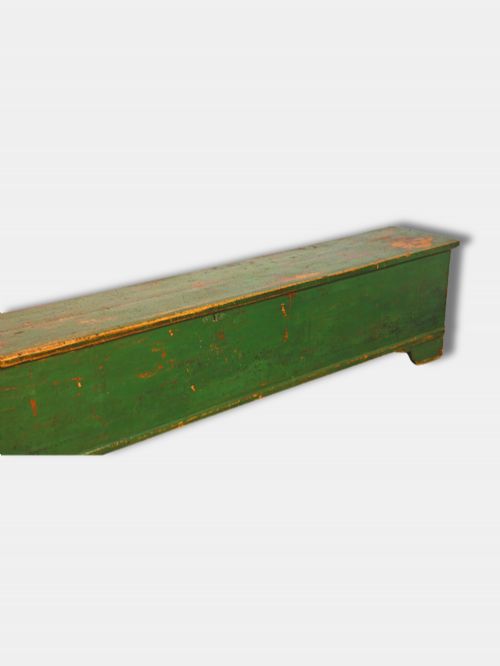
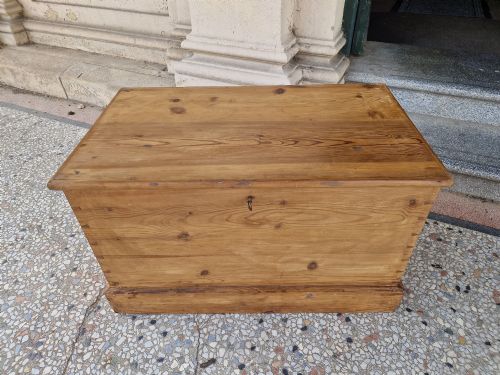


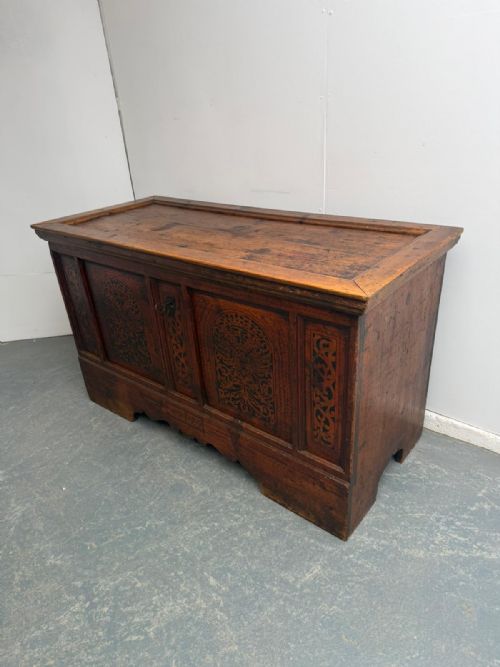


Large Pine Coffer Box
A large pine coffer box offers substantial rustic storage with a surface history shaped by generations of domestic use.
Large Pine Coffer Box
A large pine coffer box provides heavy-duty utility and generous proportions, functioning traditionally to store blankets, linens, and personal possessions. These storage pieces appear frequently from the Georgian and Victorian eras, alongside regional European examples from Hungary, Scandinavia, and the Netherlands.
The format encompasses plain blanket chests, dome-top trunks, mule chests fitted with internal drawers, and painted marriage trunks. Most examples seen here date from the nineteenth century, built primarily for practical household service in country houses and farmhouses.
Materials and construction methods
Makers constructed these chests predominantly from solid pine and pitch pine, sometimes selecting domestic softwoods for everyday utility. Workshops frequently reinforced vulnerable corners and lids with iron bindings, brass fixtures, and metal mounts to withstand heavy lifting and transit.
Surface treatments vary widely between simple wax finishes, scumble paint, and pigmented layers of green or teal. Internal arrangements often include till boxes or secret drawers concealed beneath the main compartment.
Large Pine Coffer Box Retail Price Guide 2026
Typical asking prices for large pine coffer box among the pieces listed under this phrase on Sellingantiques today, from the lower quarter to the upper quarter. They describe what is for sale here now, not the wider market.
Listings feature structural variations including dome-top lids, iron-bound corners, and internal secret drawers across Georgian and Victorian periods.
Assessing quality and character
Quality rests in the integrity of the timber, the thickness of the pine boards, and the retention of original hardware such as strap hinges and locks. Superior examples display honest patination on the exterior surfaces earned through long exposure.
The presence of untouched period paintwork, original interior compartments, or maker-specific alterations like internal drawers elevates a piece above standard utilitarian trunks.
The Large Pine Coffer Box Glossary
- Coffer
- A heavy wooden chest traditionally used for storing valuables or household goods. These sturdy boxes often feature hinged lids and iron reinforcement.
- Mule chest
- A storage chest that combines a blanket box with one or more lower drawers. This hybrid form bridges the gap between traditional chests and drawer-based cabinets.
- Scumble
- A decorative painting technique where a translucent glaze is manipulated over a lighter base colour to imitate the grain of costlier hardwoods. This finish appears frequently on nineteenth-century utility furniture.
- Pitch pine
- A dense, resinous softwood sourced mainly from North America and utilised for heavy-duty furniture requiring high durability. The wood exhibits a pronounced growth ring pattern.
- Till box
- A small internal compartment fixed inside a chest to hold minor personal items or documents. It sits beneath the main lid.
Large Pine Coffer Box: Frequently Asked Questions
How were large pine coffer boxes used originally?
These chests served primarily for storing household textiles, woollens, and personal belongings in domestic settings. Their sturdy construction also made them suitable for transporting possessions during travel.
Larger variations often sat at the foot of beds or in hallways, functioning simultaneously as casual seating when closed.
How do I care for a waxed pine chest?
Maintain the surface by applying a traditional beeswax polish sparingly and buffing it with a soft cloth. Avoid placing the box near direct heat sources or in areas prone to dampness.
Keep natural oils replenished to prevent the pine from drying out while preserving the existing patination.
What is the difference between a coffer and a mule chest?
A standard coffer or blanket box consists of a single deep compartment accessed solely through the top lid. A mule chest incorporates one or more drawers built into the base beneath the main storage well.
This design evolution allowed access to frequently needed items without requiring users to lift the heavy top lid.
Are painted pine chests authentic period pieces?
Many nineteenth-century and Georgian chests retain original pigmented surface treatments, including regional Hungarian and Dutch folk art finishes. Scumble paint and coloured washes were applied by contemporary makers to enhance plain softwood.
Examine the wear patterns and pigment integration into the wood fibres to understand the age of the painted surface.