
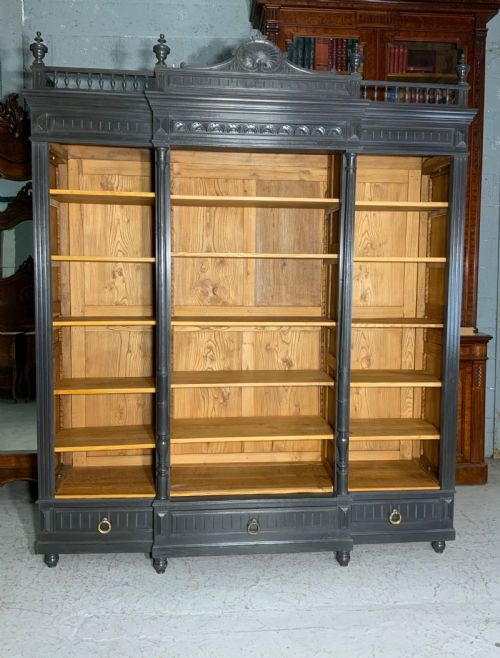

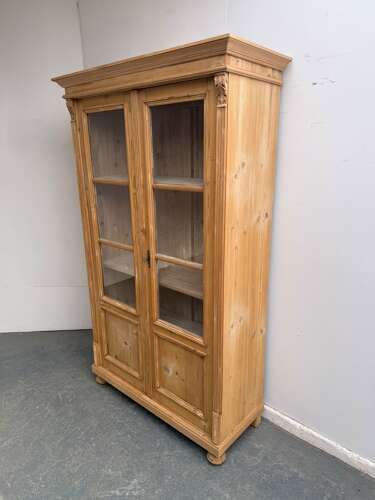
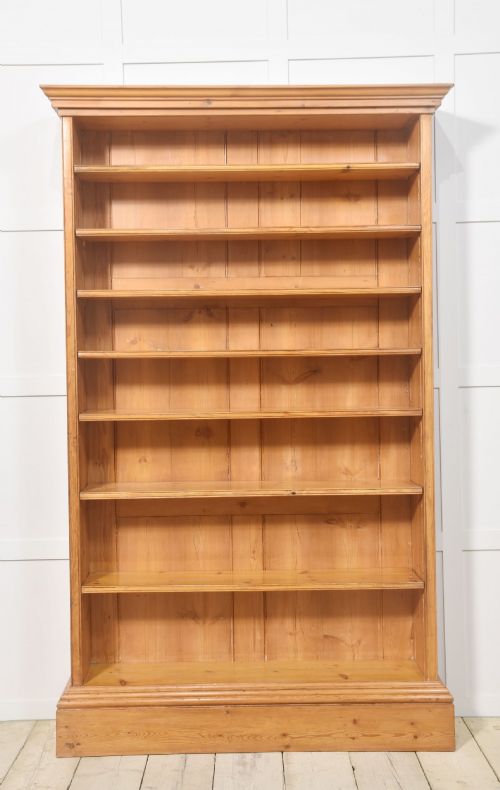
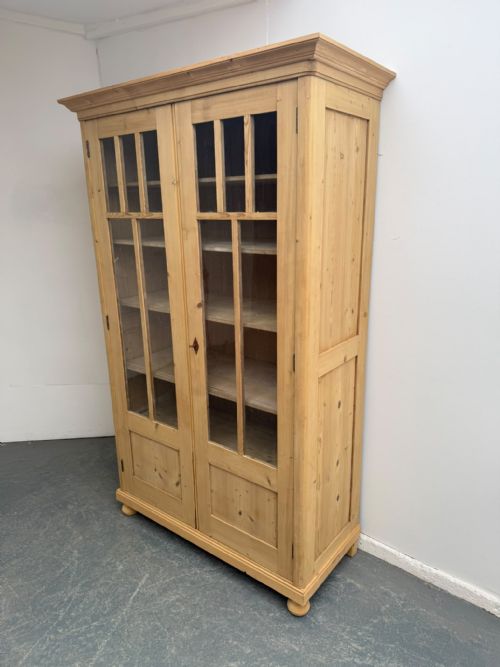


Large Pine Bookcase Cabinet
A large pine bookcase cabinet brings architectural scale and honest utility to a room, offering deep shelving behind glazed or open timber fronts.

Large Pine Bookcase Cabinet
When you search for a large pine bookcase cabinet, you are looking at substantial storage furniture built from softwood timber, often designed with adjustable shelving and lower cupboards. These pieces arrive in various regional vernaculars, ranging from English and Irish country workshop builds to French provincial and Scandinavian iterations.
The most common examples on this page date from the nineteenth century, including Victorian and Edwardian periods, alongside Georgian country house pieces and later twentieth-century interpretations. They span open shelving formats, glazed display cabinets, breakfront kitchen dressers, and fitted secretaire bookcases with drop-down writing desks.
These items served demanding domestic and institutional roles in libraries, country houses, and farmhouses, requiring robust construction to hold heavy volumes and household stores. Today, buyers select them to anchor high-ceilinged rooms where standard-height shelving looks diminutive and insubstantial.
Materials and construction
Makers utilised native and imported softwoods, primarily pine and deal wood, occasionally incorporating pitch pine for denser structural members and grain figure. Timber preparation relied on hand-sawing and planing, producing boards of varying widths joined with traditional pegged mortise and tenon joints.
Hardware elements employ brass for key escutcheons and drop handles, alongside iron hinges and latches securing heavy doors. Many surviving examples retain original or historic painted finishes, while others show stripped wax surfaces that expose the natural knotty grain of the deal wood.
Listings feature pine, deal wood, and pitch pine across nineteenth-century Victorian, Edwardian, and Georgian periods.
Assessing quality and proportion
The distinction between ordinary utility furniture and finer cabinet work lies in architectural detailing, such as moulded cornices, panelled lower doors, and fluted pilasters. Cabinet makers working in Georgian and Victorian country houses applied sophisticated joinery techniques to softwood, achieving crisp proportions that elevate utilitarian pine above rustic workshop standards.
Originality of glazing bars, backboards, and hardware determines the integrity of a piece, as does the survival of period paint or patinated wax surfaces. Knockdown construction, allowing large carcasses to dismantle for transport, indicates clever design intended for substantial country houses with restricted access routes.
The Large Pine Bookcase Cabinet Glossary
- Deal wood
- A traditional British term for softwood timber, typically fir or pine, widely used in nineteenth-century carcase construction and shelving.
- Breakfront
- A cabinet design where the central section projects forward from the flanking wings, creating a stronger architectural facade.
- Secretaire
- A cabinet incorporating a fitted writing drawer with a drop-down front, concealing pigeon holes and small compartments.
- Escutcheon
- A protective metal plate surrounding a keyhole, commonly cast in brass on period cabinet doors and drawers.
- Glazing bar
- The narrow wooden strip that holds individual panes of glass within a cabinet door, defining the pattern of the window.
Large Pine Bookcase Cabinet: Frequently Asked Questions
How do I clean a waxed pine bookcase?
Dust the timber regularly with a soft, dry cloth to prevent grit accumulation on the wax finish. Apply a quality beeswax sparingly once or twice a year to nourish the softwood and buff to a soft sheen.
Avoid placing pine furniture near direct heat sources or in damp conditions, as temperature fluctuations cause softwood to expand, contract, and split over time.
How do I date a pine cabinet?
Examine the construction marks, nail types, and backboards to establish the period of manufacture. Hand-sawn boards, pegged joints, and square-headed wrought nails typically point towards Georgian and early Victorian workshops.
Later nineteenth and twentieth-century pieces often display circular saw marks, machine-planed timber, and standardised iron fixings that reflect industrial manufacturing shifts.
Are painted finishes original?
Many country pieces received multiple layers of paint over decades of domestic use, reflecting changing interior tastes in farmhouses and provincial homes. Traces of early pigment beneath later decorative layers often survive on internal shelving and backboards.
Professional evaluation under magnification helps determine whether a painted surface dates to the nineteenth century or represents a later decorative application.