




Large Pedestal Bowl
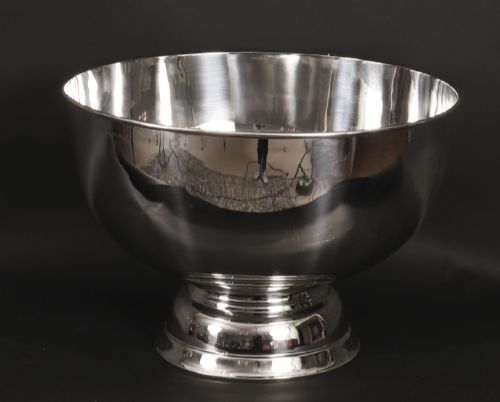
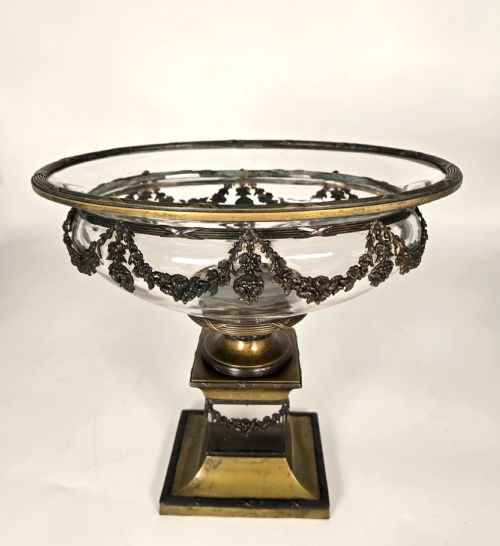
A large pedestal bowl commands attention on any table, offering height and presence through silver, porcelain, bronze or glass.
Large Pedestal Bowl
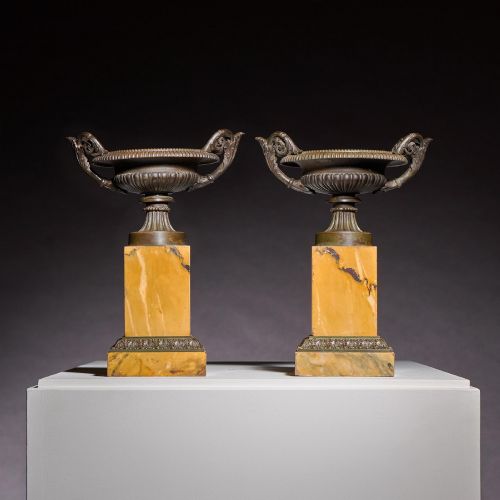
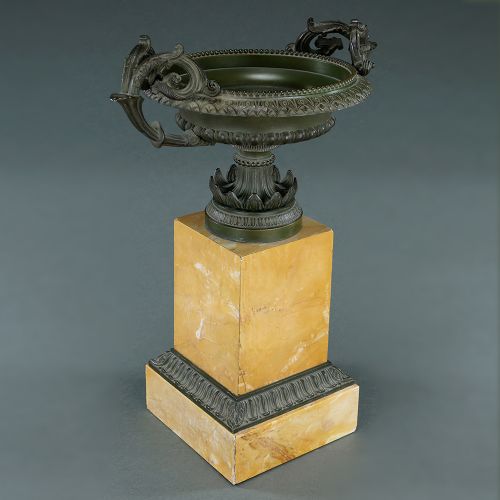
A large pedestal bowl elevates fruit, flowers or presentation pieces above the surface on a raised foot or column. These vessels appear frequently as heavy silver centrepieces, porcelain table ornaments, and grand bronze tazzas.
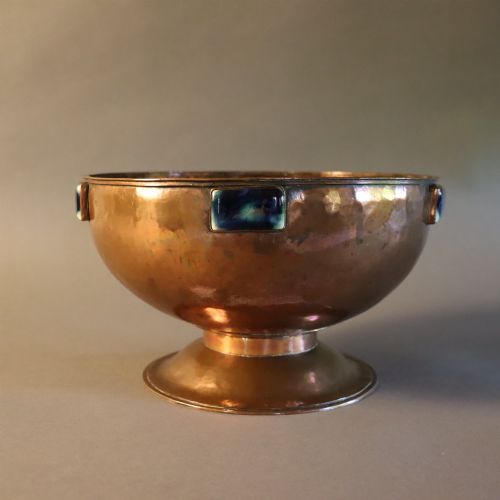
The material range spans nineteenth-century sterling silver and silver plate to Art Deco glass, majolica ceramic, and Arts and Crafts copper. Forms stretch from classic tazzas and punch bowls to wine coolers and jardinieres.
Victorian and Edwardian examples dominate the selection alongside French Empire bronzes and 1930s modernist pieces. Buyers encounter everything from blue and white ironstone to cobalt glass paired with fine metalwork.
Materials and construction
Metals such as sterling silver, silver plate, copper, and bronze involve silversmithing, casting, and mounting techniques. Copper versions often incorporate enamelled cabochons or Ruskin pottery inserts, while silver pieces utilise intricate repoussé and piercing.
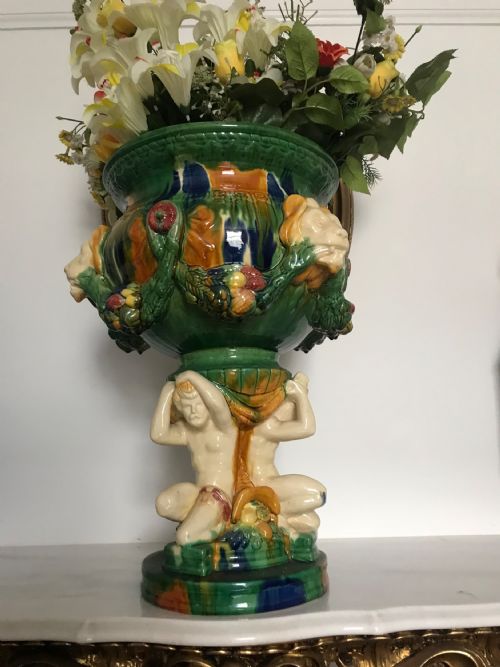
Ceramic and glass vessels rely on moulding, hand-blowing, and detailed glazing. Majolica and German porcelain pieces feature hand-modelled floral appliques and figural supports, whilst crystal comports show deep hand-cut facets.
Large Pedestal Bowl Retail Price Guide 2026
Typical asking prices for large pedestal bowl among the pieces listed under this phrase on Sellingantiques today, from the lower quarter to the upper quarter. They describe what is for sale here now, not the wider market.
Several porcelain bowls feature cheerful ceramic putti and applied roses clinging stubbornly to the rim after more than a century.
Indicators of distinction
Distinction rests on the weight of the metal, the crispness of cast ornament, and the clarity of hallmarks or maker signatures. Heavygauge silver and well-chased bronze mounts show superior craftsmanship compared to lighter plated alternatives.
Porcelain and glass quality depends upon the delicacy of painted detail, the absence of clouding in crystal, and the structural integrity of applied elements like putti or floral garlands.
Mappin and Webb·Barker Ellis·Joseph Rodgers·Schierholz Plaue·Maling·Alexander Clarke and Co·Graystan
The Large Pedestal Bowl Glossary
- Tazza
- A shallow bowl or plate mounted on a pedestal foot, traditionally used for serving fruit or sweetmeats.
- Monteith
- A bowl with a scalloped rim, designed originally for chilling wine glasses by their stems.
- Comport
- A decorative stand or pedestal dish used on the dining table for fruit or confectionery.
- Jardiniere
- An ornamental pot or stand, typically ceramic or metal, made to hold live plants.
- Repoussé
- A metalworking technique where the artisan hammers the design from the reverse side to form a raised relief on the front.
Large Pedestal Bowl: Frequently Asked Questions
What is a large pedestal bowl used for?
These vessels serve primarily as centrepieces for dining tables, sideboards, or entrance halls. Historically, they held fruit, flowers, punch, or iced wine during formal meals.
Today, they function equally well as standalone decorative objects or display pieces that introduce architectural height to a room.
How do I clean silver plate and sterling silver?
Silver requires gentle cleaning with a specialised non-abrasive polish to preserve the patina and surface detail. Avoid harsh chemical dips that strip away the original finish of antique metalwork.
For pieces with applied enamel or glass inserts, care must be taken to keep liquids away from vulnerable mounts.
How can I tell a nineteenth-century tazza from a later piece?
Nineteenth-century examples frequently utilise materials like Siena marble, heavy bronze casting, or hand-blown crystal. Examination of the base often reveals casting seams, wear patterns, or period hallmarks.
Twentieth-century modernist and Art Deco pieces show cleaner geometric lines and different alloy compositions, such as chrome.
Where should I place a heavy bronze or marble bowl?
Because marble and bronze centrepieces possess substantial weight, they require a sturdy piece of furniture such as a heavy oak sideboard or a strong dining table. Ensure the supporting surface is level to distribute the load evenly.
Keep them away from direct sunlight if they feature delicate cobalt glass or enamelled elements.